Green Hydrogen News: Swiss-Moroccan Collaboration On Renewable Hydrogen Strengthens Energy Security
Switzerland is exploring technical cooperation with Morocco on renewable hydrogen and synthetic fuels, including Synhelion’s planned 100 000 t/year plant in Tan-Tan.
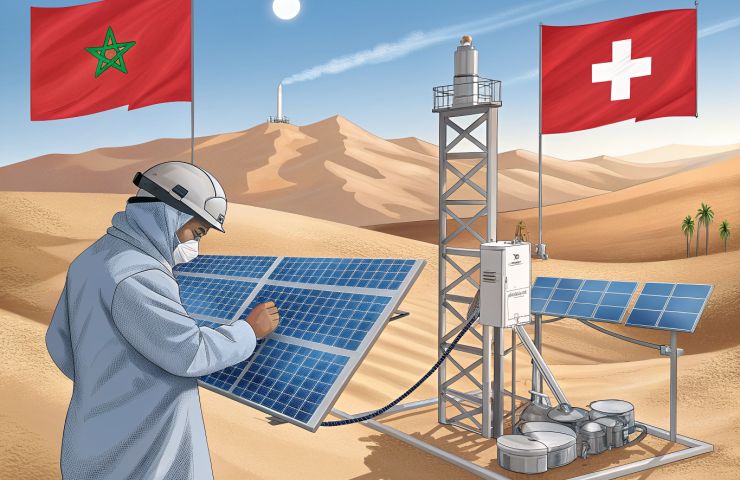
Recently, the Swiss Federal Council approved a report identifying Morocco as a priority partner for technical cooperation in renewable hydrogen and synthetic fuels, aiming to bolster Switzerland’s long-term energy security.
This move is right in step with Switzerland’s national hydrogen and Power-to-X strategy and sets out to explore how targeted partnerships can expand clean energy supply chains abroad, according to the report released by the Swiss Federal Council.
Partnership launch and core goals
The report, prepared with support from the State Secretariat for Economic Affairs (SECO), outlines how Swiss institutions—universities, research centers and clean-tech companies—could engage in joint studies, training programmes and technology transfer with Moroccan counterparts, according to SECO.
Using Morocco’s solar and wind resources, the report notes, could help produce low-carbon hydrogen and its derivatives at scale while drawing on Swiss expertise in electrolysis and certification systems. The Federal Council report notes this combination of resource and know-how could underpin exports of clean fuels, according to the same text.
Rather than creating a new dedicated fund, the report recommends building on existing frameworks such as the bilateral implementation of the Paris Agreement and Morocco’s established hydrogen roadmap—known as “Morocco Offer”—which covers everything from renewable electricity generation to logistics, according to Moroccan government programme documents.
This approach keeps Switzerland’s public support focused on multilateral climate programmes while enabling targeted technical cooperation without immediate financial commitments, the Federal Council specifies.
How the technology works
At the heart of the collaboration lies renewable hydrogen by electrolysis, a process the Federal Office of Energy (OFEN) describes as splitting water into hydrogen and oxygen using renewable electricity. The only byproduct in this step is oxygen, making it a zero-carbon source of hydrogen when powered by solar or wind installations.
Power-to-X processes then convert that hydrogen into synthetic ammonia, methanol or fuels that are easier to store and ship, according to OFEN. These derivatives can displace fossil-based chemicals in industry or be used as sustainable fuels for aviation and heavy transport.
For the Synhelion project in Tan-Tan, the technology goes further by using solar thermal energy in a thermochemical reactor to generate a synthesis gas that’s refined into liquid fuels, according to Synhelion. A field of mirrors concentrates sunlight to heat a chemical reaction, the company explains, then standard gas-to-liquids techniques produce kerosene, gasoline or diesel analogues.
Practical applications and benefits
Solving real-world problems, this collaboration may support data centers, remote industrial sites and sectors where direct electrification is challenging, the Federal Council notes. Hydrogen and its derivatives can offer stable energy supply options even when the grid is constrained.
Produce hydrogen close to abundant renewables. Ship it or its derivatives back to Switzerland. Then integrate those fuels into transport or industrial processes that are hard to electrify, according to SECO.
Made in Switzerland, made for Europe’s future, Swiss companies could collaborate on system design, quality assurance and certification, drawing on national expertise in energy regulation and digital tracing, the Federal Council report suggests. Universities may contribute by training engineers and conducting feasibility studies with Moroccan research institutes.
Moroccan authorities stand to gain as well. By drawing on local solar and wind expertise, Morocco can attract international investment, nurture new industrial clusters and create jobs in renewable energy, engineering and construction, as highlighted in Morocco’s national hydrogen roadmap.
Environmental impact and local economic boost
Green hydrogen news rarely captures both environmental and economic upsides at once, but this cooperation aims to do just that. By using renewable power for electrolysis, carbon emissions are cut compared with conventional fuels, aligning with global decarbonization goals, according to IRENA’s regional analysis on North Africa.
At the same time, integrating desalination of seawater to supply fresh water for electrolysis could drive innovation in water management technologies, SECO indicates. If desalination is powered by renewables and coupled with smart brine management, it may alleviate stress on local resources, the report adds.
Synhelion’s planned capacity of 100 000 tonnes per year, still pending final investment decisions, illustrates the scale of modern synthetic fuel projects, according to Synhelion. The company indicates that successful demonstration could pave the way for further expansions and exports to Europe.
Regional development is another target. This partnership also supports regional development in the Guelmim-Oued Noun region, creating jobs in plant construction, operation and maintenance. Local supply chains for steel, engineering services and logistics stand to gain, as noted in Morocco’s industrial strategy documents.
Leveraging existing frameworks
Rather than reinventing the wheel, this collaboration builds on Switzerland’s own national strategy on hydrogen and Power-to-X, published in December 2024, according to the Federal Office of Energy (OFEN). That document identifies the potential for hydrogen and synthetic fuels in storage, industry and hard-to-electrify transport.
By aligning with these domestic objectives, the Swiss–Moroccan cooperation may accelerate the rollout of pilot plants, standardize certification processes and share best practices, benefiting research institutions, regulators and industry on both sides of the Mediterranean.
A forward-looking agenda
This collaboration is right in step with the evolving global hydrogen economy, offering Switzerland a route to secure clean energy imports and Morocco a path to industrial growth. The Swiss Federal Council report makes it clear that confirming technical feasibility and local interest are the next steps before any financial commitments, according to the Federal Council.
By combining Swiss regulatory know-how and research capabilities with Morocco’s renewable potentials, the two countries aim at solving real-world problems in energy security and emissions reduction. The idea is simple but powerful: harness sunshine and wind, make hydrogen, turn it into clean fuels—in a partnership designed to benefit both sides, according to SECO and Moroccan government sources.
Looking ahead, stakeholders in both countries will examine pilot projects, adapt certification frameworks and train professionals. If successful, the collaboration could serve as a blueprint for other international partnerships in green hydrogen production, SECO suggests. In the words of Morocco’s hydrogen roadmap, tapping into local expertise and global markets is central to a transition that’s as resilient as it is sustainable.