Plug Power Cancels 100 MW Antwerp Plant
Plug Power has written off €13.6 million and halted its planned 100 MW CHYMIA electrolyzer plant at the Port of Antwerp-Bruges, underscoring financial and market hurdles in scaling green hydrogen production in Europe.
What happens when one of Europe’s flagship green hydrogen projects hits a wall? The quiet at the old Opel site in Antwerp’s NextGen District says it all. What was once a promising endeavor for large-scale green hydrogen production has fizzled out, as Plug Power Inc. has now scrapped its plans for a 100 MW electrolyzer plant at the Port of Antwerp-Bruges. The fallout from this could seriously reshape the future of hydrogen infrastructure in the area.
Background: Plug Power’s European Dream
Not too long ago, Plug Power was on the upswing. The company made a bold shift from just making fuel cells for forklifts to creating a complete green hydrogen ecosystem. Their big move? Securing a 30-year deal to set up CHYMIA—a 100 MW plant set to produce 35 tonnes of hydrogen every day. To put that in perspective, that’s about 12,500 tonnes a year of liquid and gaseous hydrogen, enough to really shake up transport, logistics, and heavy industries throughout Belgium and beyond.
This plant was expected to deliver around two-thirds of Belgium’s planned electrolyzer capacity by the mid-2020s, putting Antwerp on the map as a leading hub for clean energy, storage, and pipelines. With EU funding, local grid upgrades, and pipeline links all lined up, it was set to be the model for a thriving green hydrogen economy.
Over the last ten years, Plug Power had been on a buying spree, acquiring top firms in electrolyzer design and process engineering. It set ambitious goals, aiming for gigawatt-scale plants across both the US and Europe. CHYMIA was the crown jewel in this European vision, alongside projects in Sines (Portugal) and Louisiana, all focused on decarbonizing heavy industry with green hydrogen production.
Located on previously developed land where an old car factory once stood, Antwerp’s NextGen District aimed to embrace a circular economy, integrating carbon capture alongside offshore wind through the Antwerp@C initiative.
Why It Was Important
This was far more than a run-of-the-mill electrolysis project. It was hailed as Northern Europe’s shining star in the decarbonization arena—transforming an old auto plant into a circular energy hub. For the Port of Antwerp-Bruges, CHYMIA was crucial to its goal of becoming a global center for hydrogen import and production, feeding pipelines to Germany and local chemical industries.
People across the European chemical sector had their eyes glued to Antwerp: would large-scale hydrogen production finally become commercially viable? Now, that answer seems out of reach.
The Technology That Never Came to Be
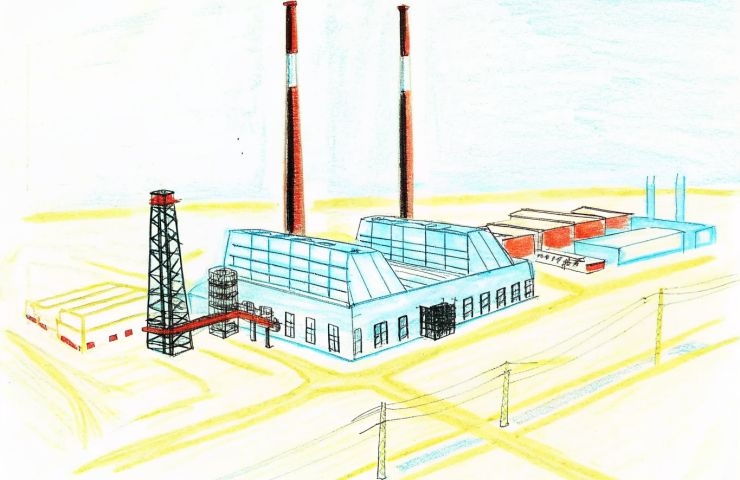
CHYMIA was set to use proton exchange membrane electrolyzers to snap water into hydrogen and oxygen. With a reserved 140 MVA grid connection, a slew of PEM modules would adapt to the fluctuating inputs from wind and solar. There was also a liquefaction train built into the plan to cool hydrogen down to -253 °C, making it feasible to store as a liquid, which could then be distributed by truck or pipeline. The design promised to smoothly integrate with the Fluxys network, connecting to Europe’s evolving hydrogen infrastructure. But now, that grand vision exists only on paper and in abandoned foundations.
Financial Woes and Market Challenges
Here’s the kicker: Plug Power never managed to turn a profit. They’ve been grappling with mounting losses and a heavy cash burn, while frozen financing put them in a tight spot. A promised loan guarantee from the US Department of Energy? That vanished, forcing Plug Power to reassess its plans.
In the latest financial reports from its Belgian branch, €13.6 million worth of assets tied to the Antwerp project were written off. What started as a €350-400 million capital plan has essentially been wiped out. According to company statements, uncertainty about economic viability and market trends made moving forward as originally proposed completely unrealistic.
Fallout for the Port of Antwerp-Bruges
With CHYMIA on hold, Antwerp is going to have to lean even heavier on imports and transit. Analysts point out that renewable hydrogen in Europe still holds a hefty price tag of about €8 per kilogram—roughly four times what fossil-based hydrogen costs. Limited renewable power production at home, high electricity prices, and a small local demand make it tough for green hydrogen to take off.
The port isn’t giving up on hydrogen, though. Projects like HyoffWind in Zeebrugge, ammonia terminals, and cracking facilities are still in the pipeline. The federal plan still aims for Belgium to be a hydrogen corridor, but now the focus is shifting to shipping molecules made in wind-rich areas rather than producing them locally.
Strategic and Policy Landscape
European policymakers are rallying behind hydrogen as part of the Green Deal, with funding coming from Horizon Europe and the Innovation Fund. Belgium’s federal strategy targets the import of up to one million tonnes of hydrogen equivalents by 2030, while also aiming to establish 150 MW of electrolyzer capacity within the country. Ports like Antwerp-Bruges are being seen as gateways for molecules in forms like ammonia and methanol, moving towards cracking facilities and industrial hubs in Flanders and just across the border in Germany.
The cancellation of CHYMIA prompts a serious rethinking. Policymakers might need to reassess state aid regulations or introduce contracts for difference to protect developers from wild electricity price swings and uncertain demand. Without tailored support, facilities risk becoming just another entry in a growing list of on-hold or scrapped megaprojects.
Plug Power’s Shift in Strategy
With its financial constraints tightening, Plug Power has pulled back considerably. After reporting losses nearing USD 1 billion, they’re putting their focus on projects that already have offtake agreements or quicker ramp-up times. Collaborations with Galp in Portugal and in US industrial settings have taken priority. Smaller modular electrolyzers, sometimes linked with biogas feedstocks, are now offering quicker routes to revenue than those massive, multi-hundred million-euro plants.
This shift shows that global hydrogen players might tighten their strategies, preferring staged rollouts over all-in megaprojects. Unfortunately, CHYMIA has become more of a cautionary tale than a model for success.
Lessons for Hydrogen Infrastructure
For investors and policymakers alike, the setback with CHYMIA serves as a reminder that ambitious announcements need to be backed up by solid financing frameworks and clear offtake agreements. Without these elements, even projects in key strategic locations can stall.
Key Takeaways for Investors and Policymakers
Investors should conduct thorough due diligence around power costs, grid access, and long-term contracts. Meanwhile, governments must craft funding strategies that minimize merchant risks while still allowing private capital to flourish. Aligning public-private partnerships with real market conditions will be crucial if we want large-scale green hydrogen production to become more than just an idea.
Focusing on testing smaller projects and building resilience will be essential for scaling the hydrogen economy with confidence. It looks like Antwerp’s NextGen District will just have to hold its breath a little longer for its hydrogen revolution.