Green Hydrogen Production Drives New Investment Talks in EU–South Africa Clean Trade and Investment Partnership
At a CTIP dialogue in Johannesburg, South Africa and EU leaders highlighted investment opportunities in green hydrogen production, leveraging renewables and local value chains to boost trade and decarbonisation.
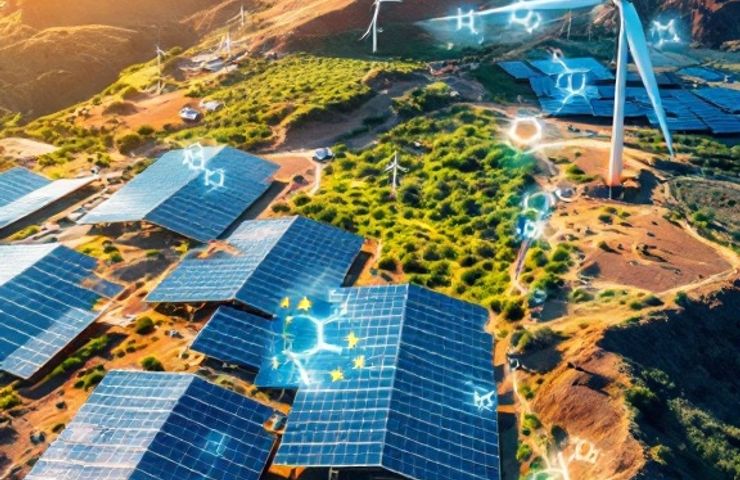
This month in Johannesburg, key players from South Africa and the European Union gathered to kick off discussions under the EU–South Africa Clean Trade and Investment Partnership (CTIP) with a spotlight on green hydrogen production. Building on the high-level commitments made earlier this year, this meeting signified a pivotal shift from mere talk to real action. Attendees brainstormed ways to leverage South Africa's top-notch wind and solar energy resources to spark a competitive hydrogen industry that could both decarbonize domestic sectors and satisfy Europe’s increasing demand for clean fuel.
Earlier this year, Presidents Cyril Ramaphosa and Ursula von der Leyen officially launched CTIP, marking the European Union's first clean trade and investment framework. This partnership lays the groundwork for joint regulatory efforts, public-private financing opportunities, and flagship projects in renewable energy, sustainable aviation fuels, critical minerals, and of course, green hydrogen. A spring Business-to-Government dialogue in Johannesburg saw over 150 participants dive deep into policy design, infrastructure planning, and industrial value chains. Now, during a follow-up session, the focus zeroed in on green hydrogen, with stakeholders exploring tangible investment opportunities.
Could South Africa Power Europe’s Hydrogen Future?
The European Union has set ambitious climate targets, aiming to produce 10 million tonnes of renewable hydrogen by 2030, while also planning to import another 10 million tonnes. To meet these goals, strategies like the EU’s Global Gateway and the Just Energy Transition Partnership (JETP) with South Africa have already mobilized nearly €12 billion in grants, loans, and blended finance. At the recent CTIP dialogue, investors and officials discussed how South African green hydrogen could play a vital role in Europe’s decarbonization efforts, supplying essential feedstock for sectors like steel, chemicals, shipping, and aviation.
South Africa is particularly well-positioned with its renewable resources—like the abundant solar power in the Northern Cape and reliable coastal winds in the Western Cape—making it a potential low-cost producer of hydrogen. While detailed cost analyses are still in progress, the combination of available land, skilled engineering expertise, and existing port infrastructure makes a strong case for establishing large-scale electrolysis hubs. Delegates examined business opportunities for hydrogen-to-ammonia export terminals, onshore pipeline networks, and refueling stations for heavy vehicles.
From Sun and Wind to Green Molecules
Green hydrogen production involves using electrolysers to split water into hydrogen and oxygen by harnessing electricity from renewable sources. In proton-exchange membrane (PEM) electrolysers, a solid polymer membrane facilitates the movement of protons, while platinum-group metal catalysts enhance the reaction. On the other hand, alkaline electrolysers utilize a liquid alkaline electrolyte but still need catalysts for optimal performance. Since South Africa has a leadership position in the production of platinum, iridium, and similar metals, it stands to benefit immensely in local electrochemical manufacturing.
Developing a scalable hydrogen ecosystem involves:
To bring these components together, careful planning is crucial. We need to consider grid connections, water sourcing in arid areas, and environmental protections to safeguard local ecosystems. Early studies under CTIP are already evaluating specific site conditions and regulatory necessities in collaboration with South African authorities and EU experts.
Key Institutions Driving the Push
This recent dialogue underscored the vital contributions from several key players:
These institutions are collaboratively shaping a pipeline of flagship projects that could reach financial closure as early as this year, moving from just ideas into actionable investment and construction.
Why Local Value Chains Matter
While the focus is often on the volume of hydrogen molecules, CTIP participants stressed the importance of fostering local value chains for critical raw materials. South Africa plays a significant role in global platinum-group metal production—essential for catalysts used in electrolysers and fuel cells. By processing these materials domestically and establishing stack assembly workshops, the country can:
Stakeholders are looking into collaborative ventures involving South African miners, electrolyser manufacturers, and European technology providers to launch pilot projects for PGM catalyst layers, membrane electrode assemblies, and fuel cell test facilities.
Benefits Beyond the Energy System
Investing in a green hydrogen industry under CTIP offers a wide array of benefits:
Charting the Course Ahead
Now that CTIP is moving from concept to reality, the focus shifts toward making dialogues actionable. Key upcoming steps include securing long-term clean hydrogen offtake agreements with European partners, aligning regulatory standards on hydrogen certification and safety, and creating blended finance options that encourage private investments. Additionally, environmental assessments and social impact studies will be vital to ensure projects in semi-arid areas respect water usage and community rights.
If the initial demonstration plants reach financial closure later this year, South Africa could establish its first operational green hydrogen corridors—connecting renewable energy zones to ports ready to export ammonia or liquid hydrogen. A successful large-scale effort could reshape South Africa’s energy landscape, transitioning from a coal-dependent system to a diversified green hydrogen hub while evolving trade dynamics with the EU. As the world watches, every milestone under CTIP brings us closer to a sustainable future powered by the limitless potential of sun, wind, and water.