EIB Finances OMV’s 140 MW Plant in Lower Austria
OMV’s €450 million EIB loan will fund a 140 MW green hydrogen plant in Lower Austria, producing 23,000 tpa of renewable hydrogen to cut 150,000 t of CO₂ emissions at the Schwechat refinery.
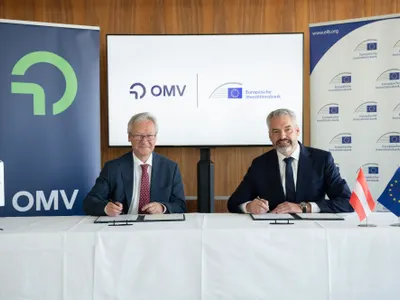
This month, OMV Aktiengesellschaft made headlines by securing a hefty €450 million loan from the European Investment Bank. They're gearing up to roll out a flagship 140 MW green hydrogen production facility in Bruck an der Leitha, Lower Austria. The plan? To crank out up to 23,000 tonnes of renewable hydrogen every year by late 2027! This plant isn’t just about numbers; it's set to pump hydrogen through a dedicated 22 km pipeline straight to OMV’s Schwechat refinery near Vienna. By letting go of grey hydrogen—which is essentially hydrogen derived from natural gas—this initiative aims to cut down around 150,000 tonnes of CO₂ emissions each year. To put that into perspective, that's about 10% of the refinery's current direct emissions!
Tech Deep Dive: The Heart of PEM Electrolysis
At the center of this ambitious plant will be a proton exchange membrane (PEM) electrolyser. This nifty piece of tech is designed to split water into hydrogen and oxygen, using a solid polymer membrane to move protons around. This not only allows for compact design but also enables quick responses to varying renewable energy inputs. Rumor has it that Siemens Energy will be supplying the PEM stacks, although we’re still waiting for the official green light on the procurement details. These stacked modules will collectively reach that impressive 140 MW capacity, perfectly set up to sync with wind, solar, and hydropower feeds from Lower Austria’s grid.
Once the hydrogen is produced, it gets compressed on-site and sent through a high-purity pipeline. That 22 km link to Schwechat? It’s a game changer, replacing grey hydrogen that’s currently used in hydroprocessing and desulphurisation. This not only streamlines logistics but also effectively wipes out the upstream CO₂ that comes from steam methane reforming.
Hydrogen Project Financing That Makes Waves
The European Investment Bank isn’t holding back either, describing their €450 million loan as the biggest energy sector investment in Austria’s history. This financing, pulled from EU climate programs, will cover around 75% of what’s expected to be a €600 million project cost. On top of that, Austria Wirtschaftsservice GmbH (aws) is stepping in with up to €123 million in guarantee support, all funneled through the European Hydrogen Bank and various national hydrogen auction schemes.
And let’s not forget about global players like Abu Dhabi’s Masdar, which is reportedly holding a 49% equity stake in this promising project. While the specifics are still under wraps, Masdar’s involvement underscores the increasing interest from the Gulf in European hydrogen infrastructure.
The Bigger Picture: Lower Austria's Green Energy Hub
Lower Austria is quite an interesting place, sporting a mix of nearly two million residents alongside rich agricultural history and heavy industry. It houses the Schwechat refinery—one of Central Europe’s largest—and a wide network of wind farms, solar panels, and hydropower plants that feed energy into the Sarasdorf substation. This vibrant energy mix is a perfect fit for large-scale electrolysis, adding a solid sustainability stamp to the whole project.
The pipeline is cleverly routed through established industrial zones, benefiting from smooth permitting processes along transport routes like the Danube and its close proximity to Vienna. This setup really drives home how hydrogen infrastructure can maximize existing resources to speed up industrial decarbonisation.
Policy Landscape and Market Influencers
OMV’s green hydrogen hub exemplifies essential aspects of the European Commission’s hydrogen strategy and the REPowerEU plan. These initiatives focus on electrolyser deployment within industrial clusters. The EU’s strategy places a high premium on reducing emissions in refining and chemical sectors, going beyond just power generation or transportation.
With national and EU frameworks tightening things up—from the Emissions Trading System to the Renewable Energy Directive—it’s clear that renewable hydrogen has found its sweet spot as a feedstock for renewable fuels of non-biological origin. This opens up new avenues for producing low-carbon aviation fuel and hydrotreated vegetable oil at Schwechat.
Business Implications and Future Models
For OMV, securing low-emission hydrogen to use as a key feedstock really boosts its competitive advantage in sustainable fuels, especially when it comes to renewable aviation fuel and hydrotreated vegetable oil. This vertical integration means they won’t have to rely as much on emission allowances under the EU ETS, which also helps to stabilize operating costs as carbon prices climb.
The combination of clear refinery demand, diverse public financing, and readily available electrolyser technology creates a replicable model for hydrogen project financing. Other refining hubs across Europe could very well adopt this template, helping to accelerate the rollout of hydrogen infrastructure and reinforce regional energy security.
While we don’t have concrete employment figures yet, it’s fair to expect this project will spawn skilled jobs in engineering, operations, and maintenance during both construction and operation phases. So, local players like equipment manufacturers, civil contractors, and service providers stand to gain, which will ultimately drive economic growth in Lower Austria.
Looking Ahead: What’s Next?
As construction ramps up and eyes are set on commissioning this facility by late 2027, key performance indicators—like electrolyser efficiency and how well it integrates with variable renewable sources—will serve as valuable data points. This real-world experience could be critical in shaping technical standards and safety regulations for large-scale hydrogen production, as well as grid codes for electrolyser operations that follow load variations.
And who knows, there might even be plans for future capacity growth. Early discussions hinted at expanding up to 200 MW of electrolysis, suggesting a phased growth strategy. The dedicated pipeline could also potentially be adapted or extended to serve even more industrial users, or link up with regional hydrogen storage sites, aiding in grid balancing and seasonal energy storage.
Financiers will be keeping a close eye on this deal as a benchmark. The EIB’s underwriting, paired with aws guarantees and private equity involvement, really showcases how a mix of policy de-risking strategies, secure demand contracts, and proven technology can pave the way for financing significant hydrogen infrastructure projects.
About OMV
OMV Aktiengesellschaft is a Vienna-based integrated energy group with its hands in upstream oil and gas, refining, petrochemicals, and an expanding portfolio of low-carbon solutions. Their strategy is all about cutting down the carbon footprint of core operations, with projects like the Bruck an der Leitha green hydrogen facility standing as a focal point. OMV’s ambition is to make this facility a key player in their roadmap toward achieving net-zero operations.