Green Hydrogen Production Facility Breaks Ground at Kenyan Coffee Farm
Nyeri Hill Farm broke ground on a solar-powered green hydrogen facility in Kenya to produce green ammonia fertilizer for its coffee crops and medical oxygen for Consolata Hospital Mathari, backed by UNIDO, GIZ and Starkmacher Impact GmbH.
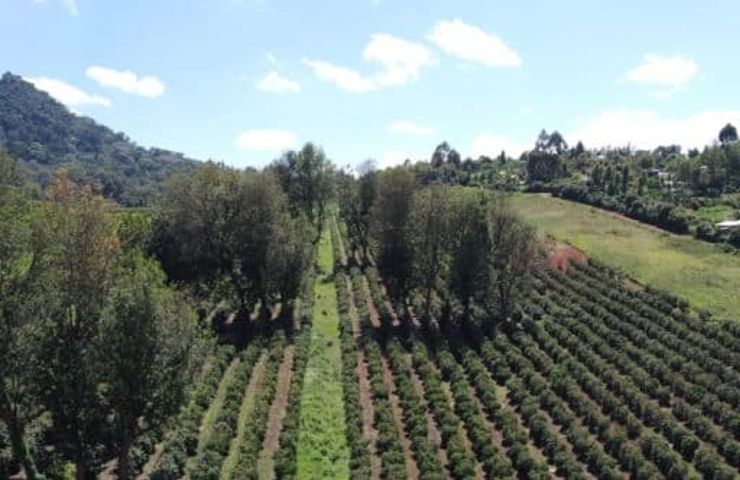
The Catholic Archdiocese of Nyeri and Nyeri Hill Farm held a groundbreaking ceremony for a Green Hydrogen Innovation Centre at the estate in Nyeri County on 1 September 2026, according to AHK Eastern Africa. The initiative aims to demonstrate solar-powered green hydrogen production with dual local benefits. On-site fertilizer manufacturing will support the farm’s Arabica coffee operation, and medical-grade oxygen is to be supplied to Consolata Hospital Mathari, according to Nyeri Hill Farm.
The facility design includes a 550 kWp ground-mounted solar photovoltaic plant powering a 220 kW anion-exchange-membrane electrolyzer, according to Nyeri Hill Farm. Purified water will be split into hydrogen and oxygen, with the hydrogen fed into an ammonia-synthesis unit to yield about 56.8 tonnes of green ammonia-based fertilizer annually, according to Ammonia Energy Association. The oxygen coproduct is intended for purification and compression into roughly 56.4 million litres of medical oxygen each year, according to Ammonia Energy Association. Those are the headline outputs. The project team says the two streams will be routed to distinct end uses on and off the estate, according to Nyeri Hill Farm.
Turning Sunlight into Fertilizer and Medical Oxygen
A ground-mounted solar array will supply direct-current power to an anion-exchange-membrane electrolyzer supplied by Enapter, according to German Energy Solutions. Solar output variations are planned to be balanced by battery storage and hydrogen buffer tanks, although specific storage capacities remain under development, according to Nyeri Hill Farm. Inside the electrolyzer, renewable electricity drives water-splitting chemistry across an anion-exchange membrane, generating streams of hydrogen for ammonia synthesis and oxygen for medical use, according to Nyeri Hill Farm.
In the ammonia module, hydrogen is combined with air-derived nitrogen under pressure in the presence of a catalyst to produce ammonia, according to Nyeri Hill Farm. The resulting green ammonia is intended as a nitrogen-rich fertilizer for roughly 825 acres of coffee at Nyeri Hill Farm, according to Nyeri Hill Farm. Concurrently, the oxygen stream will be separated, dried, tested for purity, and compressed for delivery to Consolata Hospital Mathari and potentially nearby clinics, according to Nyeri Hill Farm. The plan positions the centre to serve agricultural and healthcare needs concurrently, according to Nyeri Hill Farm.
Inside the Electrolyzer: AEM Advantages
The centre’s core is a 220 kW anion-exchange-membrane electrolyzer supplied by Enapter, according to German Energy Solutions. AEM technology combines alkaline-compatible chemistry with membrane-based ion exchange, enabling the use of lower-cost materials and rapid start-up compared to conventional alkaline cells, according to Enapter. The design must integrate water purification to protect the membrane, precise pressure control to prevent gas crossover, and thermal management to maintain optimal electrochemical performance, according to German Energy Solutions. In short: engineering controls will be central to ongoing operation, according to German Energy Solutions.
Research, Training and Risk Management
To support long-term operation and skills development, Dedan Kimathi University of Technology signed a research and training agreement with Nyeri Hill Farm, according to Kenyan News. The partnership aims to monitor performance data, train technicians in hydrogen safety, and develop best practices for decentralized ammonia synthesis, according to Dedan Kimathi University of Technology. Meanwhile, GIZ highlights water availability, seasonal variability, land-use impacts, biodiversity, electricity priorities and safety as critical risk factors requiring ongoing assessment, according to GIZ. Those risks will be subject to continual review, according to GIZ.
Policy Alignment and Sector Context
The project aligns with the first phase of Kenya’s Green Hydrogen Strategy and Roadmap, which runs from 2023 to 2027 and prioritizes domestic applications such as fertilizer and medical oxygen, according to Kenya’s Ministry of Energy and Petroleum. By demonstrating integrated production and offtake, the centre addresses key policy goals of import substitution, rural electrification, and healthcare resilience, according to Kenya’s Green Hydrogen Strategy and Roadmap. It also serves UNIDO’s mandate under the Accelerate-to-Demonstrate Facility to catalyse clean-energy innovation in developing markets, according to UNIDO. The demonstration therefore ties into national and international policy frameworks, according to Kenya’s Green Hydrogen Strategy and Roadmap.
Comparable Projects and Future Scaling
UNIDO’s Accelerate-to-Demonstrate Facility has backed similar small-scale green hydrogen initiatives in other emerging economies, according to UNIDO. However, the Nyeri Hill Farm facility is among the first to pair ammonia fertilizer and medical oxygen production on a coffee estate, according to German Energy Solutions. If performance metrics—such as electrolyzer efficiency, ammonia yield, and oxygen purity—are publicly validated, the model could be replicated at agro-processing sites, clinics, or rural microgrids across Africa, according to UNIDO. Scaling beyond demonstration will depend on regulatory approvals, access to capital at competitive rates, and demonstrated cost parity with conventional supplies, according to World Resources Institute.
Local Impact and Strategic Fit
By embedding production on a coffee estate, the project seeks to insulate the farm from fertilizer import volatility, according to Kenya’s Green Hydrogen Strategy and Roadmap. That strategy, launched in September 2023, highlights domestic fertilizer manufacturing as a route to food security and industrialization, according to Kenya’s Ministry of Energy and Petroleum. The dual-offtake model also addresses healthcare access: the farm’s oxygen stream is expected to improve supply resilience at Consolata Hospital Mathari, according to Nyeri Hill Farm. Project partners estimate a potential reduction of about 226 tonnes of carbon dioxide emissions annually by displacing conventional ammonia and oxygen supply chains, according to German Energy Solutions. However, this figure remains a forecast pending independent lifecycle assessment, according to German Energy Solutions. The demonstration’s small scale—yielding fertilizer for under 1,000 acres—means it will not replace national ammonia imports, but it could validate distributed hydrogen infrastructure for agricultural and medical applications, according to UNIDO.
Financing and Partnerships
The Green Hydrogen Innovation Centre reached financial close with support from multiple institutions. The project secured demonstration financing from the United Nations Industrial Development Organization’s Accelerate-to-Demonstrate Facility, according to UNIDO. Germany’s Project Development Programme, implemented by GIZ, provided advisory services on system design, business modelling, and technology sourcing, according to GIZ. Impact-investment firm Starkmacher Impact GmbH furnished co-financing or soft loans, according to German Energy Solutions. Soventix is planned to deliver the solar array and battery systems, Enapter will supply the electrolyzer, and PT MBR Global Indonesia is slated as the general contractor for system integration, according to German Energy Solutions. Advisory support was also provided by GET.invest Finance Catalyst on financial and legal structuring, according to GET.invest Finance Catalyst.
Regulatory and Operational Considerations
The demonstration must secure permits for land use, water withdrawal and medical-gas handling under Kenyan regulations, according to the Government of Nyeri County. Managing water purification, gas separation, and high-pressure storage will be critical for safety and compliance, according to GIZ. The facility will also require ongoing oversight to validate performance metrics—such as actual ammonia yield, water consumption, and oxygen purity—prior to any commercial scaling, according to UNIDO. Close monitoring and transparent reporting are built into the concept, according to UNIDO.
Historical Context
Nyeri Hill Farm dates to 1904, when Consolata missionaries established the estate, according to Nyeri Hill Farm. Coffee cultivation began in 1914 and a processing mill was installed in 1934, according to Nyeri Hill Farm. Today, the farm spans more than 3,000 acres, including approximately 825 acres of Arabica coffee, according to Nyeri Hill Farm. The new centre builds on this century-long agricultural legacy by integrating modern renewable-industrial processes on-site, according to Nyeri Hill Farm.
Looking Ahead
After the 1 September 2026 groundbreaking, the project moves into the construction and commissioning phase, according to AHK Eastern Africa. Its success will depend on meeting Kenyan safety, environmental and operational standards, achieving reliable system uptime, and producing fertilizer at a cost that can compete with imports, according to World Resources Institute. If the demonstration yields published results on performance and economics, it could pave the way for similar green hydrogen production hubs at agro-industrial sites or health facilities across the region, according to UNIDO.