Hybrid Electrolyzer Optimization Framework
Tianjin University and University of Surrey deploy a hybrid ALK/PEM optimization framework to boost green hydrogen production and grid flexibility in Hubei.
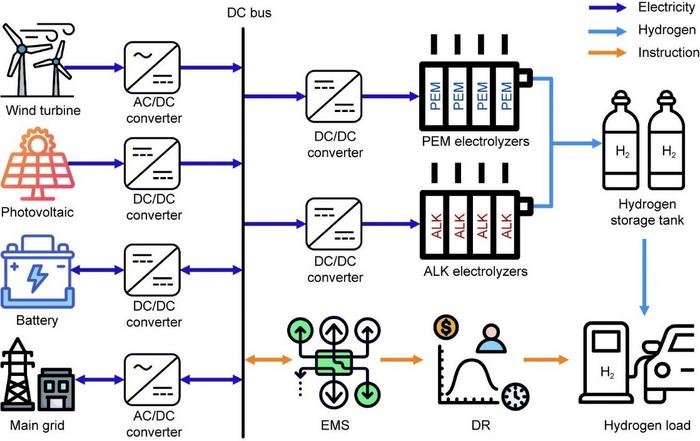
Tianjin University and the University of Surrey are joining forces on an exciting clean hydrogen project that aims to make renewable-powered hydrogen plants more economical and reliable. This collaboration is right in line with China’s ongoing efforts to build its hydrogen infrastructure. They’re diving into a real-world challenge by using a multi-timescale rolling optimization framework for hybrid alkaline–proton exchange membrane (ALK/PEM) electrolyzers. The goal? It’s both straightforward and impactful: bring together local renewable expertise, cutting-edge forecasting techniques, and flexible demand response to cut production costs, enhance renewable energy use, and create clean energy jobs in Hubei Province.
The idea is simple but powerful
At the core of this project is the brilliant synergy between two types of electrolyzer technologies. On one hand, alkaline electrolyzers can churn out hydrogen at a large scale and lower cost; however, they need more time to start up and aren’t as flexible when it comes to power changes. On the other hand, PEM electrolyzers can quickly adapt to power fluctuations and produce high-purity hydrogen, but they come with a heftier price tag. By cleverly coordinating five 37 MW alkaline units with three 10 MW PEM units in a unified control system, they’re effectively harnessing the strengths of both technologies to produce stable, cost-effective hydrogen straight from wind and solar energy.
How Alkaline and PEM Electrolyzers Work
Let’s break this down a bit. An alkaline water electrolyzer essentially splits water into hydrogen and oxygen using a liquid potassium hydroxide solution along with nickel electrodes. It’s a tried-and-true method that’s low-cost and great for steady operation, but it’s not the fastest thing around. Meanwhile, a PEM electrolyzer operates using a solid polymer membrane to move protons and create high-purity hydrogen at elevated pressures. It can adjust its output within minutes, making it perfect for handling those ups and downs that come with wind and solar energy. Together, in a hybrid setup, the alkaline units provide that steady stream while PEM units step in to manage any short-term peaks and troughs, keeping everything running smoothly.
Multi-Timescale Scheduling for Better Performance
The team really put this framework to the test with a 200 MW wind farm and a 110 MW photovoltaic plant in Macheng, Hubei Province. They created a day-ahead schedule with one-hour resolution to maximize net revenue by weighing hydrogen sales, grid-trading income, operational costs, and startup penalties. Then, they do 15-minute rolling updates throughout the day to adapt to weather changes and shifts in demand, helping to minimize unnecessary start-stop cycles. This two-stage approach keeps the alkaline systems running steadily while the PEM stacks help smooth out any volatility, achieving a remarkable execution rate of over 96% for planned hydrogen output—even when clouds roll in or the wind gets gusty.
Joint Wind–Solar Forecasting with Machine Learning
Getting accurate renewable forecasts is crucial for effective scheduling. The partners developed a nifty model called CNN–BiLSTM–Attention that digs into key indicators like wind speed, solar irradiance, and temperature. The convolutional layers capture spatial patterns, the bidirectional LSTM grasps time-dependencies, and an attention mechanism picks out the most relevant data. By filtering out extraneous information, the model enhances accuracy and feeds reliable forecasts straight into the optimization engine. All of this is grounded in local meteorological expertise, providing a smarter way to operate hydrogen plants.
Flexible Hydrogen Demand Response
To keep hydrogen production in line with renewable energy availability, the project incorporates price-based and incentive-based demand response strategies. When wind and solar output is high, hydrogen prices dip to encourage industries or refueling stations to buy more. Conversely, during lean times, prices rise, and select users get compensated to scale back their consumption. Using elasticity matrices, they convert price signals into demand adjustments, allowing the optimizer to synchronize supply and demand effortlessly. Simulations suggest that this approach can nearly double grid trading income by using surplus green power rather than dumping it at low rates.
Environmental and Economic Impact
By optimizing renewable energy use and minimizing curtailment, this framework effectively reduces lifecycle emissions, aligning nicely with carbon neutrality goals. In tests, the system captured up to 98% of theoretical profit during calm conditions while still maintaining solid earnings in volatile weather. On the economic side, local production of control hardware and software is generating jobs in Macheng and Tianjin, which bolsters regional clean-tech supply chains. Plus, transparent performance data and revenue projections contribute to making hydrogen projects more appealing to investors by reducing their risk.
Made in China, made for China’s future
This initiative is all about tapping into China-based R&D and manufacturing, which speeds up deployment and cuts costs. Everything from control algorithms to power electronics is developed locally, creating new skilled jobs and nurturing the hydrogen economy workforce. With regional partners providing training in digital energy management, from renewable forecasting to equipment operations, the project embodies the “made in China, made for China’s future” spirit—developing solutions that can be adapted to renewable energy centers across Asia.
Solving Problems Across Sectors
And it doesn’t stop at large plants; this hybrid electrolyzer model is versatile enough to fit microgrids, data centers, and heavy industry needs. Green data centers can utilize onsite hydrogen storage for backup power with zero emissions, while industrial parks can switch their operations to green hydrogen during off-peak hours. Transport fleets could even set up hydrogen refueling stations close to electrolyzer sites, lowering logistics costs. By creating a comprehensive hydrogen ecosystem—covering production, storage, and consumption—the project tackles diverse sector challenges with a single coordinated approach.
A Forward-Looking Collaboration
This partnership between Tianjin University and University of Surrey really showcases the global momentum behind green hydrogen initiatives. Researchers plan to delve even deeper into stochastic robust optimization for better handling uncertainties over longer time frames. As policymakers revise grid rules to incentivize electrolyzer flexibility and demand response, these advanced scheduling frameworks will be crucial for making hydrogen infrastructure not just viable, but scalable and compatible with the grid around the world.
By harnessing local renewable talent, state-of-the-art machine learning, and smart demand-side tools, this collaboration is paving the way for the next generation of green hydrogen projects. Its straightforward yet powerful approach to coordination and flexibility is setting a strong example for how we can decarbonize energy systems—not just today, but for decades ahead.