Green Hydrogen Production: India Records ₹279/kg Tender Price for Numaligarh Refinery Supply
India recorded a ₹279/kg ($2.89 ) lowest discovered green hydrogen tender price for 10,000 tpa supply to Numaligarh Refinery, which Minister Pralhad Joshi said signals progress under the National Green Hydrogen Mission.
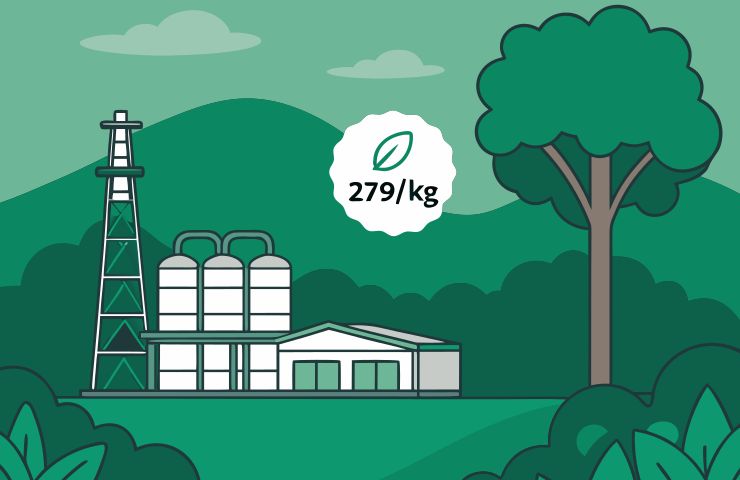
Pralhad Joshi, India’s Union Minister for New and Renewable Energy, announced a lowest discovered tender price of ₹279 / $2.89 per kilogram for green hydrogen in a procurement linked to the supply of 10,000 tonnes per year to Numaligarh Refinery in Assam, according to his video message at S&P Global Energy’s Horizons Clean Energy Expansion India 2026 conference and a Press Information Bureau release. The disclosed price has featured prominently in recent hydrogen energy news, highlighting the pace of cost reduction in green hydrogen production.
Bloomberg and The Economic Times reported that the Numaligarh Refinery Limited tender attracted nine bidders and that the awardee was not disclosed in those independent accounts. Trade-publication reports later named NeuEN Green Energy, a joint venture by Bharat Petroleum Corporation Limited and Sembcorp Industries, but that identification remains unverified.
Hydrogen Production Methods
Green hydrogen is produced by water electrolysis powered by renewable electricity, which splits water into hydrogen and oxygen with minimal direct carbon emissions. Production costs depend on electricity pricing, electrolyser capital expenditure, utilisation rates, water treatment, compression, hydrogen storage and transport infrastructure, industry sources note. India’s Green Hydrogen Certification framework, issued by the Ministry of New and Renewable Energy, defines qualifying lifecycle emissions thresholds to ensure transparency.
Electrolyser Technologies
- Alkaline electrolysers use a liquid hydroxide electrolyte and are valued for mature manufacturing supply chains and proven large-scale operation.
- Proton-exchange membrane electrolysers (PEM) employ a solid polymer membrane, offer rapid response to variable renewable power, and are compact, though they rely on costlier materials.
National Green Hydrogen Mission
The tender outcome underscores progress under the National Green Hydrogen Mission, India’s policy framework aiming to build at least 5 million tonnes per annum of green-hydrogen production by 2030. Union Minister Joshi stated that incentives awarded to date include support for roughly 862,000 tonnes per annum of green hydrogen capacity and 3,000 MW per annum of domestic electrolyser manufacturing under the Strategic Interventions for Green Hydrogen Transition programme. That support, he said, is intended to stimulate both supply-side manufacturing and early demand for clean hydrogen in industry.
Assam’s Strategic Role
Assam, a northeastern state with an existing petroleum-refining cluster, hosts the Numaligarh Refinery near major river systems, according to the 2011 Census of India. Placing production near an established refinery can reduce transport distances and make use of some existing logistics. Analysts nevertheless warn that water availability and environmental safeguards will require careful management in a region noted for sensitive ecosystems.
Green Ammonia Pricing
In the same announcement, Union Minister Joshi cited a lowest discovered price of ₹49.75 per kilogram for green ammonia, a hydrogen derivative used in fertiliser production and as an energy carrier. Like the hydrogen tender, the ammonia bid forms part of public procurement aimed at creating early markets under the National Green Hydrogen Mission. Public tenders of this kind are designed to signal demand and to help establish reference prices for nascent supply chains.
Financial and Infrastructure Implications
Securing stable pricing helps pave the way for future hydrogen project financing, including structured clean hydrogen offtake agreements and green bonds, market observers say. Green hydrogen projects require significant upfront investments in electrolysis equipment, renewable power integration, compression, hydrogen storage and transport infrastructure. A clear, replicable price trajectory supports investor confidence in hydrogen infrastructure across industrial hubs, provided tenders can be executed in a transparent, bankable manner.
Policy Mechanisms and Incentives
The Strategic Interventions for Green Hydrogen Transition programme under the National Green Hydrogen Mission provides two main streams of support: incentives for electrolyser manufacturing and production subsidies for green hydrogen. Union Minister Joshi also noted a mission outlay of ₹19,744 crore, which funds pilot projects, research and development, certification rule-making and demand-creation initiatives in sectors like mobility, steel and refineries. Those resources aim to lower early-stage technology and market risks so private capital can follow.
Environmental and Regulatory Considerations
Green hydrogen production demands treated water and continuous renewable power, raising questions about resource allocation in water-stressed areas and grid integration. India’s Green Hydrogen Certification framework sets lifecycle emissions limits, but industry groups point to the need for international alignment on additionality, temporal matching of renewables and chain-of-custody verification to facilitate exports. Addressing those issues will be important if production is intended to serve both domestic and overseas markets.
Comparing Cost Estimates
A report by the Institute for Energy Economics and Financial Analysis and JMK Research & Analytics modelled that Indian green hydrogen costs could reach ₹260 to ₹310 per kilogram under favorable power tariffs and policy waivers. The ₹279/kg tender price fits within that range, lending credibility to those estimates, though the report warns that bankability, infrastructure gaps and demand certainty remain primary risks. In short: the price is consistent with modelling, but practical hurdles persist.
Broader Hydrogen Strategy
Union Minister Joshi identified electrolyser manufacturing, refinery demand, certification, mobility pilots, steel decarbonization and renewable-energy expansion as integral components of India’s hydrogen strategy, aiming to develop both domestic markets and export opportunities, according to his conference remarks. The approach bundles supply-side measures with targeted demand stimulation in heavy industries that stand to benefit most from low-carbon hydrogen.
Key Takeaways
- The ₹279/kg tender price for 10,000 tpa to Numaligarh Refinery indicates competitive interest in clean hydrogen offtake agreements, market analysts say.
- Incentives for approximately 862,000 tpa of green hydrogen capacity and 3,000 MW/year of domestic electrolyser manufacturing have been awarded under the mission to date, as reported by Union Minister Joshi.
- While performance risks and subsidy impacts remain, repeatable tender structures could strengthen India’s position in global hydrogen energy news and attract project financing.
Price Signal vs. Unsubsidised Cost
While the ₹279/kg figure presents an observable market signal, analysts from the Institute for Energy Economics and Financial Analysis and JMK Research & Analytics warn that tender prices may reflect subsidies, transmission waivers, tax concessions or site-specific power costs. Such factors mean the bid should not be interpreted as proof that all Indian green hydrogen is globally competitive without support. Careful scrutiny of contract terms and incentive structures will be required to understand what the figure actually implies for unsubsidised cost curves.
Next Steps
What to watch next: finalisation of the supply contract, commissioning timelines, actual operating costs post-incentives and delivery performance. Observers will also track whether similar tender outcomes can be replicated for sectors like steel, fertilisers and clean ammonia without disproportionate public support. These indicators will determine whether the price signal converts into sustained commercial scale.
India’s ₹279/kg result marks a notable milestone in green hydrogen production and may help de-risk early projects, but its true impact will hinge on execution, scale-up and the emergence of parallel prices in future tenders. This tender price will be closely watched by hydrogen producers, financial institutions and policymakers as a gauge of India’s ability to scale green hydrogen production sustainably, according to industry analysts.