Spain Opens Public Consultation for Tivissa–Tarragona Hydrogen Infrastructure Segment
Spain’s BOE launched a 15-day public consultation for the 62 km Tivissa–Tarragona hydrogen pipeline segment, part of PCI 9.1.3, covering project authorization, public utility and environmental review.
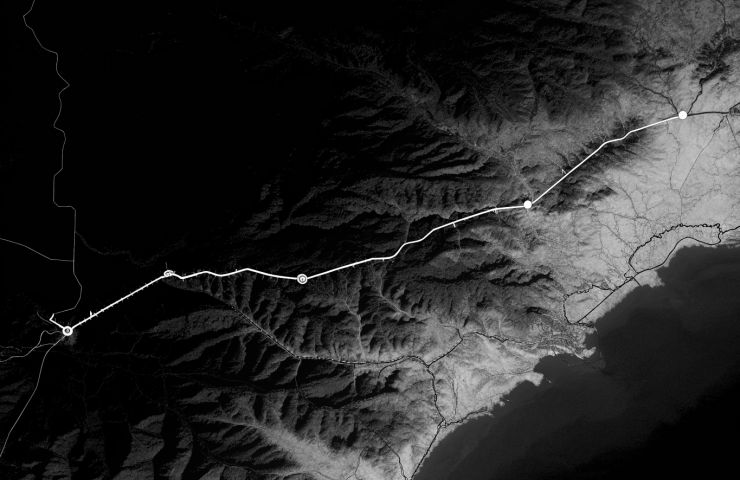
Spain's official gazette opened a public-information procedure for the Tivissa–Tarragona segment of the national hydrogen backbone on 28 September 2026, according to the BOE notice. Enagás Infraestructuras de Hidrógeno, S.L.U. has applied for administrative authorization, approval of the execution project and recognition of public utility for a proposed buried hydrogen transmission duct spanning 62.095 kilometres in Tarragona province.
Project overview
The BOE notice specifies a 62,095 metre length of DN900 (36 inch) carbon-steel pipeline manufactured under EN ISO 3183 PSL2, designed for a operating pressure of 100 bar gauge. The route begins at valve position HVE-017 in Móra la Nova and ends at valve position HVE-011 in Constantí, crossing 12 municipalities including Tivissa, Reus and Tarragona. Permanent easements of four metres wide, temporary construction occupation and access rights for maintenance are planned, the notice indicates.
Regulatory and permitting process
MITECO states the Ministry for the Ecological Transition and the Demographic Challenge is processing the Tivissa–Tarragona segment via an urgent administrative route that shortens deadlines by approximately 50% while preserving the environmental-impact assessment and public hearing. The BOE notice names the Directorate-General for Energy Policy and Mines as the authority for project authorization and the Directorate-General for Environmental Quality and Assessment for the environmental declaration.
The Subdelegation of the Government in Tarragona’s Industry and Energy Division published the notice on behalf of the state administration and opened a 15-day period for landowners and stakeholders to review project documents and submit allegations, according to the BOE notice.
European context and funding
The segment is part of PCI 9.1.3, Spain’s internal hydrogen infrastructure recognised as a Project of Common Interest by the European Commission. The Commission’s executive agency awarded 32.5 million euros under the Connecting Europe Facility Energy for the study phase of the first backbone axes, according to European Commission sources. PCI status links the route to the H2med corridor but does not replace national approvals.
Historical background
Spain’s 2020 Hydrogen Roadmap placed renewable hydrogen within its decarbonization and energy-security strategy, according to the European Hydrogen Observatory. The April 2023 Royal Decree-Law 8/2023 designated Enagás as provisional operator of the national hydrogen transmission network, Spanish government records report.
In July 2024, the Council of Ministers authorised Enagás Infraestructuras de Hidrógeno, S.L.U. to develop relevant European Projects of Common Interest, linking national priorities with EU infrastructure policy, government sources indicate.
Technology and engineering
The pipeline is intended as transmission infrastructure rather than a small-scale demonstration. It includes sectionalizing valves, metering and regulation installations, underground communications, electrical systems and cathodic protection to safeguard the buried steel against corrosion, the BOE notice details.
Renewable hydrogen concept
The pipeline is intended for renewable hydrogen, produced via water electrolysis powered by renewable electricity. An electrolyser applies voltage to water to separate hydrogen and oxygen; the hydrogen is then dried, conditioned, compressed and injected into the transmission system, project documents indicate. The overall climate benefit depends on the electricity source, equipment efficiency, construction impacts and actual displacement of fossil-based hydrogen in industrial use.
How the pipeline works
Hydrogen enters the pipeline at controlled pressure and flows under a 100 bar gauge design. Compressors counteract friction and elevation losses, while valve positions allow isolation of line sections for maintenance or incident control. Metering units regulate flows to connected sites, according to project documents.
Compression stations and pressure management
Preliminary studies for the national backbone identify compression stations at Tivissa, Coreses (Zamora) and Villar de Arnedo (La Rioja). Tivissa is planned as the upstream station for this segment, Enagás indicates. Compressors use electricity, cooling systems and safety controls to increase hydrogen pressure before transmission.
Safety and monitoring systems
Remote-controlled sectionalizing valves can isolate segments to limit hydrogen release. Continuous monitoring systems collect pressure, flow and operational data. Cathodic protection applies electrical controls to reduce steel corrosion, while underground communications and electrical connections support integrity and safety, the BOE notice states.
Land and environmental considerations
The pipeline crosses agricultural land, wooded areas, roads, railways and watercourses in Tarragona province, affecting parcels dedicated to crops, olive groves and vineyards, the BOE lists. Enagás indicates temporary occupation and permanent easements of four metres, plus additional restrictions within ten metres of the pipe axis. Restoration measures and coordination with existing gas infrastructure are proposed.
Public participation process
The BOE notice makes project plans, parcel maps and the environmental-impact study available at the Subdelegation in Tarragona and in affected municipal offices. A 15-day period allows landowners and interested parties to review documents and submit allegations, which authorities must address in the final environmental declaration. The urgent procedure does not waive these requirements, according to MITECO.
Economic and environmental impacts
The BOE records a segment budget of 126,564,435 euros, while MITECO states that the first four nationally prioritised segments require approximately 389 million euros. Construction could generate contracts for civil works, steel, surveying and environmental restoration, although company-commissioned studies caution that employment and local economic benefits remain projections. Environmental effects such as excavation, soil disturbance, noise and dust during crossings of roads and watercourses will be mitigated through binding conditions set by the environmental declaration.
Strategic and market implications
By linking renewable-hydrogen production in the Ebro Valley and Levante axes with industrial consumers in Tarragona and the Barcelona energy hub, the segment is intended to support decarbonisation in chemical, refining and heavy transport sectors, according to Enagás. Beyond local linkages, this section forms part of a Catalan network envisioned to span 275 kilometres across three sections and 89 municipalities, connecting Tivissa with Barcelona and La Salzadella, its website reports. While the full Tivissa–Barcelona section covers 165 kilometres, the BOE notice pertains only to the 62.095 kilometre Tivissa–Tarragona portion.
Enagás reported a non-binding market consultation in 2023 involving 206 companies and 650 projects, indicating prospective production of around 2.5 million tonnes per year and demand of roughly 1 million tonnes per year by 2030. Company and government sources caution these figures are indicative rather than firm offtake agreements.
Budget and timeline
The segment’s budget is recorded at 126,564,435 euros in the BOE notice, with a planned delivery target of 2030 for the wider backbone, according to Enagás Infraestructuras de Hidrógeno. MITECO emphasises that this segment remains subject to environmental approval, administrative authorization and final investment decisions before any construction can begin.
Relation to H2med corridor
The Tivissa–Tarragona segment is intended to integrate with the Mediterranean hydrogen corridor known as H2med, which aims to transport renewable hydrogen between Spain and France. By linking to the Barcelona energy hub, the segment could enable export flows toward southern Europe, enhancing cross-border energy security and market integration, according to European Commission policy documents.
Next steps
After the 15-day consultation period, authorities will consider allegations, finalise the ordinary environmental-impact assessment and decide on project authorization, public-utility recognition and the environmental declaration. If approved, compulsory easements may be applied and construction could begin, but no construction or operation should be assumed until all permits are secured.