Green Hydrogen Production, Transport and Storage Link Ukraine to Central Europe
H2EU+Store brings together RAG Austria AG, Eco-Optima and key TSOs to produce RFNBO-compliant hydrogen in Western Ukraine, ship it through Ukraine, Slovakia and Austria, and store it in underground reservoirs, targeting a €500 million Phase 1 approval by 2028 and initial flows by 2029.
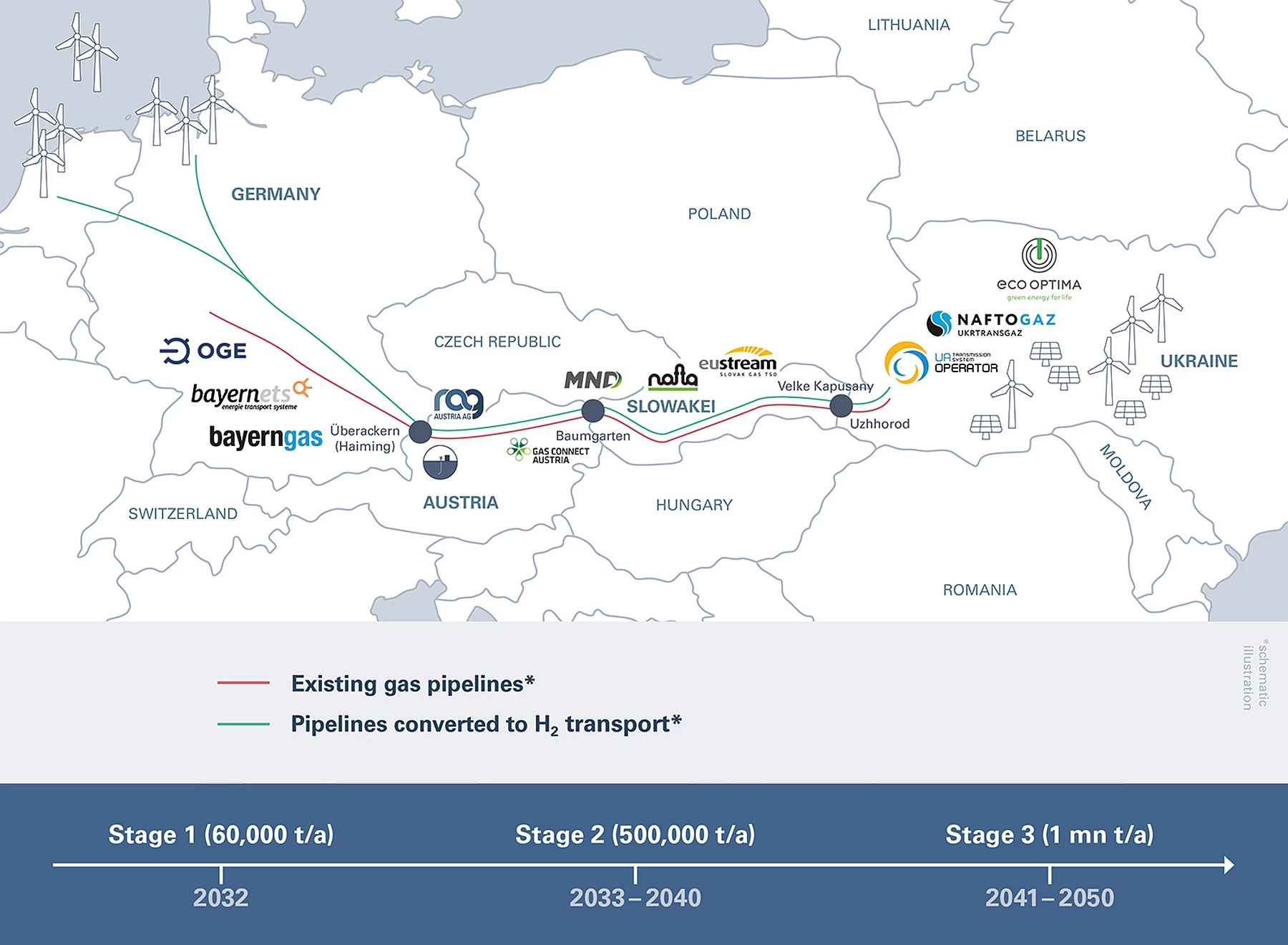
The H2EU+Store partnership, spearheaded by RAG Austria AG and Eco-Optima LLC, is on a mission to produce green hydrogen in Western Ukraine and get it flowing through existing gas pipelines into Central Europe, all while storing it underground. Sounds ambitious, right? But that’s the goal—efficiently tackling energy demands while contributing to a cleaner future.
This consortium features national transmission operators, storage specialists, and energy developers from Austria, Germany, Slovakia, and Ukraine. They’re aiming for a green light on a first phase that’ll cost around half a billion euros by 2028, with plans to have an initial hydrogen blend up and running around 2029. Just think about the potential here!
Production Hubs in Western Ukraine
With its fantastic solar irradiation and strong wind resources, Western Ukraine is shaping up to be a great site for large-scale electrolysis linked to new photovoltaic and wind parks. Eco-Optima LLC, which already holds the title for the biggest private wind and solar operator in the area, plans to expand its current sites near Lviv. This expansion will help deliver the kind of electricity needed to feed electrolysers that pump out compliant hydrogen known as Renewable Fuels of Non-Biological Origin. The plan hinges on additionality, ensuring that new renewable capacity serves the electrolysis directly and meets EU standards regarding green power.
You might wonder why they don’t just build those electrolysers in Central Europe. Well, cheaper land and a significant renewable potential in Ukraine help lower production costs. Plus, with existing grid and pipeline connections, hydrogen can be shipped west without the hassle of starting from scratch. A feasibility study expected to wrap up by mid-2025 will confirm that green hydrogen production in Western Ukraine can actually compete on price with other import options. Talk about a win-win!
The project’s roadmap spans three phases: kicking off with an initial target of 60,000 tonnes per year by 2030, scaling up to 500,000 tonnes by 2040, and reaching a whopping one million tonnes annually by 2050. Each phase is designed to unlock new renewable power, adapt midstream processes, and refine storage capabilities, gradually expanding the project's scope and complexity.
Transporting Green Molecules
Instead of creating new rights of way, H2EU+Store plans to blend hydrogen with the existing gas grid operated by the Gas Transmission System Operator of Ukraine (GTSOU). From there, they’ll move the blend through eustream across Slovakia, and onto Gas Connect Austria, bayernets GmbH, and Open Grid Europe, integrating it into German networks. Bayerngas GmbH and other traders are already lining up to find buyers for this low-carbon fuel in places like Bavaria and beyond.
To start off, technicians will limit hydrogen shares to levels that are safe for the current materials. But as the volumes increase, there’s a clear path to establish dedicated hydrogen streams. Modifications to compressor stations and valves to handle higher hydrogen concentrations will be rolled out in subsequent phases, utilizing insights from the broader European hydrogen backbone planning.
Seasonal Balancing Underground
Balancing the seasonal fluctuations between renewable output and industrial demand makes storage a big deal. Fortunately, RAG Austria AG, with its leading edge in technical underground storage, brings years of experience to the table with porous gas reservoirs. During pilot projects, their teams have experimented with injecting hydrogen into former gas fields, keeping a close eye on reservoir chemistry, microbial activity, and material compatibility.
By blending hydrogen into existing wells and seal-rock formations, the project is set to build strategic reserves in Austria and potentially in Slovak facilities run by NAFTA. When demand spikes or renewable generation dips, they’ll be ready to withdraw stored hydrogen, recompress it, and dispatch it as needed—simplifying supply and bolstering a climate-neutral energy system.
Financing and Industrial Synergies
Landing that first EUR 500 million investment decision by 2028 is a major goal for H2EU+Store. This funding will fuel solar farms, wind turbines, electrolysers, and midstream enhancements across four countries. For Ukraine, it’s a fresh export industry built around green hydrogen instead of electricity, which opens up new revenue avenues and tightens connections to European markets.
On the European front, gas traders are discussing offtake agreements that could mean long-term contracts for green hydrogen blended into gas networks. With lower production costs in Ukraine, green hydrogen could be offered at more competitive prices for industrial clusters in Austria and Germany. Plus, developers are looking into premium pricing for fully separated hydrogen, especially if higher purity standards or specific end-user tech demand it.
Local communities around Lviv and nearby regions stand to gain from new jobs tied to plant construction, operations, and maintenance. The rollout of electrolysis units will also promote technology transfer partnerships with European equipment manufacturers, fostering a regional supply chain for essential components like membranes, catalysts, and electrical balance-of-plant materials.
On the Ukrainian side, agreements inked with Naftogaz of Ukraine and its subsidiaries—Ukrtransgaz and Gas Transmission System Operator of Ukraine—highlight institutional support for reworking existing infrastructure. These deals set the stage for aligning Ukrainian regulations with EU hydrogen certification schemes, although the nitty-gritty details of implementation still need to be hammered out.
Integration and Geopolitical Impacts
The H2EU+Store project is a direct response to the EU’s ambitions under the Hydrogen Strategy and the REPowerEU plan to step up Renewable Fuels of Non-Biological Origin. By bringing Ukraine’s renewable potential into Central Europe’s hydrogen economy, the project strengthens energy ties with Ukraine and helps it integrate into EU markets. For policymakers, it represents a concrete example of post-war recovery and a shift away from reliance on fossil gas.
Of course, environmental assessments will need to consider how land use for solar and wind farms in Western Ukraine stacks up against the benefits of cutting carbon emissions. And while hydrogen leakage from pipelines or storage setups is generally minimal, rigorous monitoring will be key to minimizing any risks to air quality or climate integrity.
But the question remains: can this cross-border hydrogen chain navigate the regulatory and security challenges ahead? Aligning technical safety standards, tariff frameworks, and certification schemes across multiple jurisdictions will demand serious coordination. Not to mention, the possibility of intermittent conflict risks and changing EU hydrogen regulations could cause delays. Still, partners believe that leveraging existing pipeline and storage assets presents a lower-risk approach compared to building everything from scratch.
Looking Ahead
Could H2EU+Store set the stage for other cross-border value chains? If they manage to kick off green hydrogen flows as intended and storage strategies show their reliability, it could pave the way for similar partnerships linking abundant renewable sources in Ukraine, North Africa, or the Middle East with demand centers in Europe. Success in this venture could spark broader investments in hydrogen infrastructure and reduce costs for everything from electrolysis to pipeline conversion and underground storage.
For now, all eyes will be on the Phase 1 approval process, ongoing construction in Ukraine, and pilot injections in Austria. The coming years filled with collaboration, regulatory negotiations, and technical tweaks will be crucial to see if green hydrogen can seamlessly travel from the sun-soaked and wind-blessed fields of Lviv right to industrial consumers in Bavaria—bridging distance, geology, and geopolitics for a cleaner energy future.