Honda Unveils CR-V e:FCEV: Fuel Cell Technology Meets Plug-in Hybrid Flexibility in 2024
Honda unveils the CR-V e:FCEV for 2024 — a hydrogen fuel cell electric vehicle with plug-in charging flexibility. Co-developed with GM, it aims to overcome infrastructure challenges and boost consumer adoption.
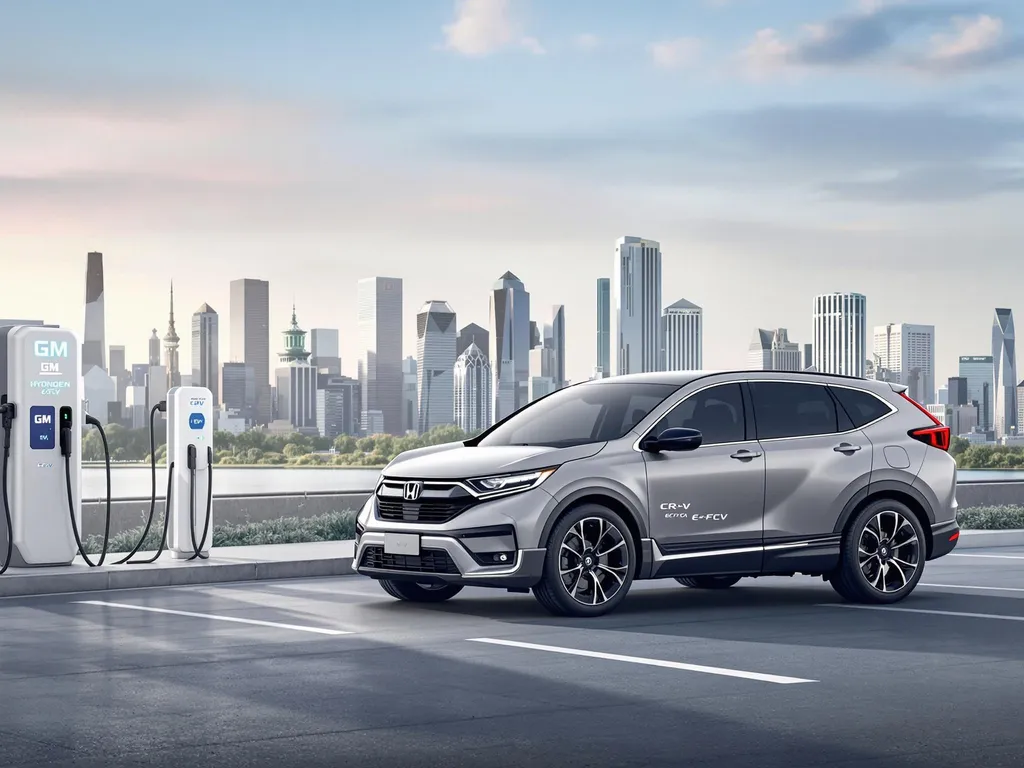
Honda Blends Fuel Cell Innovation with Plug-in Utility in New CR-V e:FCEV
Honda is rolling out an exciting new chapter in its hydrogen game with the debut of the 2024 CR-V e:FCEV — a unique plug-in hydrogen fuel cell electric vehicle (FCEV) that’s the first of its kind in the U.S. This new crossover is doing something clever. It combines the long-range benefits of a hydrogen-powered fuel cell system with the everyday convenience of battery-based plug-in charging. Translation? More flexibility for drivers and fewer headaches over where to fill up.
This launch is more than just a new SUV. It’s a statement of intent from Honda — a bold move on its journey toward sustainable energy and industrial decarbonization. It shows the company still believes strongly in fuel cell technology as a real contender in the clean mobility space.
Behind the Tech: Strategic Collaboration and a Dual-Power Approach
The brains behind the CR-V e:FCEV pull from decades of Honda's experience in the fuel cell world — remember the FCX Clarity? They’ve leveled up with a brand-new, next-gen fuel cell system built in partnership with General Motors. Thanks to this collaboration, the fuel cells are now smaller, cheaper, and tougher — all key things needed to make hydrogen fuel cells more mainstream.
But the real standout feature? The plug-in functionality. Drivers can plug in at home or at public stations just like they would with a regular EV. This helps solve a major problem hydrogen cars have always had — not enough fueling infrastructure. It’s the best of both worlds: zip around on battery power for short trips and rely on hydrogen for longer hauls without the wait.
Why This Matters: A Shift Toward Versatile Clean Mobility
Let’s be honest — fuel cell technology has had a rough time breaking through, mostly because of the sparse hydrogen infrastructure. But Honda’s new approach with the CR-V e:FCEV could really move the needle. Can’t find a hydrogen station? No problem. Just plug in. That kind of flexibility could be a game-changer in places like California or Japan, where hydrogen refueling is still mostly limited to major metro areas.
At the same time, this move lines up perfectly with global climate goals. As more governments push harder on zero-emissions targets, automakers are under pressure to go all in on clean tech. Honda’s decision to fuse FCEV and BEV tech shows a smart, balanced strategy that might just catch the attention of policymakers and investors looking for serious, scalable sustainable energy solutions.
Honda Joins a Growing Field of Hybrid Hydrogen Solutions
Honda's not venturing into this hybridized hydrogen terrain alone. Toyota's doing something similar, playing with hydrogen combustion in the GR Yaris, while continuing to refine the Mirai. Hyundai is pushing ahead too, fielding its heavy-duty XCIENT Fuel Cell trucks and expanding hydrogen into its industrial offerings. Over in Germany, trains like the Coradia iLint are running on hydrogen with plug-in capability mixed in.
The message is clear: The future isn’t just hydrogen or electric — it’s smart combinations of both. Honda stepping into this space reinforces the idea that hybrid approaches might be the best way to get mainstream adoption rolling.
Impacts We Can Expect — From Supply Chains to Streets
In the short term, launching the CR-V e:FCEV is going to shake things up on two fronts — consumer perception and industry scaling. For buyers, ditching the fear of limited range makes a big difference. Meanwhile, on the manufacturing side, Honda’s deepening partnership with GM could kickstart mass production and cost drops on both sides of the Pacific.
Looking ahead, a growing number of dual-powered vehicles like this could trigger more urgency among lawmakers to build out hydrogen infrastructure — especially in transport-heavy areas like ports and distribution hubs. And for automakers lagging behind? This might be their wake-up call that embracing multiple technologies isn’t a sign of indecision — it’s just smart engineering.
Barriers Remain: Infrastructure and Cost
That said, there’s still a steep hill to climb. The U.S. is nowhere near having a coast-to-coast hydrogen refueling network. Most stations are bunched up in a few regions, making FCEVs tricky for a lot of people. And producing green hydrogen — the cleanest kind — is still pricey and not yet scaled up to where it needs to be.
Then there’s the sticker price. Honda hasn’t revealed how much the CR-V e:FCEV will cost yet, but historically, FCEVs haven’t been cheap — either to buy or maintain. The big unknown is whether consumers will see the plug-in backup as a compelling enough reason to give it a shot.
Where This Goes Next
The CR-V e:FCEV is expected to hit the streets in 2024, fresh off the line at Honda’s Performance Manufacturing Center in Ohio. It’s part of Honda’s bigger promise: achieve 100% carbon neutrality across its vehicles by 2050. Fuel cell technology — especially in versatile formats like this — is going to play a key role in meeting that ambitious goal.
There’s a lot riding on this launch. Will drivers get behind a dual-energy ride? Will it light a fire under hydrogen infrastructure investment? Could it push other manufacturers toward hybrid hydrogen setups? Time will tell — but one thing’s certain: with the CR-V e:FCEV, Honda is betting big that mixing technologies could be the spark that finally brings hydrogen fuel cells into the mainstream.
About the Company
Honda Motor Co., Ltd. has been turning heads in the auto world since 1948. From motorcycles to jet engines, the company’s engineering chops are legendary. Now, with the tide turning toward cleaner energy, Honda is pivoting fast — embracing battery EVs, fuel cell technology, and major collaborations with heavy hitters like General Motors and CATL. The mission? A cleaner, smarter, more sustainable future in motion.