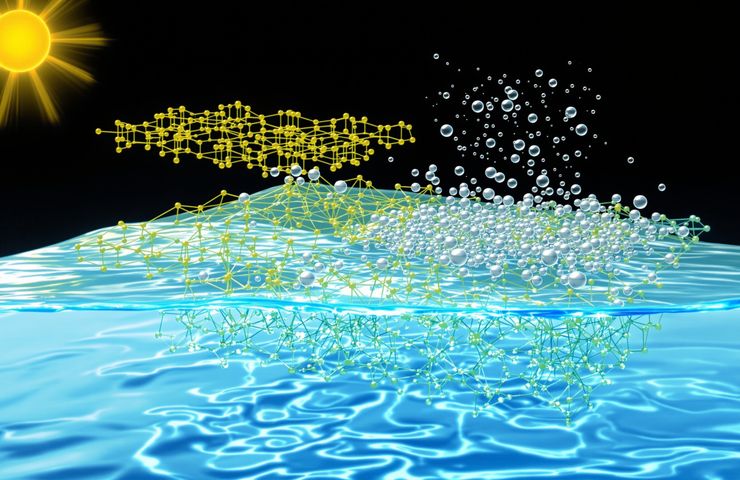
BIT’s New Acid–Base Interface Quadruples PEMFC Power
BIT researchers have created a proton-exchange membrane fuel cell embedding a Brønsted acid–Lewis base interface that boosts power density fourfold, improves platinum utilization and durability, and could reduce costs for heavy-duty transport and stationary applications.
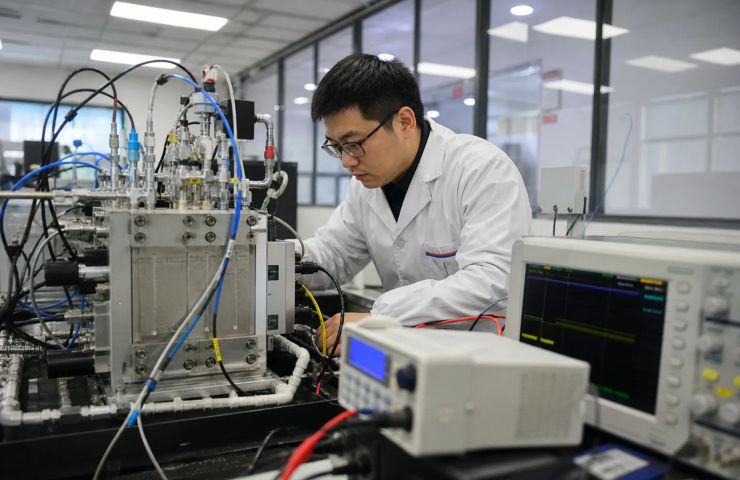
Researchers at the Beijing Institute of Technology in Beijing have just revealed an exciting new design for a proton-exchange membrane fuel cell (PEMFC) that packs a punch—offering about four times the power density of conventional cells while also significantly boosting platinum efficiency and longevity. The findings have been published in the journal Science, showcasing how a custom Brønsted acid–Lewis base interface built into the cathode catalyst layer creates a sort of proton “relay” network. This network helps speed up proton transport and allows for higher current densities at practical voltages.
This breakthrough tackles a well-known issue in fuel cell tech: sluggish proton movement through the dense ionomer films found in the catalyst layer. In traditional PEMFCs, engineers often resort to cranking up platinum loading to deal with the slow transport of protons or oxygen, which can really drive up both costs and weight. But with this new design, they’ve created a smart interface that introduces a mix of acidic and basic sites right next to the platinum nanoparticles. By doing this, they’ve built a sort of stepping-stone pathway for protons, which lowers the energy barrier and optimizes the use of those precious metal catalysts in laboratory conditions.
Acid–Base Relay for Proton Transport
To break it down further, the Brønsted acid spots on the interface donate protons, while nearby Lewis base sites help stabilize and coordinate them. This lets protons hop across several intermediate points, rather than forcing their way straight through a thick polymer film. The results have been impressive: this relay system has increased proton diffusion by roughly ten times and boosted proton conductivity in the catalyst layer by a factor of 6.5, as per the published figures. Essentially, the activation energy needed for proton movement has been reduced by more than half, leading to peak power densities hitting nearly 0.75 W/cm² at 0.7 V—around four times that of standard electrode setups.
On the durability side, lab tests have shown promising results as well. After going through accelerated stress tests over 30,000 cycles, the new setup maintained about 63% of its initial power. In comparison, a conventional ionomer-wrapped catalyst layer retains only about 30%. Plus, the platinum mass activity skyrocketed to around 6.9 kW per gram, getting close to the targets set by agencies like the U.S. Department of Energy for fuel cell vehicles that are cost-competitive. These improvements with lower platinum loading hint that the new interface could also make fuel cell stacks smaller and lighter—all without sacrificing efficiency or lifespan.
Implications for Heavy-Duty Vehicles and Infrastructure
For heavy-duty trucks, buses, aerospace, and backup power systems, cutting down size and weight is key. Being able to pump out high power density while using less catalyst material could bring down system costs and simplify packaging. When you pair this with green hydrogen production from renewable sources, it aligns perfectly with China’s ambitious hydrogen strategy, which aims to deploy fuel-cell vehicles in demo city clusters and expand refueling networks nationwide. Smaller and lighter stacks can also ease issues with thermal management and the balance of plant requirements, making it easier to adopt this technology in long-haul transport, where quick refueling and range are top priorities compared to slow battery charging.
Li Jie, an assistant professor and one of the lead authors, points out that while their current lab synthesis yields are modest—about 100 grams of composite material every three days, which is enough for a handful of 100 kW-class stacks—they do have plans to incorporate this interface into larger prototypes. The team is now focused on translating these cell-level advancements into full-stack performance, optimizing the electrode coating processes for roll-to-roll manufacturing, and checking real-world durability under different load cycles and air contaminants.
China’s Hydrogen Push and Global R&D Landscape
China has been pouring resources into hydrogen infrastructure, electrolyzer production, and fuel cell research and development since its early space program days, with significant initiatives coming from the 863 and 973 plans. Their Medium- and Long-Term Hydrogen Industry Development Plan aims for tens of thousands of fuel cell vehicles on the road by 2025 and beyond. Recently, BIT has carved out a niche as a leader in high-power PEMFC research, alongside other institutions working to overcome the cost, durability, and mass transport challenges that have been holding the industry back. Globally, other teams are exploring platinum-free catalysts and ultra-thin membranes, but this acid–base relay approach offers a complementary route: maximizing platinum efficiency instead of ditching it altogether.
Meanwhile, parallel efforts at various universities across Europe and North America have achieved steady improvements in volumetric power density or high-temperature membranes, but scaling up these innovative electrode chemistries remains a shared hurdle. The BIT interface effectively demonstrates the importance of interface engineering at the nanoscale—a lesson that could extend to other electrochemical systems, like electrolyzers and redox-flow batteries. If they can manage to scale up their lab successes to industrial levels through roll-to-roll coating, manufacturers may just have to rethink their production strategies.
Looking Ahead
To really make a mark, real-world validations are critical. The new design needs to be tested under dynamic driving conditions, exposed to air impurities, and go through long-term durability tests. This could pave the way for industry partnerships to bring this interface into commercial stacks, particularly for heavy trucks and bus fleets in the short term. Policymakers and fleet operators will be keeping a close eye on things: if this innovation can trim down platinum content to below 15 g per 100 kW stack while maintaining performance, fuel cell system costs could finally meet the double-digit dollars-per-kW targets that global energy agencies have been advocating for.
Improving fuel cell efficiency also feeds into broader decarbonization goals, offering a zero-emissions alternative for applications where battery-electric tech struggles to keep up. Higher-power, lower-cost stacks could also make hydrogen data centers and stationary backup systems more compact and reliable. On the regulatory side, advancements like this might influence procurement standards and subsidies, especially in regions that offer incentives based on stack power density or platinum usage.
In the big picture, the BIT acid–base interface marks an important advancement toward unlocking the full potential of fuel cell technology. By engineering proton transport pathways right at the catalyst boundary, the researchers are paving the way for high-power, low-platinum PEMFCs that could redefine heavy-duty transport, aerospace power systems, and stationary energy backup. The next few months will be crucial to see if this concept can withstand the challenges of scaling up—one thing's for sure, though: it’s a bright signal for ongoing innovation in the hydrogen economy.