California’s FCV Vanguard and Antwerp’s Hydrotug 1 push hydrogen harbor craft forward
Two pilot projects in California and Antwerp demonstrate that hydrogen fuel cells and dual-fuel combustion can power harbor vessels with zero tailpipe emissions and competitive efficiency.
Harbor vessels—like tugs, pilot boats, and fast-response craft—are the hidden heroes of global trade. But let’s be honest, those old diesel engines leave quite the mess, especially in waterfront communities. Thankfully, some exciting trials are showing promise. Take Zero Emission Industries’ FCV Vanguard in California and the Port of Antwerp-Bruges’ Hydrotug 1, for instance. They’re proving that hydrogen fuel cells and hydrogen combustion can keep up with the demanding needs of quick marine craft, as long as we set up the right hydrogen infrastructure and safety protocols.
In California, the FCV Vanguard is leading the charge, thanks to nearly $2 million in support from the California Energy Commission. They revamped a 27-foot boat to run on a hydrogen-battery-electric system. So, what’s under the hood? It features two nifty 80 kW PEM fuel cell modules borrowed from automotive tech, a 23 kWh marine-grade lithium-ion battery, and a powerful electric motor hooked up to the original sterndrive. The boat stores about 9.8 kg of hydrogen at a pressure of 700 bar while using a Mobile Refueling Truck (MRT), Fuel Interface Box (FIB), and an Emergency Fuel Tank (EFT) to fill up when necessary. In over 80 hours on the water in San Francisco Bay, this vessel traveled 217 nautical miles, used 63.4 kg of hydrogen, and topped off with an overall efficiency of around 35%. That’s not too shabby!
These trials highlight a vital question: can clean hydrogen really handle the tough demands of harbor craft? U.S. studies have long pointed out that diesel-powered vessels contribute significantly to NOx emissions, particulate matter, and greenhouse gases. Unfortunately, nearby communities—often low-income—are hit hardest when it comes to health impacts. We’ve seen some hydrogen ferries, like Sea Change in San Francisco Bay, successfully prove their value for mid-sized passenger vessels. And while Sandia National Laboratories’ SF-BREEZE study laid out what we need for safety and infrastructure, small, speedy craft like these hadn’t been tested—until now with the FCV Vanguard stepping up.
Technical Insights
If you’re curious about how hydrogen fuel cells work on a boat, the FCV Vanguard is a captivating example. It all starts with hydrogen that’s fed to the fuel cell anodes, where it splits over a platinum catalyst into protons and electrons. The protons travel through a PEM membrane, and the electrons take a path through an external circuit that leads to a DC-DC converter, then onto a high-voltage bus. Meanwhile, oxygen from the air combines at the cathode to create water, which is the only thing that comes out of this process! A liquid-to-liquid heat exchanger helps manage waste heat by transferring it into seawater. The 23 kWh battery keeps everything running smoothly during those moments of unexpected power need, allowing the fuel cells to do their best work—think around 47–48% efficiency when they’re in the sweet spot. During quick bursts of acceleration, the battery kicks in, supplying about 25% of the power, then charges back up during lighter loads with impressive round-trip efficiency above 92%.
On the storage front, the boat's hull houses type IV composite tanks holding hydrogen at 700 bar. Safety measures like sensors, forced ventilation, and pressure-release valves are in place to guard against leaks or overheating. The MRT is equipped to carry roughly 50 kg of hydrogen at a pressure of 950 bar and taps into public heavy-duty refueling stations, such as the one at the Port of Oakland. Thanks to the FIB’s automated leak-check and cascade-fill routines, crews can transfer about 4.6 kg in under 12 minutes while keeping tank temperatures below 85 °C. Talk about efficiency!
Parallel Approach in Europe
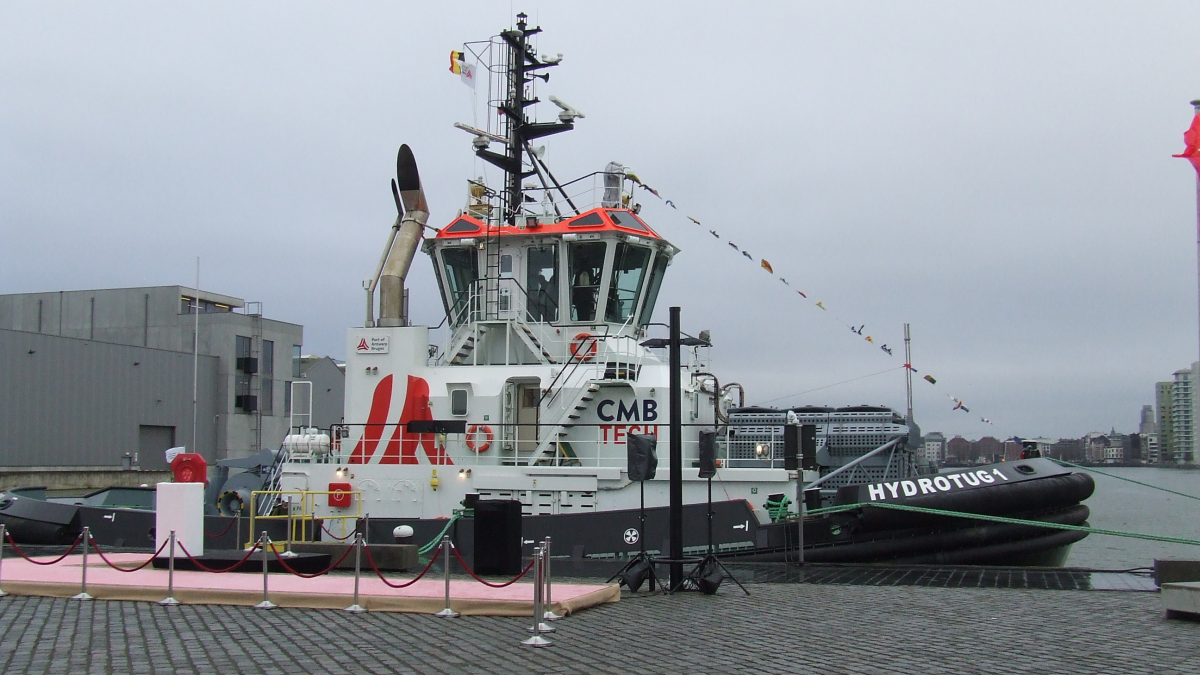
Across the pond, the Port of Antwerp-Bruges also jumped into the hydrogen game by teaming up with CMB.TECH for their new Hydrotug 1. They’re calling it the first hydrogen-fueled tugboat on the scene. Instead of fuel cells, this one uses dual-fuel BeHydro engines that can switch between hydrogen and traditional marine fuel. This way, they’re easing into the transition by building off existing engine logistics while cutting down on CO2, NOx, and particulates right at the docks. Hydrotug 1 is just one part of a larger three-vessel program focused on testing decarbonization technologies throughout Antwerp’s tugboat fleet. It’s a solid example of how major ports are exploring different ways to achieve zero emissions.
Business and Strategic Outlook
Looking at the numbers, independent techno-economic modeling done by the University of California, Irvine’s Advanced Power and Energy Program gives us some real insight into where things stand with these technologies. Right now, hydrogen-powered harbor craft have a higher total cost of ownership compared to their diesel cousins, mainly because fuel prices can be pretty steep—jumping from $16/kg to $36/kg during trials—and supply chains are still in the development phase. However, as electrolyzer and fuel cell costs are expected to drop and factoring in a non-zero social cost for carbon, we might just see costs balance out or even tilt in favor of hydrogen by around the mid-2030s. If California’s 3,310 commercial harbor vessels, along with parts of the smaller recreational fleet, made the switch to hydrogen, we could save over 2.6 million tonnes of CO2 annually while generating demand for about 114,000 tonnes of hydrogen each year. That scale could really help drive down costs and encourage more investment in hydrogen infrastructure for trucks, port equipment, and other harder-to-electrify options.
In practice, some hiccups have come up, too. During the demonstrations, a couple of hydrogen stations unexpectedly shut down, causing spot prices to surge over 100%. Operators found themselves depending heavily on the Port of Oakland’s heavy-duty station, which highlights the need for dedicated hydrogen refueling stations that can serve marine, trucking, and industrial fleets simultaneously. Making everything work seamlessly will require coordinated planning among ports, energy companies, and regulators to ensure a steady supply and stable prices.
Scaling Challenges and Supply Chains
Component availability is another sticking point. Marine-grade fuel cell packages and high-pressure storage modules haven’t reached the same level of accessibility as those in the automotive sector, which means delays and custom engineering can slow things down. There are efforts underway to standardize things—from hull-integrated tank designs to SAE J2600 refueling connectors—aimed at speeding up adoption. Ports interested in hydrogen are also looking into shared hydrogen storage hubs that would cater to vessels, terminal tractors, and local bus fleets all in one place.
Regulatory Momentum and Safety
These kinds of projects also have a lot to do with shaping the regulatory landscape. Zero Emission Industries is actively working with the U.S. Coast Guard to set safety standards for hydrogen vessels, while the California Energy Commission’s Gas Research and Development Program is diving into project management and public reporting. Over in Europe, port authorities are using these pilots to inform emissions regulations, shore power strategies, and possible incentives. The lack of any safety incidents during the FCV Vanguard’s testing phase—including just a few minor maintenance events—shows real promise for the safe integration of fuel cells and high-pressure storage in cruising conditions.
Looking Ahead
So, what’s next for hydrogen in harbor services? The focus is shifting from individual demos to operational fleets and standardized refueling networks. Stakeholders are looking at shared corridors that would connect ports, truck hubs, and industrial clusters, while manufacturers are tinkering with modular marine fuel cell packages to make integration a breeze. For operators, quieter decks, instant torque, and zero emissions are more than eye-catching features—they mean better working conditions for crews, reduced noise pollution, and potential operational benefits for patrol and pilot boats. While some are considering ammonia or methanol for future refueling, current trials firmly establish compressed green hydrogen as the most advanced zero-emission option for vessels under 30 meters, all due to its high energy density and quick refueling time. With costs expected to decrease and regulations tightening up, those initial trials in San Francisco Bay and Antwerp may just become the go-to model for zero-emission harbor craft around the globe.