PowerCell Wins Order to Power ECL’s Santa Clara AI Data Center
PowerCell Sweden AB won a SEK 30 million order to supply PS190 hydrogen fuel cells and software to ECL’s 35 MW CSC-1 AI data center in Santa Clara, marking its first commercial, multi-megawatt stationary order and laying the groundwork for up to 300 MW of future hydrogen capacity.
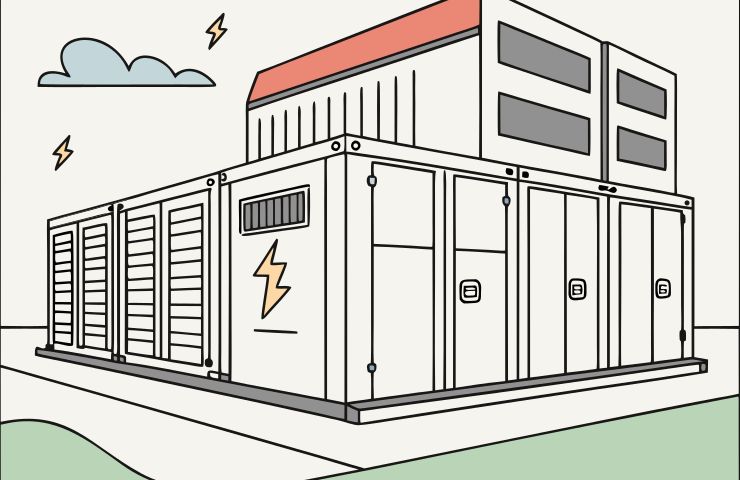
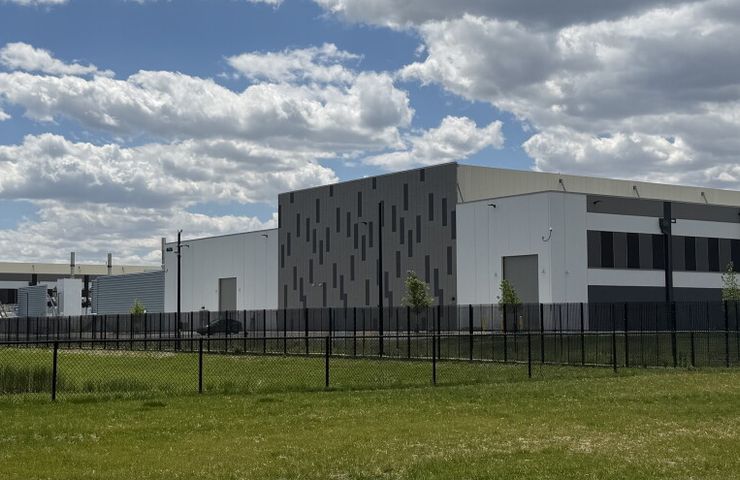
PowerCell Sweden AB recently secured a firm order worth about SEK 30 million to supply its PS190 hydrogen fuel cell systems and Distributed Master Controller software licenses to ECL for the new 35 MW CSC-1 AI data center campus in Santa Clara, California. Unlike traditional backup generators, these fuel cells are intended as part of the primary power infrastructure within ECL’s FlexGrid microgrid, alongside grid electricity, natural gas generation and battery storage. At the same time, the two companies signed a non-binding memorandum of understanding targeting roughly 300 MW of additional hydrogen fuel cell capacity for future data center sites.
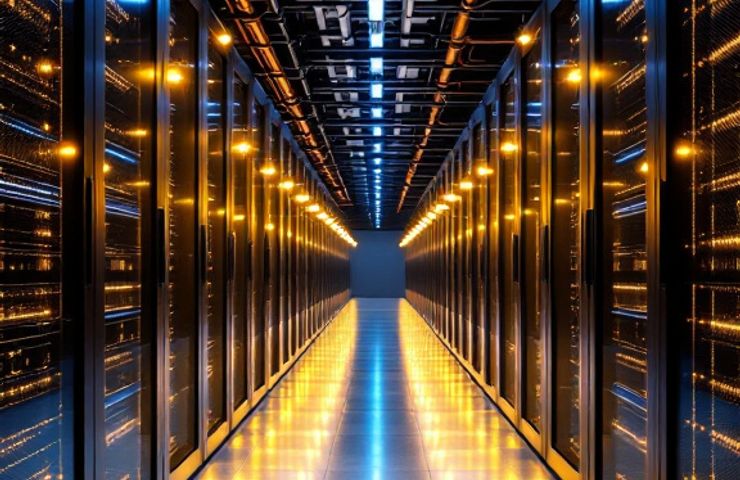
Santa Clara sits at the heart of Silicon Valley’s dense data center corridor, where skyrocketing demand for AI training and inference is putting severe pressure on local grids. With one of the highest commercial rents in the United States and ambitious decarbonization goals at the state level, the region is exploring alternative energy solutions that can deliver continuous, low-emission power without waiting on lengthy grid interconnections.
Background on ECL’s FlexGrid Architecture
ECL has built its reputation on modular, sustainable data center infrastructure powered by its proprietary FlexGrid microgrid design. FlexGrid dynamically blends multiple energy sources—on-grid electricity, hydrogen fuel cells, natural gas generators and battery arrays—to meet always-on, high-density loads. Real-time control software monitors server demand, grid prices and resource availability, dispatching each asset to optimize cost, reliability and carbon intensity. In off-grid mode, FlexGrid can sustain a facility entirely on hydrogen and gas generation with battery backup, a capability ECL has demonstrated at its Mountain View facility over the past two years.
PowerCell’s PS190 Fuel Cell Systems
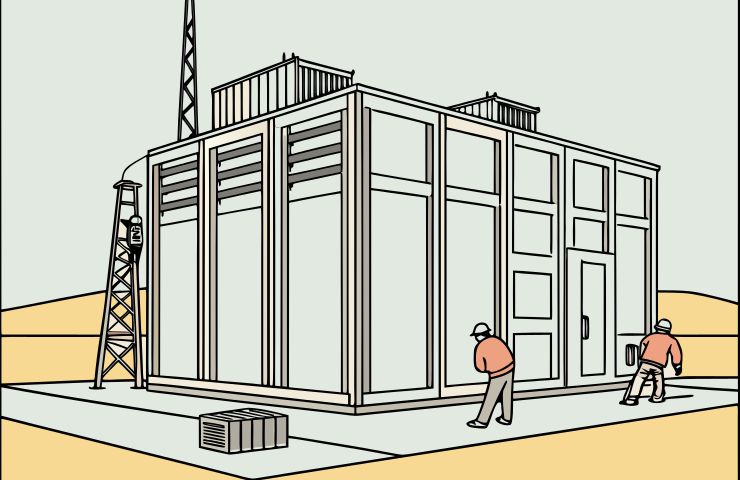
PowerCell develops proton exchange membrane (PEM) fuel cell stacks that convert hydrogen and oxygen into electricity, heat and water with no combustion. The PS190 is a containerized, multi-megawatt class system designed for stationary applications such as data centers. Hydrogen enters the anode, where a catalyst splits it into protons and electrons. The protons migrate through a polymer membrane while the electrons travel through an external circuit, providing direct current power before recombining with oxygen at the cathode to form water. Compared with diesel or gas generators, fuel cells offer higher efficiency at partial loads, very low local emissions and seamless, continuous operation.
This project marks one of the first commercial, multi-megawatt deployments of fuel cells as primary power rather than backup. It also reflects the wider debate over hydrogen fuel cell vs battery electric solutions for high-intensity computing: fuel cells deliver dispatchable, on-site generation that doesn’t rely solely on grid capacity, while battery systems excel at rapid response and energy shifting but depend on a stable grid or large renewable array for charging.
Integration with Distributed Master Controller
Alongside the PS190 units, PowerCell is supplying licenses for its Distributed Master Controller (DMC), a software layer that orchestrates multiple fuel cell modules in concert with higher-level microgrid managers. In the CSC-1 campus, the DMC links to ECL’s Lightning management system, receiving signals about load demand, grid status and battery state-of-charge. When AI racks ramp up, Lightning can call on the DMC to boost fuel cell output; if grid prices spike or a transmission constraint emerges, the system can shift more load onto hydrogen power. By providing software and lifecycle support, PowerCell aims to establish a recurring revenue stream beyond the initial hardware sale.
Strategic Milestone for Stationary Power
For PowerCell, this order represents its first commercial megawatt-scale contract in its Power Generation business, a segment it launched after years of focusing on transport applications like marine vessels and heavy-duty vehicles. Historically, hydrogen infrastructure announcements for data centers were largely pilots or bids; here, a clear order for about 5 MW of PS190 capacity demonstrates tangible progress in hydrogen infrastructure for digital facilities. The deal also highlights the role of industrial partners: German conglomerate Bosch, a major shareholder in PowerCell, brings manufacturing scale and after-sales service capabilities to meet data center reliability requirements in North America.
Environmental and Regulatory Context
Hydrogen fuel cells emit only water on site, offering zero local CO₂ and negligible pollutants compared with diesel backup units. However, the climate impact hinges on hydrogen production pathways. If sourced via renewable-powered electrolysis, it counts as green hydrogen production; if derived from natural gas without carbon capture, upstream emissions can offset on-site gains. California’s clean hydrogen incentives and decarbonization mandates aim to steer projects toward low-carbon supply, but developers must navigate evolving rules around lifecycle accounting and safety regulations for hydrogen storage and handling.
Looking Ahead
The non-binding MoU for roughly 300 MW of future capacity signals that ECL envisions hydrogen as a core element of its data center portfolio, including large off-grid sites like the planned 1 GW TerraSite-TX1 near Houston. Yet execution will depend on economics—fuel costs, capital expenses and grid alternatives—as well as operational learnings from CSC-1. Developers and cloud operators will watch closely to see if hydrogen fuel cells can scale reliably in a high-density AI environment and compete with diesel generators, reciprocating engines and emerging long-duration storage solutions.
Ultimately, CSC-1 and its associated agreements may prove a bellwether for whether hydrogen data centers can move from niche sustainability branding into mainstream digital infrastructure. If the PS190 systems meet expectations on uptime, efficiency and total cost of ownership, they could help reshape power strategies in capacity-constrained regions. Either way, this project underscores the growing intersection of AI-driven energy demand, industrial-scale hydrogen supply chains and the quest for cleaner, more resilient data center power.