Hydrogen Fuel Cells Power U.S. Ferry Revolution as Maritime Partners Backs Sea Change
Maritime Partners finalizes zero-emission ferry financing, giving SWITCH Maritime's hydrogen-powered ferry the financial lift needed to scale clean marine transport in U.S. cities.
The Maverick Analyst here — let’s dive right in. The U.S. is finally making big moves on cleaning up its ferry systems, and guess what’s steering the ship? Hydrogen fuel cells. Yep, we’re talking about real boats, running for real people, with zero emissions.
First-of-Its-Kind Deal Brings Hydrogen Ferry to Life
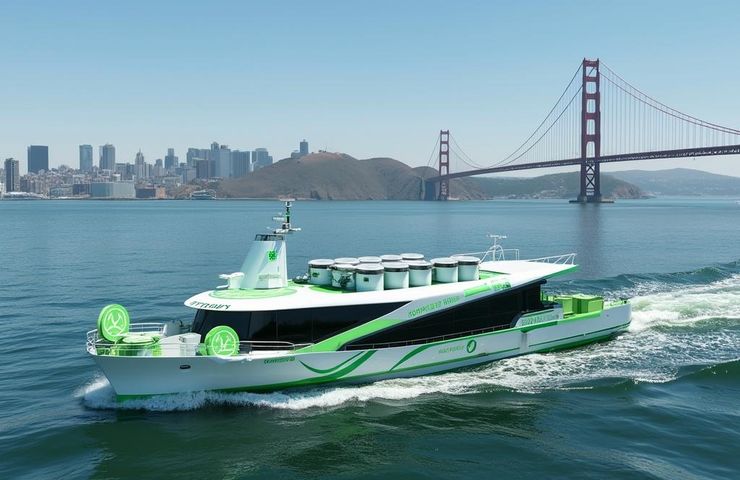
Maritime Partners LLC, a Gulf Coast player known for financing tank barges and tugboats, just made a bold pivot into clean tech. They’ve backed SWITCH Maritime’s Sea Change — the first hydrogen-powered, zero-emission commercial ferry operating in the U.S. Not just a prototype or a PR stunt. It’s sailing in the San Francisco Bay, right now.
How’d they pull it off? A classic sale-leaseback. SWITCH gets a cash boost, Maritime Partners gets a stake in the clean marine game. It’s a win-win — and it’s happening today. The vessel runs on hydrogen fuel cells supplied by Zero Emission Industries (ZEI) and fueled by green hydrogen produced through solar-powered electrolysis. In other words: no smoke, no smog, nothing dirty — just water coming out the tailpipe.
Bigger Than Just One Boat
This isn’t just another feel-good sustainability story. It’s a proof of concept for an industry that’s been stuck on diesel for decades. U.S. ferries? They’re some of the hardest nuts to crack when it comes to zero-emission technology. We're talking about aging boats, old financial models, and not a lot of appetite for risk. But this deal? It flips the playbook.
How the Tech Works
Here’s the 30-second lowdown on Sea Change: it carries its own hydrogen, which feeds into fuel cell technology that generates electricity and powers the propulsion system. The only byproduct? Water. No diesel fumes, no particulate pollution, no CO2. And since the hydrogen is produced using sunlight and electrolysis right in California, this is full-cycle clean energy.
When it’s time to refuel? No need for expensive shore-side stations. A mobile hydrogen truck brings the fuel straight to the dock.
Turning One Ferry into a Movement
The folks at SWITCH Maritime aren’t stopping here. According to public filings, they’re already designing bigger boats for cities like Seattle, Boston, and New York. Meanwhile, the strategic funding from Maritime Partners is a big signal to investors: these boats aren’t just politically correct — they’re financially viable and ready to roll.
And let’s call it like it is: Maritime Partners isn’t writing checks for charity. They're positioning themselves to dominate the hydrogen production and zero-emission vessel leasing space. They're betting on a future where clean, compliant ships are the standard — not the exception.
Why We Needed This Yesterday
America’s ferry fleet? Let’s be real — it’s old, polluting, and propped up by subsidies to keep it limping along. While places like Scandinavia have sprinted toward sustainable shipping, the U.S. has barely nudged its anchor. But Sea Change proves it’s possible to bring these systems into the 21st century, even in one of the slowest-moving sectors.
This kind of innovation didn’t come out of nowhere. The 2021 Infrastructure Investment and Jobs Act carved out federal funds for clean transit — including ferries. That opened the door. But what kicks it wide open? Deals like this. Smart financing, bold tech, and companies willing to be first out of the gate.
What’s at Stake (And What Gets in the Way)
Let’s talk upside: lower emissions in major port cities. Cleaner air. New jobs across the board — not just in engineering but in hydrogen logistics, vessel maintenance, and renewable infrastructure. It’s a blue-collar green revolution.
But there’s no sugar-coating the hurdles. Hydrogen still needs a better logistics network. Prices can spike. Ferry operators need serious retraining. And let’s not forget — U.S. maritime regulators are still figuring out how to permit and monitor hydrogen-powered tech. It’s a game of catch-up, and we’re in the early innings.
The Big Message
Don’t mistake this as just a Northern California pilot. This is a blueprint. One vessel like Sea Change paves the way for other types of craft — from RoPax ferries to harbor service boats and even offshore work vessels. The fact that private equity is getting behind this? That’s the real shift. Clean fuel isn’t just for climate conferences anymore — it’s for Wall Street, shipyards, and commuters alike.
Bringing It Home
Will we suddenly see fleets of zero-emission ferries coast to coast? Maybe not tomorrow. But the model is here. The fuel works. The financing works. And most important — there’s a boat in the water, not just a PowerPoint deck. That’s the kind of momentum decarbonization needs.
Keep your eyes on the Bay. That’s where the clean marine future is starting to surface.