OGE Opens Europe’s First Dedicated H₂ Pipeline Training Centre in Werne
Open Grid Europe has invested €10 million to launch the Werne H₂ pipeline training centre—a Europe-wide unique facility offering DVGW-certified practical and theoretical modules to upskill technicians and support the hydrogen infrastructure transition.
Open Grid Europe just kicked off an impressive initiative with its brand new H₂ pipeline training centre right at their Werne location, dropping around €10 million on what they’re calling a first for Europe. If you thought putting together hydrogen infrastructure was just about laying down pipelines and setting up electrolyzers, you might want to rethink that. This venture really highlights how crucial the human element is in all of this.
The Bold Move
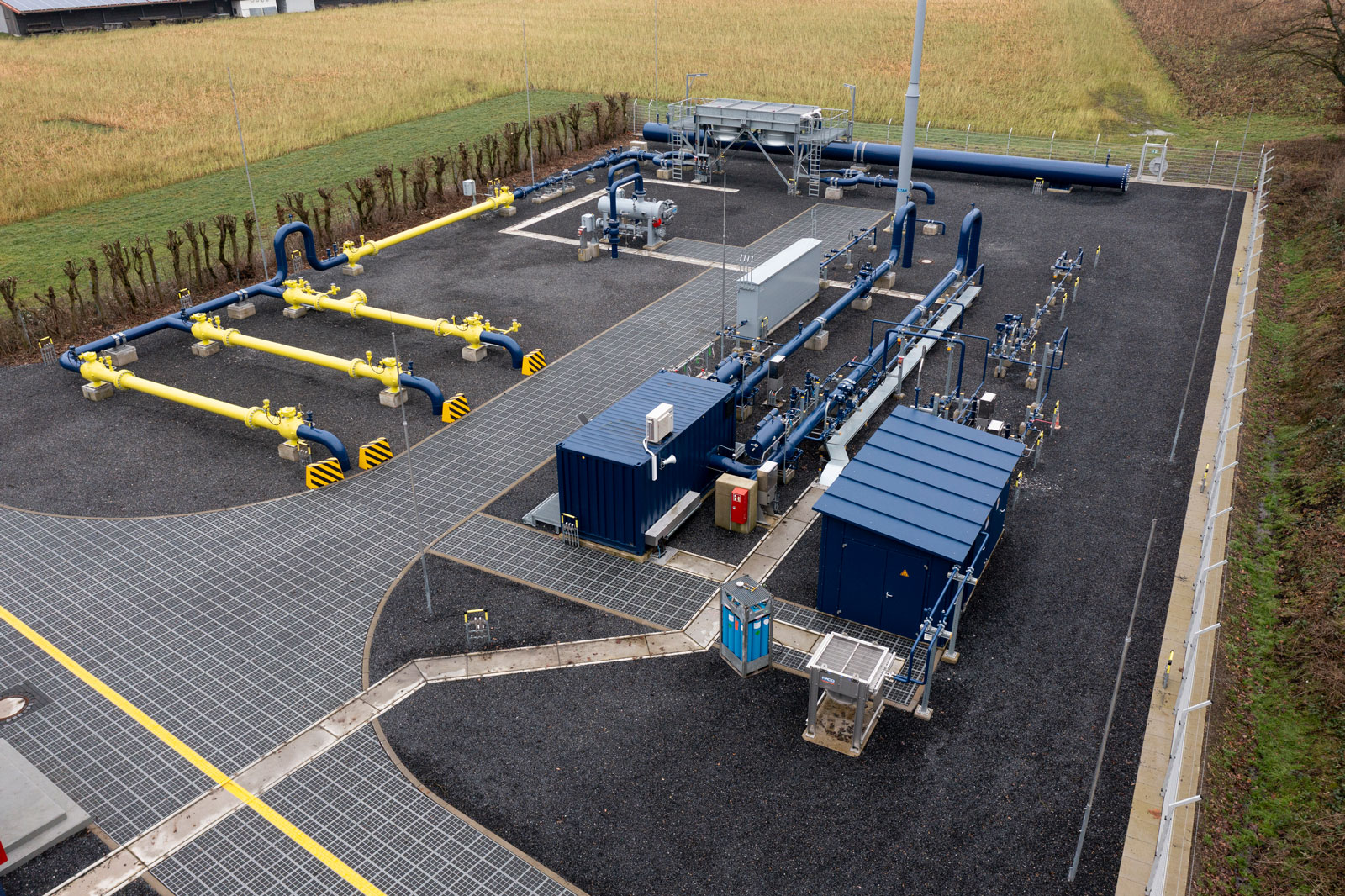
Germany's heavyweight in long-distance gas, Open Grid Europe, recently marked the launch of their H₂ training centre with some serious backing from the local government and industry buddies. Nestled next to an existing compressor station, this facility mimics a high-pressure hydrogen transmission pipeline inside a closed-loop hall. After a two-year journey, it opened its doors this summer, blending theoretical classrooms with a full-scale “H₂-Trainingsstrecke” track. Teaming up with the German Technical and Scientific Association for Gas and Water and the Gas- und Wärme-Institut Essen, OGE aims to equip around 500 employees, then bring in technicians and network operators from outside.
Under the Hood
At the heart of this centre is a looped steel pipeline decked out with shut-off valves, various fittings, ultrasound and turbine flow meters, filters, gas coolers, and process-engineering modules. Trainees will pump hydrogen from a tank on-site into the loop, crank up pressures that mimic live transmission lines, and then practice isolating parts, gradually bringing them down, swapping components out, and getting everything back up and running—all without messing with the live network.
The training program unfolds in two stages. First, participants dive into hydrogen basics in the classroom—think molecular diffusivity, material embrittlement, and the risks of leaks—while also getting familiar with DVGW’s technical codes under Germany’s regulatory framework. After that, it’s hands-on time on the “H₂-Trainingsstrecke.” Each exercise is DVGW-certified, which means they’ll walk away with credentials that align with national safety and quality standards.
But it’s not just about nuts and bolts; the centre packs in some serious tech, too. We’re talking infrared leak detection, gas sampling stations, controlled flaring procedures, and a SCADA-like interface. Instructors are on deck to track performance metrics as trainees run through bubble tests, emergency isolation drills, and safety scenarios, all under realistic conditions.
Strategy at Play
This isn’t just a fancy PR move; it’s a strategic play for industrial decarbonization. OGE has plans to adapt big parts of its existing network for green hydrogen transport, but getting there requires highly specialized skills. By launching this training hub and even renting slots to peers, OGE is managing its hiring risks while setting up a new revenue stream.
On a political level, this centre fits snugly into Germany’s broader national hydrogen strategy and aligns with North Rhine-Westphalia’s ambition to revamp its industrial heartland. Local leaders are already applauding the €10 million investment as a significant boost for the Ruhr’s economy, especially as it transitions out of coal.
And on the EU front, programs like the European Hydrogen Backbone need standardized training across the board. OGE’s Werne centre could become a gold standard, translating policy and technical guidelines into real-world skills for those who’ll be operating tomorrow's pipelines.
Maverick’s Take
Let’s be real here: one training facility won't fix Europe’s skills shortage. Sure, it's a solid starting point, but we’re going to need a whole lot more technicians as hydrogen corridors grow. Where’s the outreach to remote regions with mobile labs or the digital twins we should be using?
The DVGW certification is a strong badge of honor, but planting the program so firmly in rigid technical styles might push aside some of those nimble startups and quicker innovations. Real expertise often thrives in uncertainty—like unexpected soil shifts, temperature changes, and unpredictable flows. This training setup can't recreate every possible scenario out there.
That said, OGE has definitely set the bar high. If they start rolling out remote-access modules or collaborate with cross-border organizations, they could evolve from just an isolated training spot into a European hydrogen academy.
What’s Next?
Europe needs more of these hubs, not just a singular standout. Imagine if Dutch, French, and Belgian TSOs were sending teams to Werne, sharing instructors across borders under a unified certification scheme. Until that’s a reality, don’t expect a single training centre to do all the heavy lifting. Hydrogen infrastructure can only achieve climate goals if skilled hands are there to tighten those bolts and respond when alarms go off.
Keep an eye on competitors like Fluxys or Snam—they're likely to follow in OGE’s footsteps, and a pan-European training network could be on the horizon. The Werne centre is an exciting first step, but the real challenge lies in scaling up and ensuring interoperability.