South Korean Lawmakers Tour Hyundai’s Namyang Center to Boost Hydrogen Infrastructure and Vehicles
South Korean parliamentary hydrogen-policy forum members toured Hyundai’s Namyang centre to inspect hydrogen production, storage, refueling and fuel cell vehicle data. Hyundai highlighted over 2.3 billion kilometres of real-world driving data. Lawmakers pledged to fast-track the Hydrogen Business Act and Hydrogen City Act to secure stable policy and funding for hydrogen infrastructure.
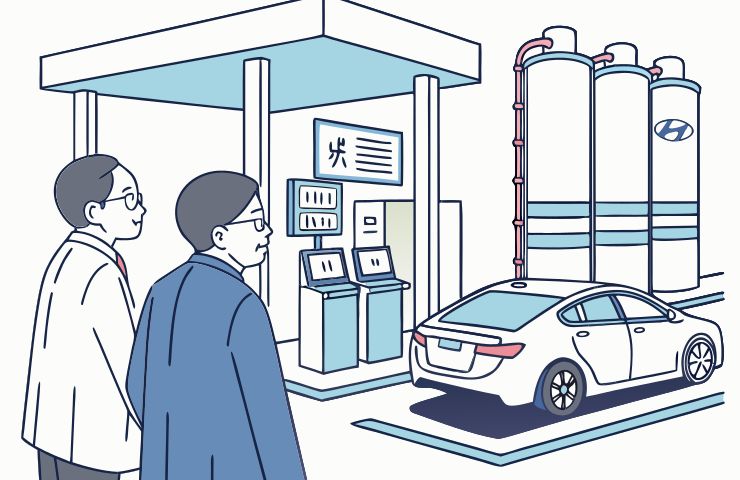
In recent hydrogen news, members of the National Assembly Hydrogen Economy Forum in South Korea toured Hyundai Motor Company and Kia’s Namyang Research Institute in Hwaseong, Gyeonggi Province. The delegation got a front-row view of hydrogen infrastructure in action, including hydrogen refueling stations, storage tanks and hydrogen production methods. They also reviewed the nation’s growing fleet of hydrogen vehicles and discussed policy steps to reinforce Korea’s role in the clean energy transition.
Lawmakers Assess Full Hydrogen Value Chain
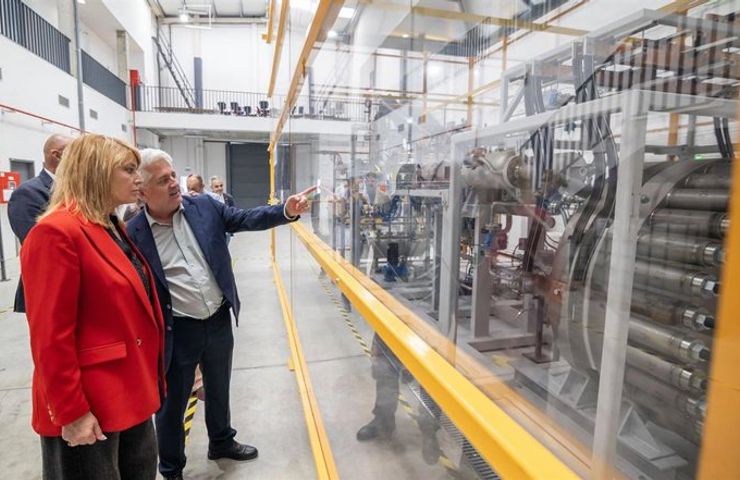
The visit gathered key stakeholders from industry and parliament. Co-chairs Lee Jong-bae and Jung Tae-ho led the forum’s delegation alongside representatives from the Korea Hydrogen Alliance and the Korea Hydrogen Fuel Cell Association. At a dedicated demonstration hall, attendees saw water electrolysis equipment that can split water into hydrogen and oxygen using renewable electricity. Engineers noted that when powered by low-carbon power, such systems can produce truly green hydrogen, offering a contrast to conventional blue hydrogen made from natural gas with carbon capture.
Delegates also examined high-pressure storage vessels and compressor units that feed hydrogen into on-site dispenser nozzles—critical elements of any ramped-up public network. Industry voices argued that expanding pipelines and distribution hubs will be vital to enable more widespread adoption of hydrogen cars and buses. Hwaseong’s industrial profile, with its large automotive R&D footprint, made the venue symbolic of how local supply chains for electrolyzers, pumps and storage could support domestic jobs and exports.
Hyundai’s Hydrogen Technology Showcase
At the heart of the tour was a state-of-the-art fuel cell stack laboratory. Hyundai engineers explained that the company’s research dates back to 1998, when it partnered on prototype development, then moved to in-house stack design, culminating in the world’s first mass-produced hydrogen fuel cell vehicle in 2013. Attendees saw a next-generation fuel cell module, where hydrogen reacts with oxygen across a polymer membrane to generate electricity, heat and water.
These stacks contain dozens of repeating membrane-electrode assemblies and are tested under rigorous cycling protocols in environmental chambers, replicating extreme heat and cold to assess durability. Demonstrators also highlighted ongoing work to shrink stack size and cut manufacturing costs—key factors in raising power density and lowering vehicle prices. A compact refueling dispenser on display cooled and compressed hydrogen before it enters a vehicle tank, illustrating the precision needed to meet safety standards. Hyundai further noted its fleet has logged over 2.3 billion kilometers of real-world driving data, which it uses as proof points in hydrogen fuel cell news.
Alongside fuel cell technology, the lab showcased integrated battery systems designed to smooth power delivery and recover energy through regenerative braking—essential controls for maintaining system longevity under dynamic driving cycles.
Policy Push for Business and City Legislation
Following the technical briefing, lawmakers outlined plans for two key bills: the Hydrogen Business Act and the Hydrogen City Act. These measures aim to create a stable legal framework, direct budget allocations toward refueling network expansion and offer tax incentives for equipment makers. Lee Jong-bae warned that Korea could fall behind if it hesitates on hydrogen policy, while Jung Tae-ho stressed that clear rules and long-term funding are essential to mobilize private capital.
On the industry side, Jang Jae-hoon, vice chairman of Hyundai Motor Group, underscored that technology breakthroughs must be matched by consistent policy. Kim Jae-hong of the Korea Hydrogen Alliance called for dedicated production subsidies, a national pipeline network and more hydrogen infrastructure grants to bring down costs and attract new participants. Under the draft Hydrogen City Act, local governments would be able to designate hydrogen hubs, coordinate safety regulations and partner with utilities for grid-linked electrolysis projects.
Forum co-chairs said they would fast-track hearings on both acts early next year, seeking to lock in multi-year budget lines and give industry the predictability needed for large-scale plant and station investments.
Challenges and Outlook
Despite these ambitions, scaling hydrogen faces economic and technical tests. Building a dense network of hydrogen refueling stations demands high upfront investment, and critics point to the superior energy efficiency of battery-electric charging. Supporters counter that fuel cell vehicles can refuel in minutes and cover longer distances, making them better suited to heavy-duty transport and urban fleets.
Questions over the carbon footprint of hydrogen production also linger. While green hydrogen from renewables offers a low-emission path, South Korea currently relies heavily on imported natural gas for steam methane reforming, yielding blue hydrogen with some residual emissions. The debate over green hydrogen vs blue hydrogen highlights trade-offs in supply security, cost and lifecycle climate impact.
Another open issue is how to balance grid demand when hydrogen production ramps up. Electrolyzers can act as flexible loads, soaking up surplus renewable power during off-peak hours—a factor that could link hydrogen to broader energy management strategies. But complex controls and smart metering remain areas for further research and collaboration.
Nevertheless, the forum visit sent a clear signal: a combination of cutting-edge R&D, accumulated hydrogen data and strong policy backing could help Korean firms build an exportable platform. As lawmakers and executives left the Namyang site, many agreed that hydrogen—alongside battery electrics—will form a diverse, resilient future for clean mobility.
Moving forward, the extent to which public-private cooperation and legislative clarity can overcome cost and infrastructure hurdles will determine if hydrogen takes its place alongside other zero-emission technologies. For now, South Korea looks to solidify a hybrid energy strategy by backing both hydrogen production and vehicle deployment as twin pillars of its clean energy transition.