Hydrogen production expansion unlikely to strain Europe’s freshwater supplies
A JRC study finds Europe’s planned hydrogen production will put limited pressure on most freshwater supplies, though Southern Europe faces local risks under pessimistic climate scenarios.
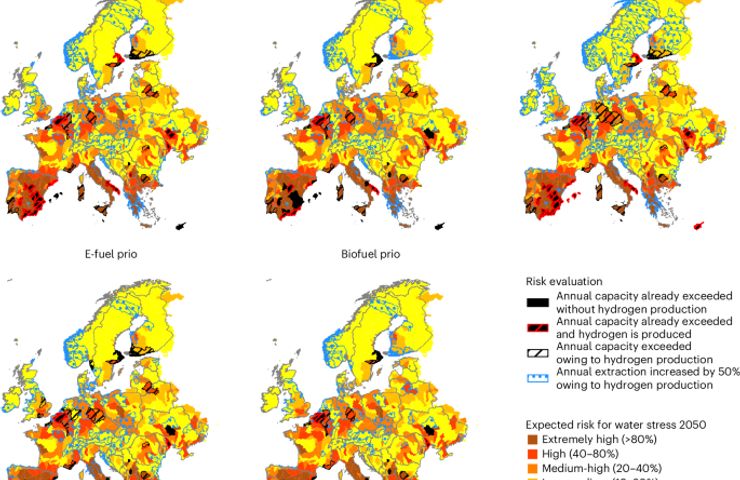
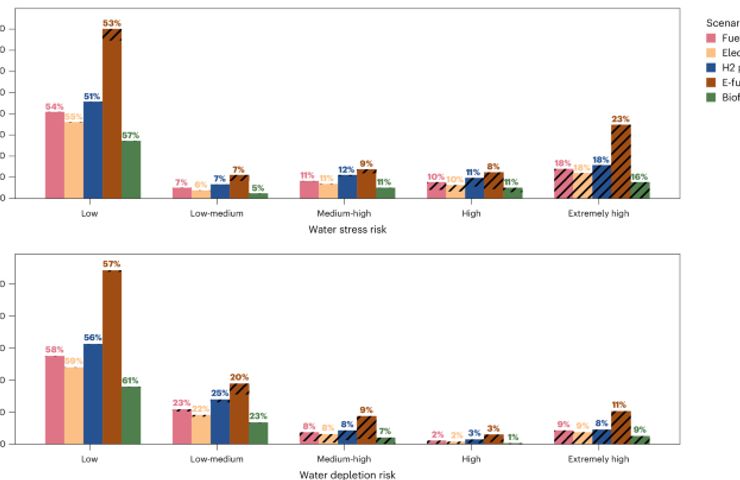
Earlier this month, the European Commission Joint Research Centre released its report Spatial assessment of the impact of hydrogen production on European freshwater resources, mapping projected water demand for hydrogen production through 2030 and 2050 and evaluating risks for freshwater supplies across Europe, according to the JRC. The study pairs geospatial capacity forecasts with river-basin hydrology to show where new hydrogen facilities are likely to appear and how much water those facilities could require. Most hydrogen-production assets are expected to operate in basins with low to moderate water stress, but under pessimistic climate scenarios nearly one in ten plants could operate in basins where hydrogen abstraction represents a noticeable share of renewable water resources, according to the report. Southern Europe, particularly Spain, Italy and Portugal, is highlighted as the highest-risk area.
Can Europe’s hydrogen ambitions coexist with water sustainability?
The JRC framed its analysis around a specific assumption: all projected hydrogen demand is met with freshwater rather than alternative sources, testing exposure before widespread adoption of desalinated seawater or wastewater reuse. That conservative baseline is intended to reveal potential pressure points rather than to predict final engineering choices. According to the JRC, practical electrolysis consumes approximately 18–22 litres of water per kilogram of hydrogen, accounting for purification and cooling losses. To put those figures in context at continental scale, the report’s abstract estimates a water share of about 0.24% of freshwater consumed in 2017 to meet the 2030 target and up to 1.65% by 2050, according to the report’s abstract.
Mapping at river-basin scale shows why percentages can be misleading. The report spatially maps hydrogen-production capacity and water availability across European river basins. Local averages can hide sharp imbalances; basin-level analysis reveals hotspots where water competition could become significant during seasonal droughts. These local pressures align with European Environment Agency indicators showing that Southern Europe already faces pronounced water scarcity and that climate change is expected to increase drought frequency and intensity, according to the EEA.
Key recommendations to safeguard water resources
- Basin-level siting and permitting to align hydrogen plants with local water availability, according to the JRC
- Use of alternative water sources such as desalinated seawater, treated wastewater or brackish water
- Investment in water reuse, closed-loop cooling and high-efficiency electrolysers
- Seasonal monitoring of water stress to adjust operations during droughts
- Further research to refine data on hydrogen running times, abstraction rates and cooling losses
- Integration of seasonal stress tests and dynamic production adjustments in regulatory frameworks
Players shaping Europe’s hydrogen roadmap
The European Commission Joint Research Centre authored the study, with the Publications Office of the European Union issuing the report and the European Environment Agency providing background on water stress. It ties directly into broader EU policy. The assessment builds on the Commission’s 2020 Hydrogen Strategy and the REPowerEU plan, which set domestic targets for renewable-hydrogen capacity and imports by 2030, according to the European Commission.
Regional hotspots in Southern Europe
Risk is concentrated, not evenly distributed. According to the JRC, the highest freshwater risks from hydrogen production are concentrated in Southern Europe. In Spain, river basins with high irrigation demands and seasonal droughts could experience noticeable water competition if new hydrogen plants draw from freshwater sources. In Italy, southern regions and certain river basins already face recurring scarcity, making basin-level planning essential to prevent conflicts with agriculture, municipal supply and ecosystems, according to the report. Portugal’s coastal and metropolitan areas, where tourism and agriculture drive high water use, may need to rely on desalinated seawater or treated wastewater to support hydrogen hubs without exacerbating existing stress, according to the JRC.
The JRC recommends that project developers in these countries conduct detailed basin-level water-stress assessments and consider alternative water sources from the earliest planning stages. Desalination can reduce freshwater abstraction but must be weighed against energy use and brine disposal, while wastewater reuse and brackish-water treatment can offer lower-impact options if quality standards are met. Coordinated planning among industry, regulators and water managers will be crucial for sustainable hydrogen roll-out in Southern Europe, according to the report.
Understanding electrolysis water demand
Water electrolysis is the process by which electricity splits water into hydrogen and oxygen. According to the JRC, low-temperature electrolysers require ultrapure water and consume a stoichiometric minimum of approximately 9 litres per kilogram of hydrogen, while practical purified-water consumption typically ranges between 18 and 22 litres per kilogram to account for treatment and losses. The report examines two main electrolyser technologies: proton-exchange membrane (PEM) electrolysis and alkaline electrolysis, both of which rely on treated water quality and incur additional purification needs, according to the JRC.
Exploring alternative water sources
Coastal and urban hubs present options that inland sites do not. The JRC highlights that desalination of seawater can help coastal hydrogen hubs reduce freshwater use, but it brings energy requirements and generates concentrated brine that must be managed. According to the report, modern reverse-osmosis desalination produces water suitable for electrolysis after additional polishing, while wastewater reuse—from municipal or industrial effluent—can offer a lower-impact supply if treated to high purity. Brackish-water treatment and wastewater polishing both demand tailored infrastructure and quality controls, according to the JRC.
Policy and regulation at work
Regulatory frameworks will matter as much as engineering choices. The report notes that while EU directives set hydrogen and water targets, implementation of basin-level water safeguards varies among Member States. According to the JRC, inconsistent permitting standards risk creating regulatory competition, with some countries advancing hydrogen hubs without robust water assessments. Standardizing water-stress criteria and including reuse obligations in renewable-hydrogen regulations could level the playing field and ensure that projects across Europe respect freshwater limits.
Despite local risks, the findings suggest that Europe’s hydrogen production goals can be met without triggering continent-wide water crises, provided that developers and regulators integrate water planning into every stage of project design, according to the JRC. By prioritizing river-basin assessments and alternative water sources, the industry can avoid shifting stresses from carbon emissions to freshwater ecosystems.
For hydrogen developers, securing non-potable water supplies or co-locating with desalination or wastewater treatment facilities may become a competitive advantage. Policymakers can include basin-level water balances and reuse requirements in permitting frameworks. Communities will benefit when hydrogen hubs operate within sustainable water limits, ensuring that industrial growth does not compromise drinking water, agriculture or ecological flows.
As Europe scales up renewable hydrogen, water-smart approaches—such as closed-loop cooling, advanced membranes and dynamic production curtailment—could shape a resilient hydrogen infrastructure, according to the report. Further research and consistent implementation across Member States will be key to balancing ambitious decarbonization targets with the need to preserve freshwater resources for future generations.
By taking these steps, Europe’s hydrogen sector can align energy ambitions with water stewardship and support a climate-neutral economy, according to the JRC.