Hydrogen Production Hub: Air Liquide’s $200M POX Unit at Bay City Boosts Low-Carbon Syngas Supply
Air Liquide will invest over $200 million in a high-efficiency POX syngas unit at Oxea’s Bay City site, combining CO₂ recycling with low-carbon hydrogen to cut emissions by 64,000 t/year and secure on-site supply for an oxo-chemical expansion.
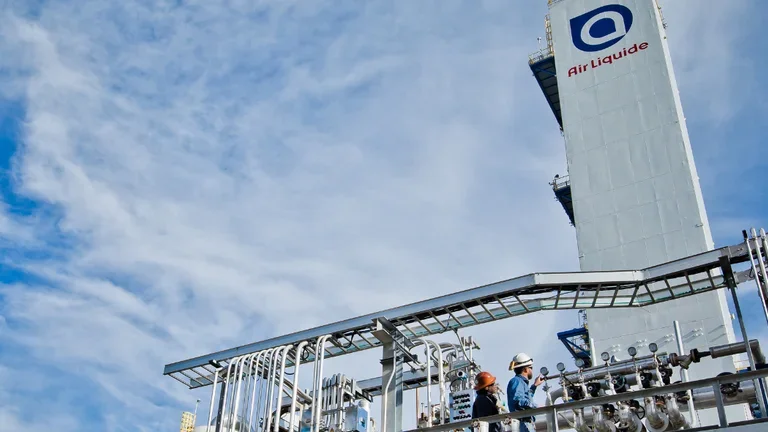
Air Liquide is really making a splash with its latest move, pumping over $200 million into building a cutting-edge partial oxidation (POX) unit at OQ Chemicals’ Bay City site along the U.S. Gulf Coast. This isn’t just about building something shiny—it’s about producing a large quantity of syngas and low-carbon hydrogen to help kickstart Oxea’s plans for expanding oxo-alcohols and performance chemicals. Plus, they’re introducing a unique CO₂ recycling loop that’s expected to cut down net emissions by around 64,000 tonnes each year. Exciting stuff is on the horizon, with site prep beginning later this year and operations slated to kick off in early 2029.
What’s the Tech Behind It?
So, what’s the deal with this POX process? It’s a pretty efficient method that reacts a controlled amount of oxygen with hydrocarbon feedstocks—think natural gas—at high temperatures to create a synthesis gas blend that’s rich in CO and H₂. Compared to traditional steam methane reforming, POX has some real advantages, especially when it comes to efficiency and footprint:
Why This Matters
This big investment aligns perfectly with Oxea’s decision to expand its capacity for producing propionaldehyde, propanol, and butanol by late 2028. Under a long-term agreement, Air Liquide will be the proud owner, builder, and operator of the POX plant. This not only guarantees a secure feedstock supply for OQ Chemicals but also plays a crucial role in supporting the company’s new production lines.
For Air Liquide, this project is a game-changer. It strengthens its position as a key supplier of low-carbon hydrogen on the Gulf Coast while enhancing existing pipelines and storage facilities that serve chemical producers and industrial partners. Plus, it fits right into their broader strategy for industrial decarbonization, which includes exciting projects like the modular air-separation units for ExxonMobil’s low-carbon hydrogen and ammonia complex in Baytown.
What’s Next?
While the Bay City POX unit still relies on fossil feedstocks, it represents a vital step toward cleaner hydrogen production. The incorporation of an emissions-management feature in a brownfield setting could set the standard for other syngas-dependent sites. As companies face increasing customer and regulatory pressure, integrated CO₂ loops might become essential until we see a real ramp-up in production of green hydrogen through electrolysis.
Looking down the road, the success of the Bay City initiative could speed up conversations on topics like carbon capture and storage, more extensive hydrogen pipelines, and innovative feedstock options. For chemical manufacturers, having on-site gas supply backed by performance guarantees could become the best approach for balancing growth ambitions while keeping an eye on low-carbon goals.
Even though there’s still a dependency on hydrocarbon inputs, the Bay City POX initiative highlights how targeted process innovations can effectively reduce emissions and bolster supply security in an industrial sector that’s traditionally been tough to clean up.
Getting to Know the Companies
Air Liquide is shaking things up in the global industrial and medical gas market, boasting one of the largest hydrogen networks on the U.S. Gulf Coast. The group focuses on low-carbon solutions, tapping into advanced reforming, CO₂ management, and forming partnerships in hydrogen and ammonia sectors.
OQ Chemicals (previously known as Oxea) is in the business of manufacturing oxo-chemicals essential for coatings, lubricants, and plastics. Their Bay City facility is a key hub on the Gulf Coast, now set for an exciting expansion in propionaldehyde, propanol, and butanol production, all thanks to a reliable syngas supply.