Hydrogen Project Financing: Sprott Injects C$10M into MAX Power’s Saskatchewan Natural Hydrogen Validation
Eric Sprott has invested C$10M in MAX Power Mining’s Lawson natural hydrogen project in Saskatchewan, funding commercial validation drilling and seismic mapping.
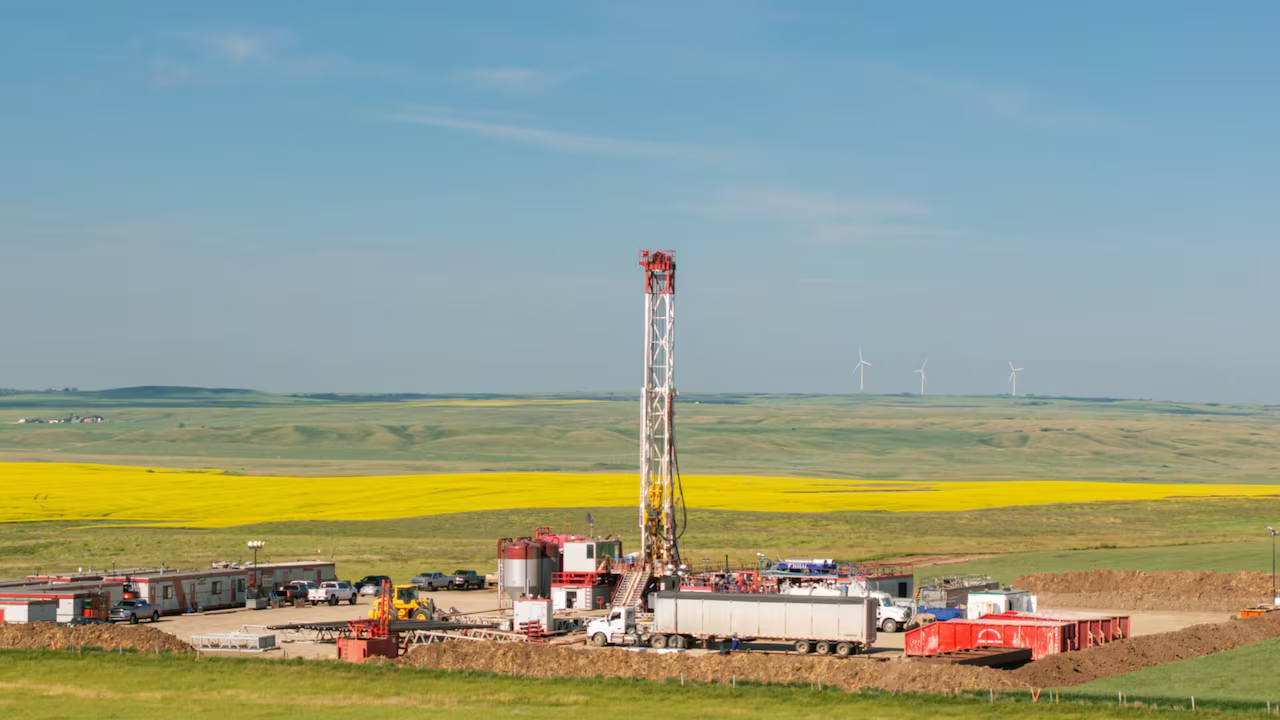
Canadian billionaire Eric Sprott is diving deep into the natural hydrogen scene by pledging a whopping C$10 million to MAX Power Mining Corp.. This investment is set to boost efforts around hydrogen production methods that focus on finding natural hydrogen underground at the Lawson Complex in Saskatchewan. This funding, funneled through 2176423 Ontario Ltd.—Sprott's private investment arm—aims to kick-start drilling and seismic studies that could unearth a brand new clean hydrogen energy source right in western Canada.
Understanding Natural Hydrogen Production
So, what’s the deal with natural hydrogen production? Unlike the green hydrogen produced through electrolysis—which splits water into hydrogen and oxygen using electricity—natural hydrogen pops up deep within the Earth through geological processes. It makes its way into specific traps within porous rock formations. MAX Power’s approach is pretty innovative; they’re blending a few advanced techniques:
These methods are paving the way for a new breed of hydrogen production by utilizing a natural resource rather than just creating hydrogen at the surface.
Strategic Implications
Having a big name like Eric Sprott in the mix isn’t just about raising cash; it carries a lot of weight in the junior mining sector. His involvement often sparks interest from other investors, both big and small. That said, this kind of arrangement does come with some corporate governance considerations. Reports suggest that Sprott’s growing stake might trigger control-person approval requirements under Canadian securities regulations, which could add a layer of regulatory oversight to what’s normally a straightforward financing scenario.
The Promise of Saskatchewan
South-central Saskatchewan is sitting in a pretty advantageous spot, nestled in the Western Canadian Sedimentary Basin along the Genesis Trend—a geological area that’s getting a lot of buzz for its natural hydrogen potential. The Lawson Complex, close to Central Butte and the Regina-Moose Jaw industrial area, has shown consistent hydrogen readings over significant distances. Both provincial and federal efforts to push clean energy strategies have put Saskatchewan on the map, making it a hotbed for both manufactured green hydrogen production and naturally occurring hydrogen sources.
Economic Ripple Effects
This investment isn’t just about drilling rigs and seismic teams; it’s also a boost for local economies around Moose Jaw and Central Butte. If MAX Power can prove they have stable flow rates and a sizable reservoir, it could open the floodgates for more investment in hydrogen infrastructure—think storage facilities, transportation hubs, and partnerships with industrial players that are keen on low-emission fuel sources.
A Brief Dive into Natural Hydrogen’s History
Hydrogen isn’t a new player; it’s been around in small quantities from oil and gas venting for ages. But only recently have companies started to see its potential as a primary resource. In 2022, Canada’s Geological Survey kicked off a national assessment of natural hydrogen’s potential, revealing that a good chunk of the country is sitting on favorable source rocks. Thanks to decades of oil and gas exploration, Saskatchewan is well-equipped with subsurface data, making it a logical hotspot for groundbreaking hydrogen projects.
Policy and Industry Landscape
The federal Hydrogen Strategy encourages provinces to create regional hubs connecting production, storage, and end users. Saskatchewan has picked up on this, putting the Regina-Moose Jaw area in the spotlight for hydrogen infrastructure, especially for industries like ammonia production and steelmaking, which are looking to switch to low-carbon processes. A recent agreement between MAX Power and the City of Moose Jaw underscores the region's ambition to weave natural hydrogen into a broader clean hydrogen supply chain.
Green vs. Natural Hydrogen
Most of the chatter around clean hydrogen has revolved around green hydrogen production methods—think electrolysis powered by renewables—and blue hydrogen that relies on carbon capture. But natural hydrogen offers a different route. If they can prove that these reservoirs are productive, we might be able to skip the hefty costs associated with electrolysers and compression systems. Still, commercial validation drilling is a must to confirm flow rates and how long the reservoir will last. Success at Lawson could put Saskatchewan in the same conversation as other global projects that have spotted subsurface hydrogen shows.
Market Reactions and Business Valuation
Since the announcement, MAX Power’s share price has seen some ups and downs as investors weigh the opportunities against the potential risks. On one hand, teaming up with a big name tends to bolster market confidence; but with early-stage resource projects, price swings can be pretty common. Analysts suggest that a detailed report on how well the wells are performing could act as a significant turning point, possibly paving the way for agreements or partnerships with industrial gas suppliers.
Environmental and Regulatory Considerations
Extracting natural hydrogen could have a low carbon footprint if it manages to avoid extensive drilling and uses efficient methods. However, environmental assessments will need to tackle issues related to land use, protecting groundwater, and the impact of seismic activities. Regulators in Saskatchewan have been in the oil and gas game for a while, and they’re now tweaking their permitting processes to align with hydrogen-specific health and safety standards.
What’s Next?
Investors and policymakers will be keeping a close eye on the outcomes from the next couple of validation wells, looking for stable flow rates during multi-day tests, gas purity that meets technical criteria, and signs of reservoir replenishment. Beyond that, MAX Power will have to secure additional financing for essential infrastructure, like pipelines and storage tanks, and may even consider a demonstration facility. And don’t forget, Sprott’s influence could lead to significant shareholder decisions, setting an important precedent for how big investments in new energy resources are managed within publicly traded juniors.
This move by Eric Sprott really highlights a growing trend in clean hydrogen news: the search for new methods of hydrogen production that go beyond traditional electrolysis. If MAX Power finds success, their work could change how we view hydrogen sourcing, serving as a complementary option alongside green hydrogen in the quest to decarbonize heavy industry and energy systems.
About the Company
MAX Power Mining Corp. is a Canadian exploration company focusing on subsurface natural hydrogen. Their flagship project, the Lawson Complex near Central Butte, Saskatchewan, is one of the first major attempts to tap into geological hydrogen on a large scale. The company is actively drilling wells, conducting seismic surveys, and modeling reservoir characteristics to assess the feasibility of extraction.