Hydrogen Storage and Infrastructure: How Ammonia Catalysts Advance Green Hydrogen Production
Prof. Li’s team at PolyU has developed nanostructured cobalt catalysts to crack ammonia into hydrogen more efficiently, powering a fuel cell golf cart and pointing to a scalable hydrogen storage and infrastructure solution.
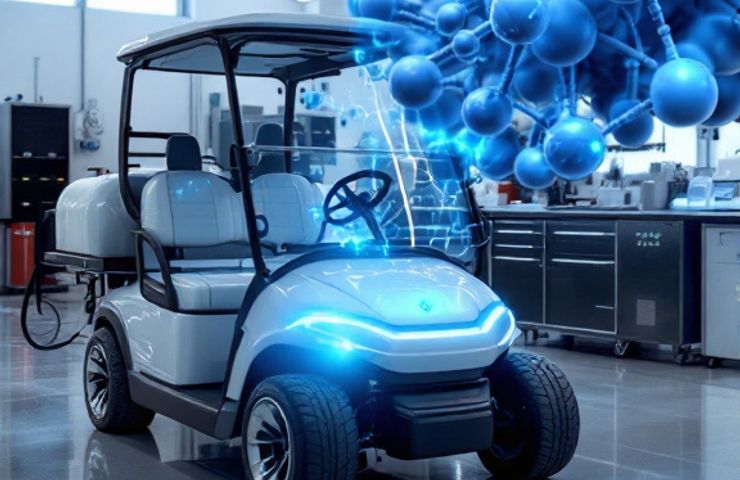
Picture this: you're at a fueling station, and instead of the usual routine, you’re filling up your vehicle with a liquid that’s rolled in on a standard tanker truck, yet it’s delivering pure hydrogen right when you need it. That’s the exciting promise of ammonia as a hydrogen carrier, and guess what? A research team over at The Hong Kong Polytechnic University has made some headway towards turning that dream into reality. They’ve come up with some nifty nanostructured catalysts that efficiently crack ammonia into hydrogen—enough to power a golf cart—without the fuss of high-pressure tanks.
This innovative approach is shaking things up in hydrogen storage and distribution by tapping into an established global supply chain for ammonia. By transforming this everyday chemical into a high-purity hydrogen source, these researchers are tackling two of the biggest challenges in clean hydrogen infrastructure: safe and cost-effective storage along with scalable delivery. Sounds pretty promising, right?
Could ammonia be the key to cleaner hydrogen storage?
The basic idea is pretty simple: ammonia (NH₃) is packed with hydrogen by weight and can be liquefied at relatively low pressures—just around 10 bar at room temperature—using equipment that's already out there. This high volumetric energy density means you could transport more energy in a single go, all while using familiar setups from the chemical industry. So, while there are other hydrogen storage methods like compressed gas and liquid hydrogen, ammonia could really shine, especially when we leverage existing ammonia networks.
Once that ammonia rolls into a fueling station, a catalytic reactor—often referred to as a cracker—works its magic, breaking it down into nitrogen and hydrogen. The clean hydrogen then streams into fuel cells or combustion turbines. This method bypasses the need for highly pressurized hydrogen tanks or extremely cold liquid hydrogen, which can be a bit on the pricey and complex side to set up.
Inside the catalyst breakthrough
Now, the real star of the show here is the team’s nanostructured cobalt-based core-shell catalysts. Led by Assistant Professor Molly Mengjung Li and her crew, they've developed a catalyst that encloses tiny cobalt particles within a protective metal-oxide shell, specifically a barium aluminate matrix. This design tweaks how ammonia molecules latch onto and break apart on the cobalt surface, making the process super efficient.
In their tests, this new Co@BaAl₂O₄-ₓ catalyst achieved nearly complete ammonia conversion between 475 °C and 575 °C, producing hydrogen at rates that stack up against traditional ruthenium-based systems. What’s more, this comes without the reliance on those precious metals, making it cheaper and reducing the concerns about raw material scarcity. The oxide shell helps prevent sintering, so the catalyst stands up to repeated heating cycles. It’s a trailblazing blend of chemical engineering and advanced materials science that could really minimize the energy losses associated with ammonia breakdown.
From lab walls to loaded golf carts
Developing a high-performance catalyst is only part of the story. The researchers quickly designed a working prototype: an ammonia-powered fuel cell golf cart. In this setup, liquid ammonia is stored in a low-pressure tank onboard. The cart then uses that core-shell catalyst to crack NH₃ into H₂ and N₂ before cleaning and feeding the hydrogen-rich stream into a fuel cell stack. Talk about a win—this setup delivers zero tailpipe CO₂ emissions!
This demonstration is a significant leap in hydrogen fuel cell news. It shows just how ammonia cracking and clean hydrogen delivery can work in a compact and mobile system. When you compare it to battery systems, refilling with liquid ammonia takes mere minutes instead of hours, and it avoids the high storage pressures that complicate many hydrogen car concepts. It gives a clear example of how hydrogen fuel cells function in a real mobile setting, powered by ammonia-derived hydrogen.
Building robust hydrogen infrastructure
By leveraging ammonia’s existing global supply chains for production, shipping, and storage, we could unlock a more flexible hydrogen economy. Instead of pouring resources into high-pressure pipelines or a ton of new refueling stations, operators might adapt the existing ammonia terminals and fleets. Regions that currently import ammonia for fertilizer could use the same docks and tanks to handle energy-grade ammonia, speeding up the rollout of distributed hydrogen production.
Fuel cell vehicles without high-pressure tanks
By providing on-demand hydrogen through ammonia cracking, automakers and fleet operators could sidestep some of the major hurdles that come with switching to fuel cell vehicles. Lower-pressure ammonia storage means you can do away with bulky tank requirements, and the chemical industry has decades of experience handling NH₃ safely—though they still follow strict protocols due to its toxicity. For crowded urban areas, this could mean more refueling stations and happier regulators!
Benefits beyond the refill station
What’s next for green hydrogen production?
The team at PolyU isn’t stopping here; they've got their eyes set on bigger targets. They’re exploring larger prototypes, like minibuses, and dedicated ammonia refueling stations to see how they perform in the real world. Operators are also looking into how ammonia crackers might mesh with hydrogen refueling stations to boost local capacity.
Researchers are working hard to refine the catalyst even further, aiming to drop the temperature threshold and trim energy losses in the cracker. They're teaming up with electrical engineering experts to integrate efficient heat-recovery systems, squeezing even more power out of every ammonia molecule. With shifting policies in global shipping and urban decarbonization working in their favor, ammonia-based hydrogen could transition from niche demo projects to headline green hydrogen news.
A clean energy path forward
There's still some work ahead—like making sure any ammonia slip or nitrogen oxide byproducts don’t exceed strict limits. Life-cycle assessments remind us that only green ammonia, made from renewable-powered electrolyzers, truly delivers on zero-carbon benefits. But with cutting-edge cobalt catalysts, functional prototypes on wheels, and a robust global supply chain, ammonia might just carve out its spot in the hydrogen economy. For fleet managers eyeing a shift to hydrogen vehicles, this emerging clean hydrogen infrastructure could open up all sorts of new opportunities across various sectors, including ports, urban logistics, and data centers.