Hydrogen Storage and Separation from Methane Blends Using Metal Hydrides at Stony Brook University
Stony Brook University unveils a reversible metal hydride system that stores and purifies hydrogen from methane blends under mild conditions, promising streamlined hydrogen infrastructure.
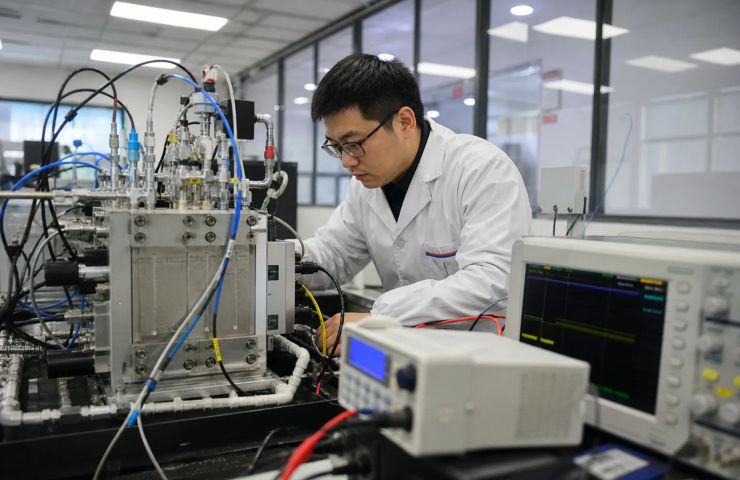
Stony Brook University researchers have introduced an innovative, budget-friendly metal hydride system that can effectively store hydrogen from blends of hydrogen and methane and later recover high-purity hydrogen at near-ambient conditions. This method, spearheaded by Professor Devinder Mahajan and his team from the university’s Institute of Gas Innovation and Technology, offers a new pathway for both storage and separation, which could utilize the existing natural gas infrastructure for hydrogen logistics during this transitional phase.
Finding reliable hydrogen storage and separation methods is a critical hurdle for building a clean hydrogen economy. Traditional approaches, like compressed gas and cryogenic liquid storage, not to mention pressure swing adsorption, often come with hefty energy costs, complex equipment, and safety issues. Although blending hydrogen into natural gas pipelines has been explored as a temporary transport solution, most users need to extract pure hydrogen from that blend later. This adds extra steps and expenses. Stony Brook's new technique looks to combine both the storage and separation functions into one reversibly-effective material, aiming to cut down on operational costs at blending sites, storage facilities, or pipeline hubs.
Design and Operating Parameters
The heart of this technology lies in a metal hydride material that selectively absorbs hydrogen atoms from a mix of hydrogen and methane. As noted on the university’s licensing page, this sorbent operates efficiently at temperatures of around 50 to 70 °C and pressures ranging from about 50 to 1,000 psig. Under the right conditions, hydrogen from the blend binds within the hydride structure while methane simply passes through; by adjusting the temperature or pressure, the hydrogen can be released at a purity level exceeding 99 percent.
The Importance of Deblending
Being able to recover hydrogen from a natural gas blend without needing energy-heavy purification equipment is a significant advantage. Many industrial players—like fuel cell manufacturers and refineries—depend on high-purity hydrogen. Typical deblending methods, such as membranes and vacuum swing adsorption, can rack up capital and energy costs that eat away at 20-30 percent of the value of the hydrogen recovered. A solid-state metal hydride that serves as both a storage medium and a selective sorbent could simplify the design of plants while shrinking their footprint.
Business Implications
Incorporating this technology into existing pipeline networks or storage caverns could make it easier for utilities and gas operators to dive into hydrogen blending. By capturing hydrogen at moderate pressures and temperatures, operators might sidestep the need for separate high-pressure tanks or dedicated purifiers. This could mean lower upfront costs, smoother permitting processes, and quicker project timelines. Plus, a reversible hydride system offers the benefit of modular scalability—lots of beds can be staged to keep operations running continuously while cycling through adsorption and desorption.
The Competitive Landscape
While metal hydrides aren’t new to hydrogen storage research, real-world applications have faced obstacles from slow kinetics, heat management issues, and material breakdowns. Alternative methods using porous materials like metal-organic frameworks show promise for high-capacity storage but often require cryogenic conditions. Meanwhile, membrane separation and pressure swing adsorption are still go-to solutions for deblending, yet they require complicated pressure management and frequent cycling. The Stony Brook approach builds on years of hydride research, focusing on low-cost alloys and operating near ambient conditions.
Context of Stony Brook’s Research
The project led by Professor Devinder Mahajan, director of the Institute of Gas Innovation and Technology, has the backing of the SUNY Technology Accelerator Fund. Early lab results shared by the team on EurekAlert are promising, but they stop short of pilot-scale demonstrations. There are still key questions regarding cycle life, the system’s resistance to contaminants like sulfur and moisture, thermal management in larger setups, and what the true material costs will be, all pending peer-reviewed data or third-party evaluations.
Economic and Policy Considerations
When it comes to incorporating hydrogen into existing gas networks, regional regulations and pipeline material approvals come into play. In various areas, hydrogen concentration limits can range from 5 to 20 percent by volume. Deblending at these levels requires high selectivity to prevent methane contamination in the recovered hydrogen. A sorbent that provides over 99 percent purity under mild conditions could help smooth out compliance with gas-quality regulations and cut down on waste.
Next Steps and Scaling Up
Even though Stony Brook University’s lab-scale results are exciting, turning them into commercial success involves several hurdles. Proving that continuous cycling over thousands of adsorption and desorption loops can happen without losing capacity is vital. Engineers will also need to create heat exchange systems that manage the energy changes efficiently. Lastly, a clear-cut cost comparison of the hydride method against membrane or pressure swing adsorption alternatives will help identify where this technology delivers the best bang for the buck.
By introducing a combined storage-and-separation unit, Stony Brook’s innovation could transform how hydrogen is moved and delivered in blended networks. If it proves feasible on a larger scale, it might open new doors for leveraging existing infrastructure, driving down capital investments, and speeding up the low-carbon hydrogen rollout. But ultimately, the real-world impact will depend on pilot test results, the long-term performance of the sorbent, and how well it integrates with operational gas systems.