Industrial Gas Supply Strengthens SK hynix AI Memory Packaging in Cheongju and Indiana
Air Liquide will invest nearly €200M in Cheongju and over $170M in Indiana to build on-site ultra-pure gas plants for SK hynix’s advanced memory packaging, securing supply and boosting HBM production.
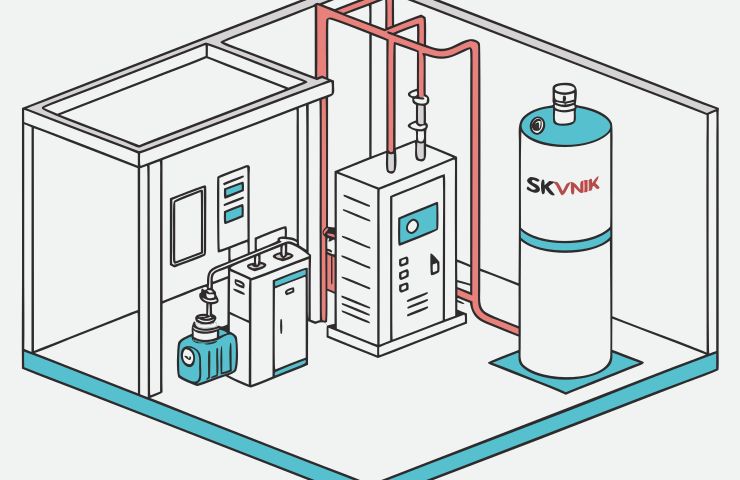
When chip makers cram billions of transistors into smaller and smaller spaces, even slight changes in gas purity can mess with yields and profits. Earlier this year, Air Liquide, a leader in industrial gases and technologies from France, made some significant moves by investing in its gas supply operations. This will help SK hynix with its cutting-edge memory packaging in both South Korea and the United States.
Two Geographies, One Strategy
In Cheongju, located in North Chungcheong Province, Air Liquide is all set to build a state-of-the-art high-purity nitrogen unit at SK hynix's new packaging and testing fab, known as P&T7. This project comes with a hefty investment of nearly €200 million, and they're aiming to have it up and running by late 2027. The new nitrogen plant will directly provide inert gas, compressed air, and other ultra-pure gases into the clean-room process lines, which will help avoid delivery delays and contamination risks.
On the flip side, Air Liquide is also pouring over $170 million into two industrial gas production units at SK hynix's first fabrication and packaging site in Indiana. These units will generate nitrogen, oxygen, argon, hydrogen, and specialty carrier gases right on-site, which minimizes logistics and enhances the ultra-clean environment of the facility. They're aiming for start-up by the end of 2028.
Key Project Highlights
Why On-Site Ultra-Pure Gas Matters
The packaging of HBM (High-Bandwidth Memory) stacks has some of the strictest contamination standards—measured in parts per billion. With on-site gas production, SK hynix ensures a consistent supply of:
Strategic and Business Implications
Air Liquide views its Electronics division as a key growth area. This deal marks a significant step forward after acquiring DIG Airgas, enhancing its presence in the market. Installing these on-site gas units not only locks in long-term offtake agreements but also protects SK hynix from fluctuating commodity prices. This strategy positions Air Liquide as a full-service partner for crucial semiconductor operations—moving beyond just cylinder sales.
For SK hynix, these agreements support an increase in HBM packaging capability. The vertical stacking of HBM requires ultra-clean, consistent gas flows; any impurity could ruin interconnects or adhesion layers, leading to higher scrap rates and longer time-to-market for AI technology.
Historical Context
Air Liquide has been a trusted supplier of process gases to chipmakers for decades, transitioning from simple bulk deliveries to sophisticated on-site solutions. As device designs have become smaller, even the tiniest amounts of moisture or particles can kill yield rates. Suppliers have responded by introducing advanced purification, monitoring, and pipeline delivery systems right at the customer’s site to meet those stringent contamination standards.
SK hynix has its roots dating back to the 1980s, focusing on memory solutions. Its current operations at P&T7 in Cheongju support chips that can stack multiple memory dies, which boosts throughput for AI accelerators while pushing the bar for gas purity even higher.
Technical Snapshot: On-Site Nitrogen Production
The on-site nitrogen production units typically use cryogenic distillation or membrane separation methods. Cryogenic plants cool air to extract nitrogen with an impressive 99.999 percent purity. Meanwhile, membrane systems use polymer modules to filter out oxygen and water vapor. Both systems feed into purification units equipped with molecular sieves and cold traps to ensure impurity levels drop below parts per billion.
By positioning these units right next to the fab, Air Liquide significantly reduces pressure drops, lowers the risk of moisture entering the system, and simplifies safety measures—no more gas trucks navigating clean-room boundaries.
Environmental and Decarbonization Angle
Generating gases on-site not only cuts down on emissions from truck transport but also brings in energy efficiency gains. Air Liquide notes that its modular units can integrate low-carbon electricity or biogas feeds, which opens up the possibility of using green hydrogen. As electrolyzers advance, these gas modules could connect to renewable energy sources, creating a closed-loop hydrogen system embedded within chip manufacturing facilities and aligning with broader semiconductor sustainability goals.
Regional Impact and Policy Alignment
South Korea's strategy around Cheongju is tapping into local power, water, and logistics to attract chip manufacturers. In the U.S., incentives at both state and federal levels are driving semiconductor localization in the Midwest. Establishing on-site gas facilities not only diminishes supply-chain vulnerabilities but also strengthens regional resilience.
The economic ripple effects touch everything from construction projects to increased job opportunities and a thriving supplier ecosystem. Local service partners will take charge of maintenance, compliance, and monitoring—areas where contamination control and emergency readiness are non-negotiable.
Risks and What to Watch
Any large-scale industrial project comes with its own set of risks. Both developments depend on proper permitting, engineering, and stringent safety checks. Recent incidents at SK hynix sites show just how critical safe chemical handling can be. Eyes will be on whether the nitrogen plant in Cheongju hits its target commissioning date in late 2027, and if the Indiana units will be ready for their end-2028 launch.
Market dynamics may also shift—any slowdowns in demand for AI memory or new technologies could impact how often these units are utilized or shift the value equation of on-site gas production.
Takeaways
Looking Ahead
As AI tasks ramp up, the demand for reliable, contamination-free process gas supplies will only grow. Air Liquide's substantial investments across two continents signal a future where industrial gas plants are planted right inside chip fabs, becoming part of the essential hydrogen infrastructure and gas delivery landscape rather than remaining an external afterthought.
For semiconductor companies, the message is clear: take control of your own gas supply or risk jeopardizing yield and reliability to logistics delays. For gas suppliers, finding success means fusing purification know-how with local execution and safety management—and maybe one day, hooking up electrolyzers for a complete green hydrogen setup.