Integrated Electrolyzer Design Drives Down Offshore Hydrogen Production Costs
H2SEA, Bosch, and TNO have cut offshore green hydrogen costs by up to 20% with their new integrated system design. Completed under the Dutch TKI Offshore Energy Program, the IPOSH project marks a milestone in marine hydrogen innovation.
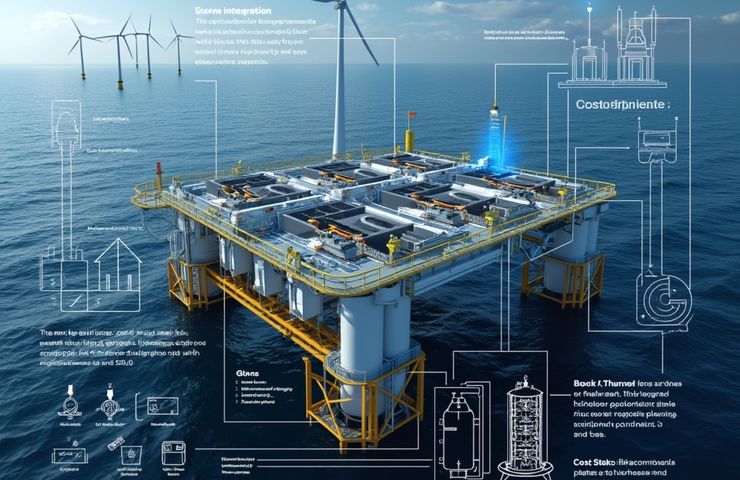
Green hydrogen just got a serious push forward—this time, straight from the choppy waters of the North Sea. A Dutch-German collaboration has just wrapped up a bold project that could shake up the way we think about offshore hydrogen production—and how much it costs.
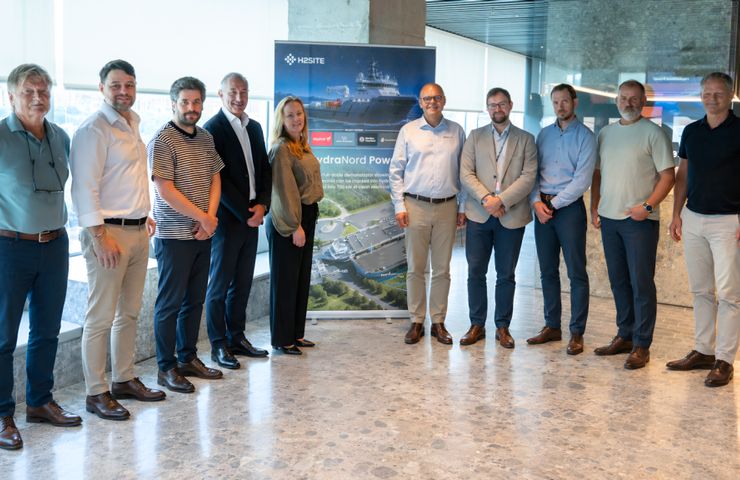
Breaking New Ground: H2SEA, Bosch & TNO Join Forces
In May 2025, H2SEA, Bosch Thin Metal Technologies, and Dutch research group TNO completed the IPOSH project, a years-long deep dive into smarter engineering for offshore hydrogen systems. Part of the Dutch TKI Offshore Energy Program, the project delivered a fresh approach that could cut the Levelized Cost of Hydrogen (LCOH) by up to 20%—a potential game-changer for offshore hydrogen.
And talk about good timing. Europe’s full steam ahead with its climate goals, and the North Sea—already home to more than 3,500 wind turbines—is shaping up to be ground zero for scaling up green hydrogen at sea. The infrastructure is there, the experience runs decades deep, but high costs and technical headaches have made offshore hydrogen tough to crack. Until now.
Flipping the Script on Offshore Electrolysis
Traditionally, hydrogen production systems follow a step-by-step process: build the electrolyzer, then tack on everything around it. But IPOSH took a different route. They designed the entire system as one connected whole—hardware, support systems, and all. The upside? A more efficient, compact solution that thrives in the harsh offshore environment.
The magic came from all sides. Bosch’s thin metal technology made it possible to create lightweight, modular stacks that fit snugly on space-tight platforms. Meanwhile, TNO ran extensive lifecycle analyses, stress-testing everything from maintenance schedules to take-down scenarios under wind, wave, and salt-heavy conditions. Then come H2SEA, pulling it all together into a scalable model ready for the real world.
One standout tool was the Model-Based Stack Analysis Tool. It let teams compare how different module sizes stack up (pun intended) in terms of performance. That level of insight is priceless, especially when you're choosing between fixed platforms and floating systems. As one engineer put it, “It’s more than just knowing when to swap parts. It’s the difference between a viable business case—or a money pit.”
Why You Should Care About This
Sure, a 10–20% drop in costs might not sound earth-shattering, but in the world of offshore green hydrogen, that’s big news. These projects often come with massive up-front investment and tons of logistical uncertainty. By rethinking the entire system from the get-go, IPOSH is setting a new bar—and giving other developers a roadmap they can actually follow.
And it’s not just a nice theory. The findings are already working their way into the Dutch Offshore Hydrogen Strategy 2030. With tougher EU decarbonization mandates on the horizon, both governments and energy developers need faster, cheaper, and scalable answers. IPOSH delivers all three—and it’s been tested in one of the world’s roughest marine environments.
The ripple effects could go even further. As the North Sea gradually winds down its oil and gas legacy, projects like this help sketch out what the next energy era could look like. Of course, this doesn’t mean smooth sailing ahead. Planners will still need to juggle ocean space with shipping routes and marine ecosystems. Turns out, industrial decarbonization at sea may be just as tricky—and vital—as on land.
North Sea’s Legacy: From Oil Rigs to Hydrogen Platforms
The North Sea has been an energy powerhouse for over 50 years—first with oil in the ’70s, then offshore wind in the 2000s. Now, it’s gearing up for the next chapter: hydrogen production. With its rich history of marine engineering and logistics, the region is uniquely equipped to lean into offshore H2—and lead the way for the rest of Europe.
That history gives companies like H2SEA, Bosch, and TNO a serious leg up. They’re combining proven expertise with next-gen thinking, helping move green hydrogen from concept to commercial reality.
What’s Next? From Prototype to Playbook
With IPOSH now in the books, the big question is: who will be the first to run with it? Multiple developers are already exploring offshore H2 hubs aimed at 2030, and integrated designs like this might just become the new gold standard. Don’t be surprised if there’s a noticeable uptick in licensing applications, policy discussions, and full-blown project proposals soon.
“This work leaps us ahead by years,” said a systems engineer closely involved in the effort. “We’re finally engineering these systems the way they’re meant to be—not in isolation, but as the sum of all parts.”
So if all goes according to plan—and with the right support—the IPOSH model might be the blueprint that jumpstarts Europe’s next offshore energy boom, powered not by fossil fuels, but by wind and electrolysis.