Netherlands Injects Over €44M into Hydrogen Mobility Subsidy Scheme
The Netherlands’ SWiM programme has allocated over €44 million to hydrogen fuel-cell trucks and stations, testing an integrated subsidy model to overcome infrastructure and vehicle coordination challenges.
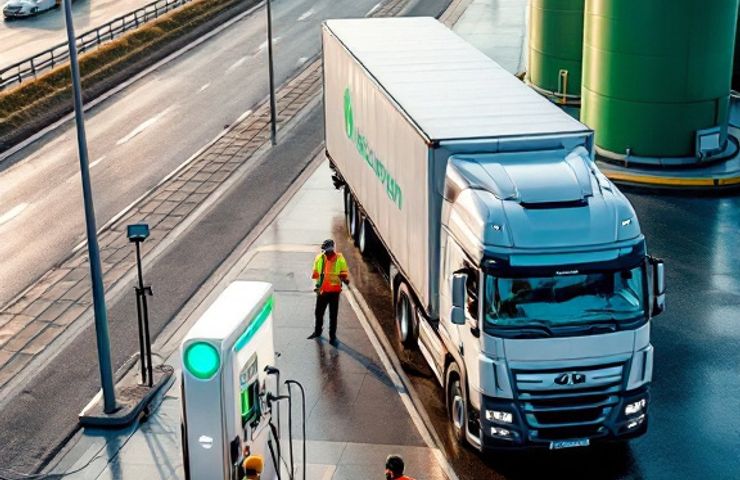
This month, the Netherlands Enterprise Agency (RVO) announced that reports attribute more than €44 million in funding to transport operators integrating hydrogen fuel-cell trucks under its Hydrogen in Mobility Subsidy Scheme (SWiM), aiming to spur coordinated deployment of vehicles and refuelling infrastructure nationwide.
The scheme, managed by the Netherlands Ministry of Infrastructure and Water Management and administered by RVO, requires applicants to form partnerships between at least one hydrogen-station operator and one transport or logistics company. Official guidance confirms that SWiM supports construction and expansion of high-pressure hydrogen stations, acquisition or conversion of hydrogen-powered vehicles, and related logistics equipment, with grants covering up to 80% of the incremental cost compared to diesel alternatives.
Bridging the Infrastructure-Vehicle Gap
Hydrogen heavy-duty transport has long been hampered by a “chicken-and-egg” dilemma: fleet owners hesitate to purchase costly vehicles without dependable refuelling, while infrastructure developers delay station builds without guaranteed demand. SWiM tackles both sides simultaneously by tying vehicle subsidies to station investment and by setting minimum capacity and utilisation requirements. According to official conditions, qualifying stations must offer at least 1,000 kilograms of hydrogen per day, of which a minimum of 300 kilograms must be earmarked for validated vehicle commitments.
Industry advocacy material from H2Accelerate underscores that station utilisation is critical: simply building stations does not de-risk investment unless a steady roster of trucks is on the road. That principle lies at the heart of SWiM’s partnership model, which aims to generate the traffic needed to push stations towards commercial viability.
Technically, heavy-duty refuelling stations employ high-pressure compressors and buffer storage to dispense hydrogen at pressures of 350 bar or 700 bar. Some operators link with local electrolysis providers to secure low-carbon supply, while others rely on tube trailers or liquid deliveries. Measuring throughput in kilograms per day and monitoring station uptime will determine whether these assets can compete without ongoing subsidies.
Other public reporting outlines that a recent application round involved eight partnerships, four brand-new stations, expansions at four existing sites, and proposals for 355 hydrogen trucks, according to business.gov.nl. Meanwhile, one report suggests that more than €80 million in subsidy requests landed against the scheme’s reported €44 million budget, highlighting both the appetite and the challenge of matching demand to available funds.
Industry Engagement and Advocacy
Fountain Fuel, a developer and operator of alternative-fuel infrastructure, is reported to have been in line for €13.6 million in SWiM subsidies for its hydrogen-truck deployments, on top of a previous €8.2 million award for station projects. The company highlights advantages such as rapid refuelling, maintained payload, and insulation from diesel-price volatility, although formal award documents from RVO have yet to confirm the exact figures.
Air Liquide has integrated its first hydrogen-powered trucks into Dutch logistics operations, illustrating the integrated supply-chain vision that SWiM fosters. The industrial gases specialist has also advocated for coordinated support measures, arguing that aligning station and vehicle investments is essential to improve hydrogen trucking economics.
Beyond the Netherlands, a group of stakeholders—including manufacturers associated with H2Accelerate such as Daimler Truck, Volvo Group and Toyota—have called on European regulators to adopt subsidy frameworks similar to Germany’s, embedding vehicle and station support in a single package. Though the precise composition of this advocacy remains under examination, it signals a broader push for policy that considers the full hydrogen value chain.
Participants must also navigate specialized safety standards, staff training requirements and maintenance workflows unique to hydrogen systems. These include regular leak testing, high-pressure equipment certifications and emergency response procedures, adding complexity and cost to early deployments.
Commercial Horizons and Cost Barriers
Hydrogen fuel-cell trucks deliver rapid refill times—often comparable to diesel—and can cover long distances suited to high-mileage operations, making them a compelling option for certain freight corridors. Yet recent European Commission analysis finds that both purchase prices and operating costs for hydrogen heavy-duty vehicles currently exceed those of diesel and battery-electric alternatives, while renewable hydrogen supply remains scarce and costly.
Environmental benefits hinge on hydrogen production pathways. Studies by the International Council on Clean Transportation show that lifecycle greenhouse-gas emissions fall substantially when hydrogen is produced via renewable-powered electrolysis, but fossil-based hydrogen offers only marginal gains once upstream emissions are considered. Accurate tracking of hydrogen origin will therefore be crucial to SWiM’s environmental credentials.
SWiM also fits within the EU Alternative Fuels Infrastructure Regulation, which mandates deployment targets for zero-emission refuelling stations along key transport corridors. This alignment underscores the Netherlands’ strategy to link its major ports and inland logistics hubs with sustainable fuel infrastructure, ensuring compatibility with broader European decarbonization goals.
Policy Levers and Future Measures
Industry actors are pressing for additional policy levers to tilt the economics in hydrogen’s favor, including road-toll exemptions for zero-emission fleets, green-hydrogen credit trading systems, and dedicated funding windows under national and EU programmes. While these proposals await regulatory endorsement, they highlight the policy ecosystem needed to support a long-term hydrogen transport market.
Given the Netherlands’ role as a logistics hub, projects in locations such as Meerkerk, Steenwijk and Woerden could connect hydrogen infrastructure with port operations, demonstrating how fuel-cell trucks might shuttle containers from terminals to inland distribution centres. Early port-linked deployments will signal whether hydrogen can integrate into the broader supply chain.
Market Formation versus Cost Parity
By design, SWiM is a market-formation instrument: it aims to catalyze early deployments rather than deliver immediate cost parity with established alternatives. Its lasting impact will depend on achieved station utilisation rates, unsubsidised total cost of ownership, residual values for hydrogen vehicles, and the stability of policy support over subsequent funding cycles.
Battery-electric heavy-duty trucks have advanced rapidly, with maturing charging networks, improving battery densities and declining costs. Hydrogen is poised to serve niche use cases—intensive long-haul routes where charging downtime, grid constraints or payload penalties pose challenges—but it faces competition from an accelerating electric-truck market.
Looking Ahead
The Netherlands’ integrated subsidy model offers a real-world laboratory for hydrogen logistics, producing vital insights into refuelling patterns, duty-cycle performance and total cost metrics. As operators, technology providers and policymakers assess these learnings, the key question will be whether SWiM can underpin a self-sustaining hydrogen trucking ecosystem—or whether the technology will remain reliant on sustained support to bridge the gap to commercial scale.