China Deploys First Hydrogen Fuel Cell-Powered Inland Container Ship in Push Toward Zero-Emission Waterways
China opens operational tender for its first hydrogen-powered inland container ship—a 64 TEU vessel set to cut 700 tons of CO₂ annually and redefine zero-emission river transport.
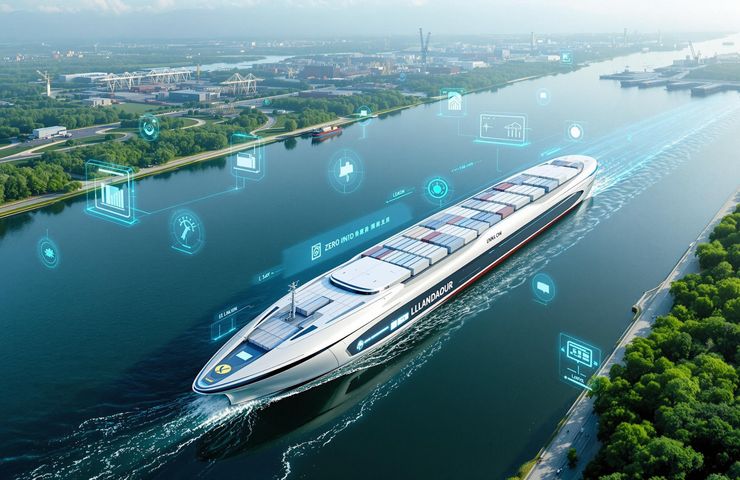
China is turning up the heat on inland waterway decarbonization with the launch of its very first hydrogen fuel cell-powered container ship. This isn’t just a cool new piece of tech—it’s a bold leap toward cleaner cargo transport. Led by Zhejiang Hydrogen Energy Industry Development Co., Ltd., the new ship will operate along the bustling Zhapu Port–Xiasha Port route in Zhejiang Province, aiming to slash emissions in one of the country's busiest shipping corridors.
A Big Move in Clean Shipping
This 64.9-meter vessel is no lightweight. It can haul 64 TEUs—or around 1,450 tons—and it runs on a pair of powerful 240 kW hydrogen fuel cell systems, developed by Sinosynergy. That makes it the most significant use of fuel cell technology onboard any Chinese ship to date. On top of that, the ship features a high-tech digital twin system, letting operators monitor its performance in real time and fine-tune the efficiency as it goes.
The project is being administered by Jiaxing Zhongcheng Construction Consulting Co., Ltd., and the services tender officially opened on July 7, 2025. With a contract valued at 680,000 yuan and no deposit required, it’s designed to get more players involved and push the project forward faster—all while meeting high safety and regulatory standards under China’s inland waterway rules.
Quick Tech Overview
- Hydrogen Fuel Cell Power: 2 × 240 kW systems
- Hydrogen Storage: 550–600 kg onboard capacity, depending on setup
- Estimated Range: About 380 km on a full tank
- Digital Twin Tech: Real-time data and predictive maintenance built in
Turning Words into Action on Decarbonization
This isn’t just about one ship—it’s about walking the talk when it comes to zero-emission technology and industrial decarbonization. China’s aiming for net-zero emissions by 2060, and inland shipping, still heavily diesel-reliant, is a tough nut to crack. That’s where hydrogen steps in. Thanks to its high energy density, it’s a great fit for mid-range, cargo-heavy routes where batteries struggle to meet the demands.
This prototype alone could cut around 700 tons of CO₂ emissions per year compared to its diesel counterparts. That’s a big win for the environment and a clear signal that hydrogen’s time on the water is now.
More Than Just a Ship: It’s a Hydrogen Wave
This vessel isn’t sailing solo—it’s leading the charge for a full-blown hydrogen logistics ecosystem. As China pours resources into building out hydrogen infrastructure in the Yangtze River Delta, this project is being positioned as a green corridor pilot. It’s expected to jumpstart upstream and downstream activity—from ramping up fuel cell system manufacturing to attracting more investment in smart maritime technology.
Companies that produce hydrogen storage, onboard systems, or software for vessel monitoring could all get a boost from the ripple effects. Still, it’s not all smooth sailing yet. High initial costs, limited refueling stations, and the need for regional policy alignment are just a few of the headwinds the industry must navigate.
What Makes This Project Stand Out
- It’s China’s first hydrogen-powered inland cargo ship, marking a key milestone in green transport innovation.
- It shows that zero-emission shipping with hydrogen fuel cells is possible—even on complex and power-demanding routes.
- With its location in Jiaxing, Zhejiang—a major logistics hub—it’s ideally placed to inspire similar rollouts across China’s inland waterways.
- It showcases the power of public-private partnerships in helping develop game-changing sustainable energy solutions for the maritime industry.
What's Next
With demo voyages expected to kick off in 2025, the industry's watching closely. If this ship can prove reliable, cost-effective, and cut emissions as promised, it could become a turning point for sustainable energy in heavy-duty transport. Sure, there are still challenges ahead—cost being a big one—but this project shows what’s possible when businesses, policymakers, and engineers get on the same page.
The Zhapu–Xiasha route may just be the beginning—but it's a powerful start to weaving a nationwide network of zero-emission hydrogen vessels that could reshape China’s future on the water.