Digital Holographic 3D Sensor Revolutionizes Fuel Cell Quality Control in Germany
Fraunhofer IPM and the University of Stuttgart have launched a digital holographic 3D sensor offering real-time, micrometer-accurate quality control for fuel cell manufacturing — a major step toward scalable, error-free production of hydrogen fuel cells.
Germany is charging ahead in its efforts to cut carbon emissions and ramp up its hydrogen infrastructure. In a big win for industrial decarbonization, a new digital holographic 3D sensor could change the game when it comes to producing high-quality hydrogen fuel cells. The innovation comes from the Fraunhofer Institute for Physical Measurement Techniques (Fraunhofer IPM), working closely with the University of Stuttgart.
Micrometer Accuracy, No Slowing Down
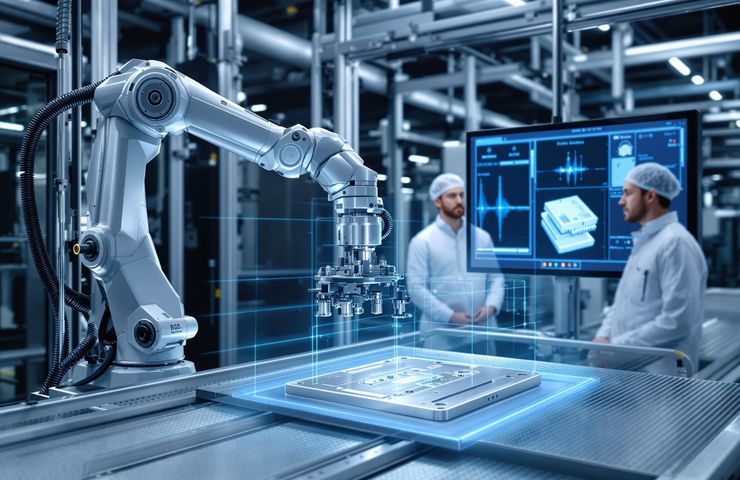
This cutting-edge sensor uses digital holography to scan the surface of metal bipolar plates — important building blocks inside fuel cells — with micrometer-level precision. But here’s the kicker: it does it all while keeping up with high-speed production lines.
Traditional inspections often check parts only after production—and randomly—but this sensor works inline, right on the production floor. It shines specially patterned light on each plate, captures the interference it creates, then instantly pieces together a detailed 3D map of the surface.
Even better? The system works hand-in-hand with a digital simulation model — a kind of digital twin — to not just spot defects immediately, but dig into what caused them in the first place. That means quicker fixes, smarter manufacturing, and a more consistent product.
Brains and Brawn: Teaming Up for Innovation
Behind this breakthrough is a mix of academia and industry, combining deep research knowledge with feet-on-the-ground expertise. Think Fraunhofer IPM, the University of Stuttgart, and companies like Thyssenkrupp Automation Engineering and Chemische Werke Kluthe. Together with backing from the German Research Foundation (DFG), they’ve brought this lab-born technology to real-world manufacturing.
The first rollouts are already happening in Baden-Württemberg, a region that's basically the Silicon Valley of German engineering — home to major research hubs and forward-thinking factories alike.
Why This Matters: Scaling Clean Energy
The big idea? Scalability. To make hydrogen fuel cells viable — especially for big jobs like trucks or power plants — manufacturers need a way to crank out high-quality parts quickly and cost-efficiently. Those metal bipolar plates are key players in that, and they’ve got to be just right.
Small defects, like wrinkles or warping, might not be visible to the naked eye but can seriously mess with a fuel cell’s performance — reducing efficiency, shortening lifespan, and driving up costs. This new tech helps spot and solve those issues before they turn into expensive problems, reducing waste and boosting production quality.
More Than Just a Surface Scan
What sets this apart is its deep integration into digital twin simulation. The 3D surface maps feed straight into virtual models of the forming process, giving engineers a real-time window into how the plates are made and how to fine-tune every part of that process — down to the pressure of forming tools or the shape of a mold.
And since the system can be tweaked to fit different plate sizes and shapes, it’s versatile enough to work on a range of applications across the fuel cell world. Welcome to the future of Industry 4.0.
Global Impact: Germany Raising the Bar
This tech isn’t just good for Germany — it’s setting a global standard. By leading the charge in advanced fuel cell technology, Germany is boosting its exports and reinforcing its role in shaping the future of the green hydrogen economy. It’s also giving local manufacturers an upper hand in hitting clean energy targets without cutting corners on quality.
Plus, this kind of inline inspection tool offers airtight traceability — a growing must-have as governments and industries tighten the rules around zero-emission systems and demand more reliable equipment to meet climate goals.
Looking Ahead
Right now, the sensor system is being put through its paces in pilot runs that mimic real-world conditions. And everything points to it being ready for commercial rollout — especially for OEMs racing to build out their fuel cell platforms. If it delivers at scale, this could quickly become the gold standard for quality control across hydrogen fuel cell production in Europe, North America, Asia, and beyond.
Bottom Line
This project shows what’s possible when you fuse cutting-edge measurement tech with smart manufacturing. As demand for clean technology grows, tools like this sensor won't just be helpful — they'll be essential. Quietly but powerfully, they’ll help fuel the global shift to more reliable, affordable, and scalable hydrogen energy systems.
Sources: Fraunhofer IPM Release, Project Summary PDF, Metrology News Article