Energy Plug Powers Into U.S. Grid Storage Market With 3GWh Supply Push
Energy Plug enters the U.S. market backed by a 3GWh Taiwanese supply line, an Indigenous-led strategy, and a forward-looking storage tech vision.
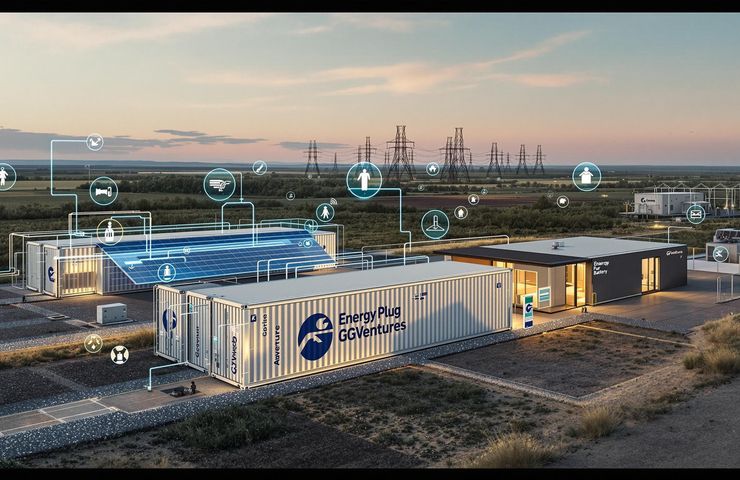
Energy Plug Technologies Corp. just made a bold move — and it's starting to light up the U.S. energy storage scene in a big way.
The Vancouver-based company has signed a major supply deal with GGVentures of the Carolinas, LLC, officially launching its expansion into the U.S. utility-scale battery market. But this isn’t just a cautious entry — it’s a full-on push backed by 3GWh of battery supply from SEETEL New Energy Co., Ltd. in Taiwan. Add in a cross-border network of engineering partners and Indigenous-led innovation, and you’ve got the makings of a serious national rollout. First stop: South Carolina. From there, commercial sites, municipal projects, and infrastructure-heavy regions across the U.S. are all on the map.
Why now? Because the U.S. grid needs answers — fast
The American power grid is under pressure like never before. There’s a massive push to bring more renewables online, reduce emissions, and beef up grid resilience — all while dealing with cyber threats and a shaky supply chain. Federal support, especially from big-ticket policies like the Inflation Reduction Act, has thrown fuel on the clean energy fire. And right in the middle of it all comes Energy Plug — not late to the game, but rolling in with deep resources, sharp engineering, and something different: an approach rooted in ethical development, led in part by Malahat Battery Technologies Corp., an Indigenous-driven clean tech partner.
“The demand for scalable, secure energy storage is soaring,” the thinking goes — and with this move, Energy Plug is clearly ready to deliver.
The tech: Utility-grade battery systems built to perform
These aren’t your typical batteries. Powered by the industrial-strength output of SEETEL’s Taiwan plant — with a hefty 3GWh annual production capacity — these Utility-Grade Battery Energy Storage Systems are designed to smooth out grid spikes, handle demand surges, and maximize the value of renewable power. Coming soon is Energy Plug’s next-gen Quantum Technology Secure Energy Management System, which promises advanced monitoring and smart control to help future-proof installations. That piece is still in development at a planned facility in Canada, but it's expected to boost deployment on both sides of the border.
Smart business with a heart
What’s really compelling here is the fusion of commercial savvy and community-rooted values. GGVentures brings serious clout — with a $5 billion track record in energy and infrastructure builds — giving Energy Plug a fast lane to the Eastern U.S. landscape. And this isn’t just boxes of batteries. The package includes commissioning support, reliability planning, and boots-on-the-ground services to keep systems humming.
Then there’s Malahat Battery Technologies, anchoring the effort in a socially responsible vision. The aim is clean energy infrastructure that’s not just efficient, but equitable — built with communities in mind, not just profit margins.
Upsides — and a few hurdles
The benefits here speak for themselves: new jobs across the growing battery supply chain, competitive pressure on legacy providers, and a clear road toward deeper U.S.-Canada collaboration on clean energy infrastructure. But there’s also a geopolitical wrinkle to consider. With SEETEL based in Taiwan, shifting international dynamics could affect shipping and supply. That’s why Energy Plug is already prepping a domestic assembly facility in Canada — a smart hedge to keep control closer to home and strengthen long-term grid resilience.
Plugged in and powering ahead
For a company that started out focusing on Canada and Latin America, this step into the U.S. couldn’t come at a better time. With momentum building around grid modernization, utility-scale batteries, and sustainable power, the opportunity is wide open. And with experienced partners and a firm supply chain in place, Energy Plug is positioned to help shape where the energy storage sector goes next.
There’s still a lot to roll out — from scaling operations to hitting performance benchmarks — but the foundation is solid. And in a space where capacity and trust matter more than anything, that’s how you get ahead.
The plug’s in. Now comes the spark.