News
Hazer and KBR Forge Global Path for Low-Emission Hydrogen Production via Methane Pyrolysis
Hazer and KBR are teaming up to fast-track low-emission hydrogen production using methane pyrolysis, targeting ammonia and methanol industries as the first rollout sectors.
New Global Alliance to Commercialize Clean Hydrogen from Methane
In a bold step toward reshaping the future of hydrogen production, Australia’s Hazer Group Ltd has teamed up with U.S. engineering powerhouse KBR in a strategic, binding alliance. Their goal? To fast-track the global rollout of Hazer’s cutting-edge methane pyrolysis technology. And they’re not wasting any time—teams on the ground in Australia, the UK, and the U.S. have already kicked things off, as of May 5, 2025.Why This Matters: Taking the Carbon Out of Hydrogen
If you dig into how hydrogen is made today, a lot of it still comes from Steam Methane Reforming (SMR)—a method that’s heavy on CO₂ emissions. That’s a problem, especially for industries like ammonia and methanol production that rely heavily on hydrogen. Here’s where Hazer steps in. Their unique process cracks methane into clean hydrogen and solid graphite—without pumping carbon into the air. Instead of leaning on water-intensive electrolysis or sticking with dirty SMR, Hazer offers a cleaner, more practical alternative that could reshape some of the hardest-to-decarbonize industries.The Partnership in Focus
KBR will serve as the exclusive global licensee of the Hazer tech for clean ammonia and methanol markets, and they’re wasting no time charting a global path forward. They’re already working on a Process Design Package tailored for large-scale facilities pumping out 50,000+ tonnes of hydrogen each year. With KBR’s expertise in large energy projects and a strong track record in industrial decarbonization, the alliance is tapping into key markets across North America, the Middle East, and Asia-Pacific. These regions are hotbeds of energy and petrochemical activity—making them prime ground for deploying next-gen hydrogen infrastructure.From Pilots to Plants: Western Australia as Launchpad
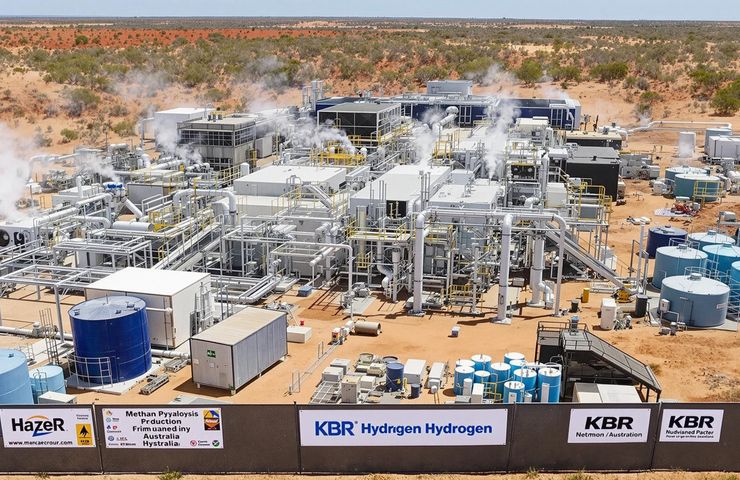
The story starts in Munster, Western Australia, where Hazer’s Commercial Demonstration Plant has been up and running since 2024. It didn’t just prove the tech works—it signaled that it’s ready to scale commercially. Western Australia, long-known for energy innovation, is now doubling as a blueprint for how this technology could roll out worldwide. The plant isn’t just a milestone—it’s a model.Business Strategy and Upside
This partnership isn’t just about cool science—it’s a smart business move. Where many green hydrogen projects still struggle with sky-high capital costs and slow infrastructure buildouts, the Hazer Process offers a way around the bottlenecks. Because it uses existing natural gas networks, it’s faster and more affordable to get up and running. Even better? It doesn’t just make hydrogen. The process also yields high-purity graphite, which is in high demand across the battery supply chain and steelmaking. That built-in dual revenue stream makes Hazer’s model even more compelling for investors and industry players alike.The Bigger Picture: Hydrogen’s Inflection Point
This isn't just another announcement—it’s a sign of where the hydrogen economy is really heading. While electrolysis gets plenty of hype, it’s not the only game in town. Technologies like methane pyrolysis are gaining serious traction—offering companies faster, cheaper ways to cut emissions now, instead of waiting for a perfect future to arrive. As one industry analyst put it, we’re seeing the start of a “new industrial layer,” one that makes clean hydrogen more accessible and practical—without a decade-long infrastructure overhaul.Looking Ahead
The Hazer–KBR partnership kicks off with a six-year term, but there’s a good chance this is just the beginning. As the world moves faster toward industrial decarbonization, more companies are looking for solutions that don’t require ripping and replacing existing systems. If these two deliver on what they’ve promised, we could see a new path forward for clean ammonia, low-carbon methanol, and even broader applications. With the right mix of policy support, investor confidence, and proven tech in the field, the big question now is: How quickly can this scale up? And if momentum keeps building? The answer might be—sooner than anyone expected.How was this article?
Thanks for the feedback!