Hybrid Hydrogen-Battery Retrofit Powers UK Vessel Toward Maritime Decarbonization
AceOn Group and its UK partners have retrofitted a research vessel with a hybrid hydrogen-battery system. Trialed in the North Sea, it's a major leap toward zero-emission maritime support for offshore wind facilities.
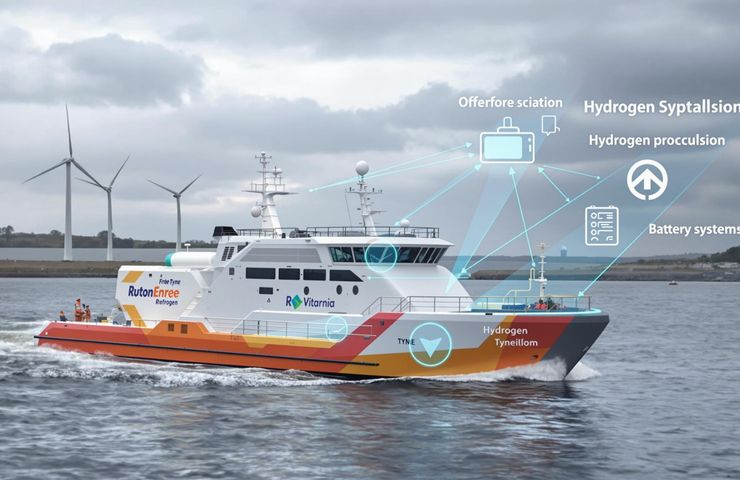
Big things are happening in the move toward cleaner seas, with the UK taking a bold step forward. A team led out of the UK pulled off what’s being called a major milestone—a real-life test of a hybrid hydrogen and battery retrofit system on board Newcastle University’s research vessel, the Princess Royal. The trial, which reportedly took place in May 2025, wasn’t just some lab experiment—it played out in the open waters of the North Sea and River Tyne, which is fitting given the region’s growing importance in the offshore wind game.
An Important Step Toward Greener Shipping
This wasn't just a tech demo—it was part of the RESTORE project (short for Retrofittable Propulsion System for Electric Vessels with Hydrogen Range Extender). The project was spearheaded by the renewables team at AceOn Group and brought together some major players like Offshore Renewable Energy Catapult, Newcastle University, and Engas Global. The initiative reportedly got a £4.6 million funding boost via the Clean Maritime Demonstration Competition (CMDC3), backed by Innovate UK and tied to the UK SHORE programme under the Department for Transport. Official funding figures haven’t been fully confirmed yet, so best to check directly with Innovate UK for the details.
So what makes this system stand out? It doesn’t rely solely on batteries or hydrogen—it blends both. The ship runs on a battery-electric drivetrain, with a hydrogen generator acting as a “range extender”. Even better, it’s built to be retrofitted into existing vessels. That’s a game-changer for operators with diesel fleets—it means you don’t have to start from scratch or cough up the budget for entirely new ships. It’s about evolving, not replacing.
Testing Where It Matters—On Water
This wasn’t just some prototype running in perfect lab conditions—the team took it to the real world. The test happened on the Princess Royal out in the North Sea and the River Tyne, an area that’s not only historically important but also central to the UK’s offshore wind industry. With vessels like Crew Transfer Vessels (CTVs) constantly in play, and most still burning conventional fuel, a clean propulsion system you can retrofit is a pretty big deal.
Engineers from Newcastle University reportedly played a key part, with support mentioned from experts like Dr. Serkan Turkmen, Dr. Rose Norman, and Dr. Kayvan Pazouki. They were said to have helped with integrating the system and running performance tests. For the full scope of their work, a technical deep dive is available via the university.
Teamwork Driving Real Results
This project was a total team effort. Beyond AceOn and Newcastle, other players like Liverpool John Moores University, University of Liverpool, Taurus Engineering, and CAGE all had their hands in the mix. Whether it was designing retrofit solutions or refining the fuel system, each partner brought something crucial to the table.
It all ties into the UK’s longer-term play: becoming a global leader in sustainable energy and building out top-tier hydrogen infrastructure. With reported backing from the £206 million UK SHORE programme, the UK’s clearly betting big on homegrown solutions that can be scaled for worldwide impact. Projects like RESTORE are the building blocks for that vision.
Powering Up Without a Complete Overhaul
Here’s the thing: the shipping industry’s under increasing pressure to clean up its act—from international regulations to decarbonization goals set by the corporations themselves. That’s exactly where systems like RESTORE come into play.
The real beauty? You don’t need a fleet of brand-new ships. This hydrogen-battery setup is all about retrofitting; plugging into what’s already out there. That’s not just smarter from a budget perspective—it’s faster, too. Ship operators can make measurable progress toward industrial decarbonization without going broke or falling behind.
And because the technology’s built for flexibility, it opens the door for scalability. Small and mid-sized fleets can start making changes now instead of waiting years for an infrastructure overhaul or big-order builds.
Looking Ahead
This reported trial was just the first chapter. The next step? The team aims to get this system certified and ready for real-world deployment. More design tweaks may come, and there’s talk of targeting broader commercial use—particularly in high-demand industries like offshore support shipping. No official release timeline has been announced yet, though.
Even with some technical details still under wraps, what’s clear is this: the system works. A zero-emission technology, engineered in the UK, is now up and running in British waters. And that could be just the start of something big for global fleets.
Charting a Clean Course with Hydrogen
For the shipping world, the RESTORE project sends a powerful signal: The UK’s getting serious about its role in creating a future powered by hydrogen fuel cells and sustainable energy. With R&D muscle from universities, government funding, and smart collaboration between industry players, it's pushing forward with purpose.
More port operators and shipping companies are crafting their own zero-emission roadmaps. If this trial is anything to go by, the message is clear—don’t overlook the ships you’ve already got. Retrofitting might just be the quickest, most cost-effective way to meet tough decarbonization targets.
What happens next comes down to scaling production, aligning with policy, and securing long-term investment. But make no mistake: hydrogen is on the rise, and projects like RESTORE are proving it belongs in the conversation.