Hydrogen news
Long haul vehicles to use opposed-piston hydrogen engine technology
Researchers have found that the H2-powered design can be effective for difficult to electrify vehicles. Achates Power and researchers from the Argonne National Laboratory from the US Department of Energy (DoE) are partnered on a project to develop a hydrogen engine customized to work in commercial long-haul vehicles that are difficult to electrify. Achates Power is best known for its cutting edge opposed-piston, two-stroke compression ignition designs. The research team held a demonstration to show that a hydrogen engine can be successfully created using an opposed-piston design with compress…

Researchers have found that the H2-powered design can be effective for difficult to electrify vehicles.
Achates Power and researchers from the Argonne National Laboratory from the US Department of Energy (DoE) are partnered on a project to develop a hydrogen engine customized to work in commercial long-haul vehicles that are difficult to electrify.Achates Power is best known for its cutting edge opposed-piston, two-stroke compression ignition designs.
The research team held a demonstration to show that a hydrogen engine can be successfully created using an opposed-piston design with compression ignition. “Hydrogen may be the best fuel for truly sustainable long-haul transportation. Argonne’s successful demonstration with carbon-free hydrogen combustion will be an important step towards decarbonizing the mid-duty, heavy-duty freight sector,” said Argonne principal engineer Essam El-Hannouny in a statement.Notable advantages to this hydrogen engine design
The opposed-piston engine was first developed more than a century ago during World War II, and it was at this point that it saw its greatest use, propelling large vehicles such as aircraft carriers and submarines. The fuel efficiency the design achieved was considerable. That said, as emissions regulations continued to tighten, its mainstream adoption was obstructed. More recently, tech and engineering developments have brought the opposed-piston engine back into the spotlight, particularly in terms of its potential uses in decarbonizing mobility.Streamlining
When compared to conventional internal combustion engines (ICEs), the new opposed-piston designs offer a range of advantages for use in hydrogen engine designs. This is particularly true of the streamlining Achates Power worked into the piston architecture.
One cylinder
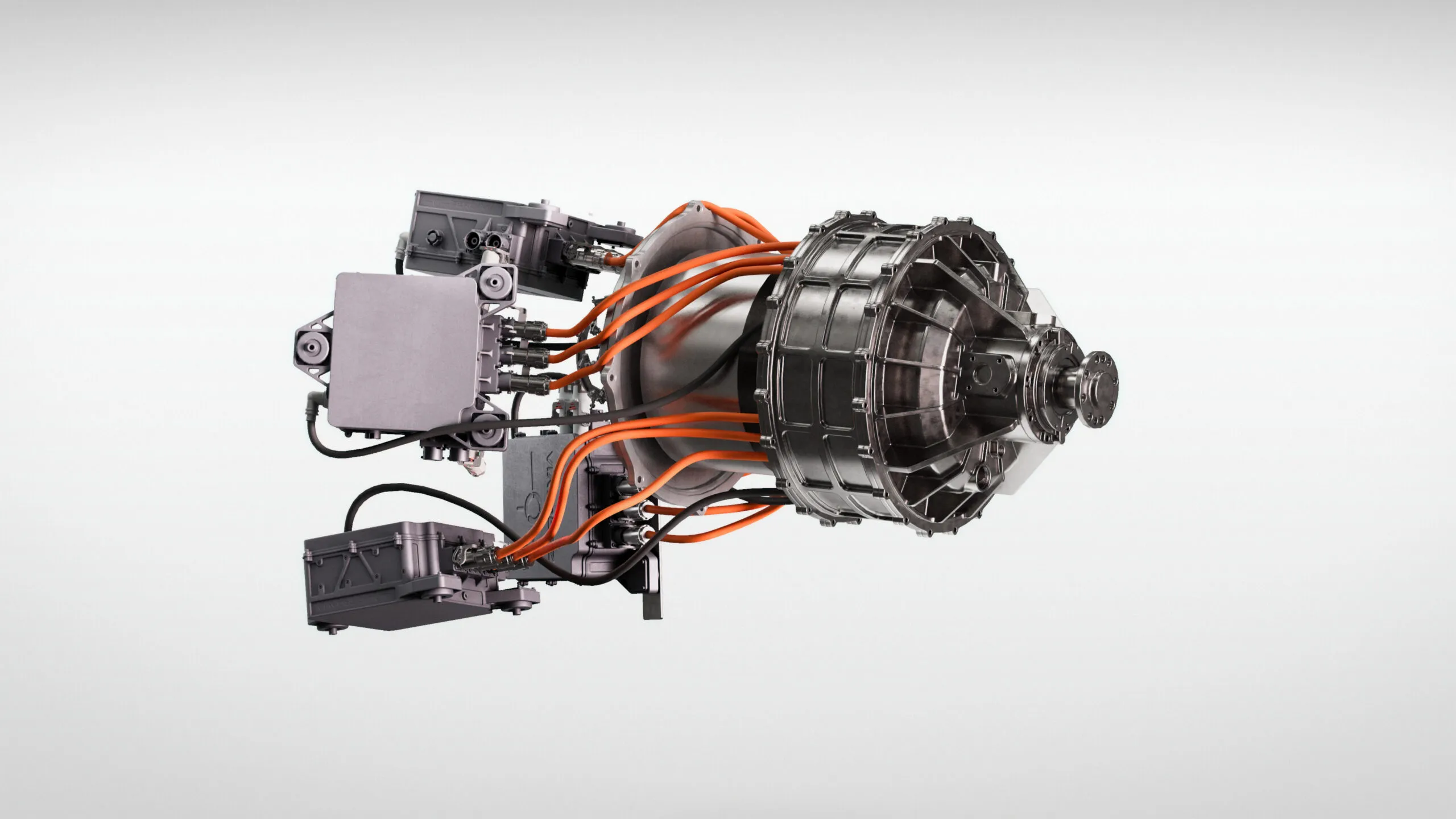
The way it works is that there are two pistons that function in opposition with a single cylinder. In this way, cylinder heads aren’t needed anymore. As a result, both the heat loss and inefficiency of ICEs are addressed, according to the researchers.Why a hydrogen engine?
The opposed-piston design is particularly well suited to a hydrogen engine because of H2’s low ignition energy and high reactivity. When combined with a two-stroke combustion cycle, it leads to twice to number of power strokes per crankshaft revolution when compared with a conventional four-stroke design. The outcome is more power output. Moreover, it is less expensive, more lightweight, and has a simpler construction process. All these factors align well with the needs of long-haul vehicles. Ready to test your knowledge on the most abundant element in the universe? Take our fun and engaging Hydrogen Quiz now! [forminator_quiz id="58712"]How was this article?
Thanks for the feedback!