Hydrogen Production Boosted by Wrexham University's New Research Hub and Experts
Wrexham University brings in hydrogen and composite materials experts to lead its hydrogen R&D hub, boosting UK decarbonization goals via the Enterprise Engineering and Optics Centre.
Wrexham University is turning up the heat on the clean energy front, making bold moves to lead in hydrogen infrastructure and industrial decarbonization. As part of its growing Enterprise Engineering and Optics Centre (EEOC), the university has added two top-notch research leads to the team—helping Wales not only clean up its energy game but also breathe new life into its industrial scene with a clear eye on zero-emission technology.
Bringing in the Big Guns for a Cleaner Tomorrow
Stepping into key roles are Barry Johnston, a pro when it comes to hydrogen engineering, and Dr. Meysam Anamagh, who brings serious know-how in composite materials. Together, they’re set to push the boundaries on next-gen hydrogen production and energy storage solutions.
Johnston’s diving deep into how we produce, use, and store green hydrogen, with one of his main goals being to figure out how to scale up electrolyzers so they can serve the heavy hitters in the industrial world. On the flip side, Anamagh is focused on creating super-strong, ultra-light composite tanks that can store hydrogen more efficiently—a game changer for sectors like logistics and aviation where every kilo counts.
As one industry insider put it, “People don’t always realize how big a deal safe, cheap hydrogen storage really is. You mess that part up, and the whole system falls apart.” That’s exactly the kind of issue Anamagh’s looking to tackle, using custom-designed materials from the ground up.
EEOC: Local Roots, Global Goals
Still under construction in Wrexham, North Wales, the EEOC isn’t just another academic lab. It's being built to be a launchpad for clean manufacturing and industrial partnerships. Picture real-world testbeds for hydrogen systems and fresh spaces to explore futuristic composite materials—all housed under one very forward-thinking roof.
Backed by UKRI grants and regional decarbonization support, the centre aims to clear some of the toughest roadblocks in clean hydrogen technology. The bigger vision? To become a go-to innovation hub where startups and larger manufacturers can develop and deploy the solutions of tomorrow.
This isn’t just a local ambition either. It ties directly into the UK’s punchy net-zero target for 2050, and builds on the government’s £4 billion pledge toward hydrogen laid out in the 2023 National Hydrogen Strategy.
Wrexham's Energy Comeback Story
Wrexham might not be known as a renewable energy hot spot—yet—but that’s changing fast. With a strong working-class history rooted in coal mining and heavy industry, the town’s now eyeing a comeback in the booming £20.49 trillion hydrogen mobility economy forecasted for 2030.
What’s powering this transformation? It’s the magic of connecting education, industry, and government—exactly the kind of collaboration the EEOC is built to support. Attracting experts like Johnston and Anamagh isn’t just about research—it’s a statement that Wrexham is ready to compete on the world stage.
“Wales has had a deep bench in materials science for centuries,” said a government spokesperson. “Now, EEOC is taking that legacy and putting it to work where it matters most—clean industry, energy resilience, and future-proofed jobs.”
Pushing the Tech Frontiers: Electrolysers and Carbon-Fiber Tanks
Two main tech pieces are stealing the spotlight at EEOC: smarter hydrogen electrolysers and next-gen composite hydrogen tanks.
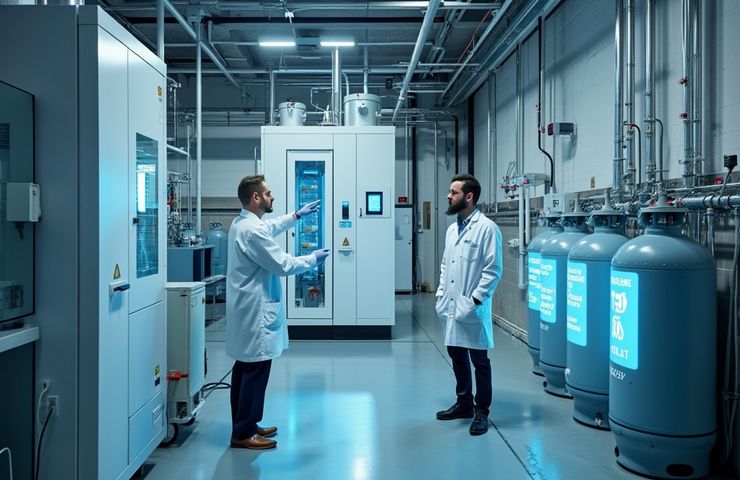
Electrolysis—the process of splitting water into hydrogen and oxygen using renewable electricity—is one of the cleanest ways to produce hydrogen. But there’s a catch: it’s still tricky and expensive at scale. That’s where Johnston steps in, focusing on how to fine-tune performance and actually plug these systems into busy, real-world factories for everyday green hydrogen production.
Then there’s the tank challenge. Anamagh’s working on high-pressure tanks made from carbon-fiber composites that not only weigh a lot less than current metal designs but also hold up better under extreme conditions. Think aerospace, long-haul trucks, maybe even shipping down the road. The problem? Manufacturing them in bulk without breaking the bank. Solving that is high on EEOC’s to-do list.
Bigger Than the Lab: Building a Whole Ecosystem
This effort reaches far beyond R&D. If EEOC hits the mark, it won’t just create tech—it’ll help shape national policy, draw in private capital, and accelerate the larger rollout of hydrogen infrastructure across the UK.
What could that look like in the real world? Cleaner delivery vans. Heavy-duty trucks running on hydrogen. Local factories slicing emissions. Aerospace startups testing bold new aircraft designs powered by lightweight fuel tanks.
No one’s saying Wrexham’s about to become the next Silicon Valley—but make no mistake, it’s carving out its own lane. One that’s deeply rooted in industrial tradition, but charging straight into a clean-energy future.