Hydrogen Production Gets a Boost: Ammonia Decomposition Enters the Green Chat
Ammonia is emerging as the go-to hydrogen carrier, and new research into efficient decomposition methods could flip the script on hydrogen logistics. This could be the backbone of distributed clean energy.
The Hook: More Hydrogen, Less Hassle
Let’s be real—hydrogen's great for the planet, but moving and storing the stuff? Total headache. That’s where ammonia comes in. It packs hydrogen in a form that’s way easier and safer to handle. And now, thanks to that convenience, it’s fueling a whole new push for innovative green hydrogen production, with scientists and engineers all over the world diving in headfirst to crack the code.
The Core Story: Ammonia Decomposition is Having Its Moment
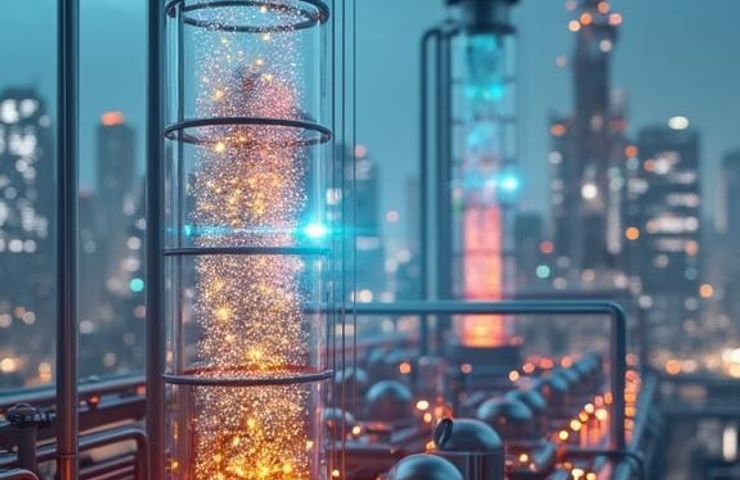
The global scientific research community—we're talking labs, universities, major industry players—is rushing to unlock ammonia (NH3) as a go-to hydrogen carrier. The big idea? Break it down right where you need the fuel. That means localized, on-demand hydrogen production, without needing massive pipes or deep-freeze storage tanks. Right now, researchers are honing in on four key tech paths: thermocatalysis, photocatalysis, electrocatalysis, and plasma-assisted decomposition. Each has its quirks, but they all share one mission—making sustainable energy practical and portable.
The takeaway? We’re talking about producing clean, carbon-free hydrogen right on-site—safely, efficiently, and without the usual logistical chaos.
Technical Punch: How They're Cracking NH3
- Photocatalysis: This one's solar-powered. Light hits a semiconductor catalyst, creates radicals like NH2, and starts breaking down ammonia. Super eco-friendly and energy-light, but still in early lab stages.
- Thermocatalysis: The old reliable. Heat and metal catalysts (think ruthenium, iron, nickel) do the heavy lifting to split ammonia. It's well proven, but pretty demanding on the energy front.
- Electrocatalysis & Plasma: These methods use electric currents or plasma to nudge the reaction along at lower temps. They’re still in the R&D sandbox, but they’ve got big potential for mobile and remote hydrogen storage setups.
The Strategic Angle: Why Now, and Why It Matters
By 2025, energy solutions need to be flexible, decentralized, and low-emission. Ammonia fits right in. It moves easily across the globe, stores more hydrogen per liter than liquefied H2, and doesn't need extreme cooling. If we dial in efficient NH3 cracking, ammonia could become the main highway for distributed hydrogen energy.
And here’s the real game-changer—government policy is finally catching up. With climate deadlines creeping up, ammonia-based green hydrogen supply chains are shifting from science projects to strategic assets.
R&D Reality Check
There’s a ton of momentum, but the road’s not exactly smooth. Catalysts still need to get tougher, cheaper, and more efficient under gentler conditions. Large-scale NH3 handling brings its own safety challenges, and let’s not forget—most ammonia is still made with fossil fuels, so the carbon math has to be cleaned up too.
But there’s good news—AI is joining the fight. Machine learning is speeding up catalyst design, cutting trial-and-error down, and helping researchers zero in on what actually works faster than ever. Smarter simulations = fewer dead ends.
So What?
Look, this isn’t just a niche science race over fancy catalysts. If ammonia cracking tech breaks through, it changes the whole landscape of the hydrogen economy. Especially in places like heavy industry or aviation—where plugging in isn’t an option—on-site hydrogen from NH3 could become standard operating procedure.
Yeah, it’s early days—but this is the kind of early that shapes industries. Think oil in the 1920s. The first teams to unlock cheap, low-temp ammonia decomposition? They won’t just be winning awards—they’ll be building the backbone of tomorrow’s sustainable energy infrastructure.
Final Word
Ammonia's been lurking in the background for decades, just waiting for its chance. And now? It finally has the spotlight. Time to see if the tech can live up to the hype. Because if it does, we’re looking at a whole new chapter in clean energy.