Hydrogen news
Could math be the solution to effectively blend hydrogen with natural gas?
Using H2 in Natural gas pipelines can make for an easier transition to a hydrogen energy economy. However, is math the answer to safely and effectively blend hydrogen with natural gas in pipelines? A mathematical modeling by Los Alamos National Laboratory (LANL) has demonstrated that math can show how to safely blend hydrogen in natural gas for transport in existing pipeline infrastructure. The mathematical modeling can guarantee blending reliability. Guaranteeing this reliability boosts hydrogen’s role in energy transition, helping the shift to a net-zero economy. A new paper detailing the…

Using H2 in Natural gas pipelines can make for an easier transition to a hydrogen energy economy.
However, is math the answer to safely and effectively blend hydrogen with natural gas in pipelines? A mathematical modeling by Los Alamos National Laboratory (LANL) has demonstrated that math can show how to safely blend hydrogen in natural gas for transport in existing pipeline infrastructure.The mathematical modeling can guarantee blending reliability.
Guaranteeing this reliability boosts hydrogen’s role in energy transition, helping the shift to a net-zero economy. A new paper detailing the LANL researchers’ mathematical modeling revealed that they used nonlinear partial differential equations to develop the model for transporting heterogeneous mixtures of natural gas and hydrogen via pipeline systems. According to the paper, “Transitions from Monotonicity to Chaos in Gas Mixture Dynamics in Pipeline Networks”, published in the journal PRX Energy, the blending hydrogen with natural gas infrastructure modeling includes:- Compressor and regulator units.
- Supply stations designed to inject gas into the network at defined pressure and hydrogen blends.
- Flow stations that withdraw the mixture from the network.
The mathematical modeling solves blending hydrogen with natural gas challenges.
One of the challenges of blending hydrogen with natural gas is that hydrogen is much lighter than natural gas, which is mostly methane.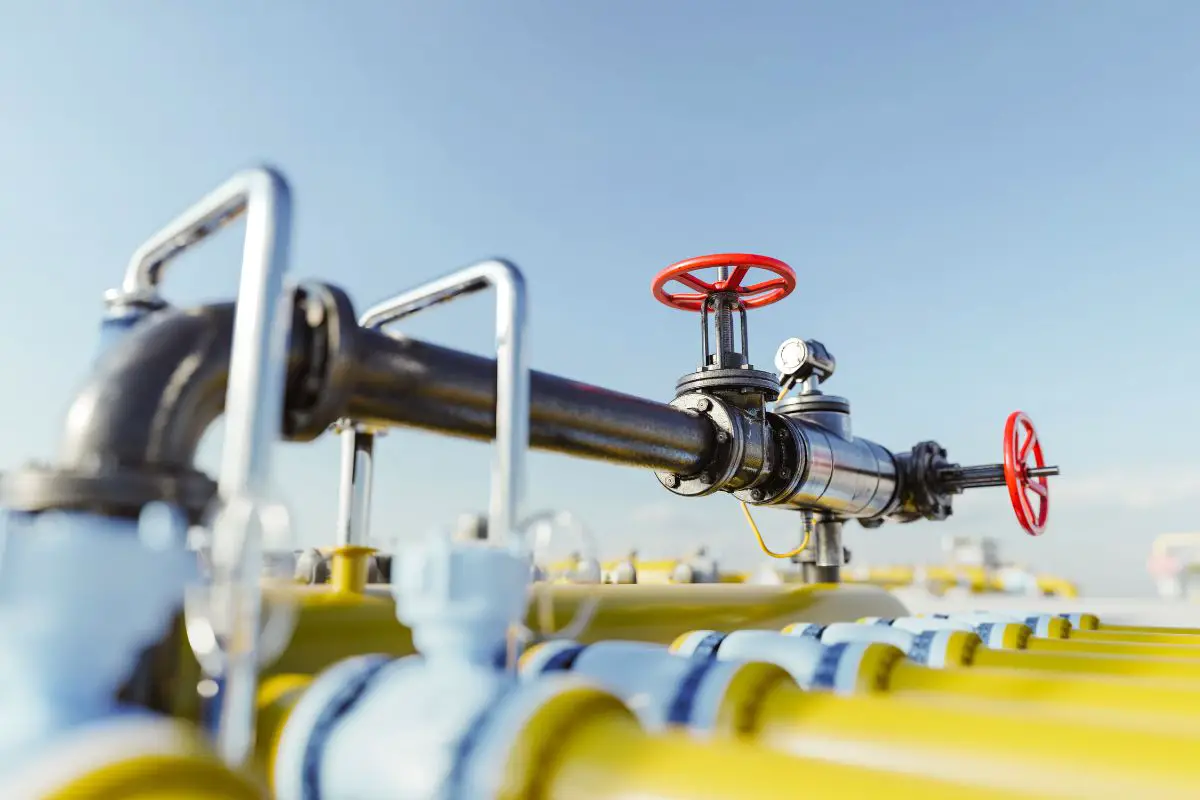 The LANL team’s mathematical modeling showed that by restricting the rate of change of hydrogen injection into a natural gas pipeline, this will prevent large, quick changes in pressures. This method for stimulating a pipeline network could open the door for operators to develop standards on injection rates.
Transporting hydrogen in existing infrastructure.
With the ability to transport hydrogen in existing natural gas pipeline networks, this gives operators the ability to maximize the utility of these extensive and costly facilities while lowering carbon emissions. Blending hydrogen with natural gas extends the benefits of hydrogen for other uses, including being burned to power manufacturing facilities, producing electricity, and even for use in household appliances, such as furnaces and dryers. Ready to test your knowledge on the most abundant element in the universe? Take our fun and engaging Hydrogen Quiz now! [forminator_quiz id="58712"]How was this article?
Thanks for the feedback!