Japan Engine Corporation Drives Global Shift Toward Clean Ammonia Marine Fuel
J-ENG's ammonia-fueled marine engine, set for 2025 rollout, signals Japan’s commercial entry into zero-carbon shipping with strong government backing. Could this anchor the next wave of global maritime decarbonization?
Japan Engine Corporation (J-ENG) isn’t just catching the clean energy wave—it’s helping build the surfboard. With its first full-scale, ammonia-powered two-stroke marine engine set to roll out in October 2025, the company is doing more than going green—it’s going full throttle. This bold move puts Japan’s climate goals on a fast track, making decarbonization feel less like an abstract policy and more like a hands-on mission.
Ammonia, Hydrogen, and Rethinking What Fuels the Seas
To put things in context, global shipping is a major emitter—responsible for nearly 3% of worldwide greenhouse gases. So finding cleaner ways to move goods across oceans is a pretty big deal. Enter ammonia. When made using green hydrogen and powered by renewable electricity, it becomes a carbon-free fuel with real promise. Sounds great on paper, but turning it into a reliable fuel for ships? That’s where the heavy lifting begins. And J-ENG has been doing that lifting for years.
What sets their engines apart is not just the ability to run on ammonia—it’s how they do it. These advanced dual-fuel two-stroke engines leverage sophisticated stratified injection technology that controls the way ammonia combusts, ensuring a cleaner, safer burn without letting harmful nitrous oxide (N₂O) off the leash. It’s smart engineering for a smarter energy future.
Big Goals, Big Bucks
J-ENG isn’t going it alone. The Japanese government, through the Ministry of Economy, Trade and Industry (METI), is making huge investments in the future of maritime fuel. With Japan’s eye on a $1 trillion energy transition strategy—called the Green Transformation (GX)—more than $51 billion has already been set aside for the development of alternative fuels like hydrogen and clean ammonia.
This isn’t just political posturing. It’s real support—from policy planning and international forums to deep funding through programs like the Green Innovation Fund. The goal is clear: Japan won’t just adapt to decarbonization. It wants to lead.
From Engine Lab to Open Ocean
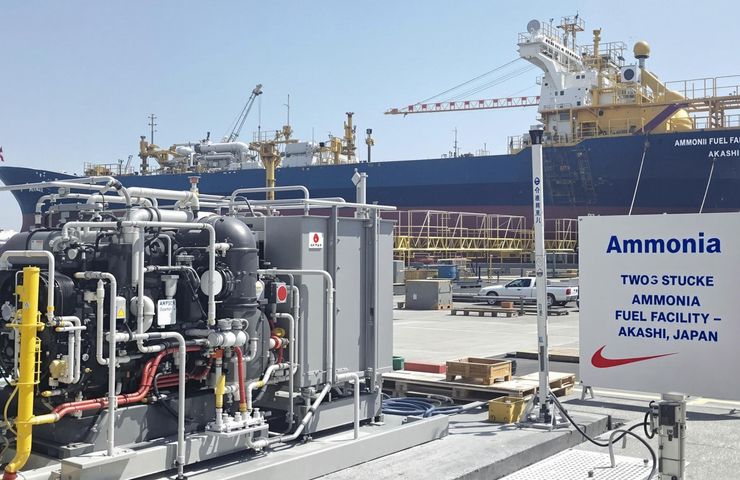
The beating heart of this project is J-ENG’s facility in Akashi, located in Japan’s industrial west coast. It’s here that the company is turning concept into reality. By 2028, the site will be transformed into the world’s first dedicated ammonia engine production plant. This is more than a factory—it’s a cornerstone for a new era of sustainable shipping.
The first proof of that effort will hit the water soon. A brand-new, medium-sized gas carrier will host the inaugural engine in late 2025, with full deployment penciled in for November 2026. These aren’t small test runs—they’re the vanguard of a wider push to grow clean ammonia supply chains and rework port infrastructure around low-carbon fuels.
High Stakes, Bigger Payoffs
Of course, it’s not all smooth sailing. Ammonia is toxic, and using it at scale means rethinking safety standards from the ground up—from improved port systems to extensive crew training. Then there’s the tricky matter of combustion and emissions control, especially managing those persistent N₂O levels.
But cracking this challenge could do more than green Japan's domestic fleet. It could position Japanese tech as the go-to solution for a shipping industry facing pressure from regulators like the IMO, which keeps tightening its carbon reduction timelines. Picture giant cargo vessels cruising between Europe and Asia, burning ammonia and carrying a "Made in Japan" engine—a powerful blend of policy, innovation, and strategic export ambition.
At its core, J-ENG’s breakthrough is a lesson in how industrial decarbonization can happen when strong engineering meets real government muscle. Japan isn’t just walking away from fossil-driven fleets—it’s staking a future on ammonia production, hydrogen infrastructure, and homegrown innovation.
2025: From Plans to Ports
September 2024 marked the successful wrap-up of single-cylinder combustion testing. Now, co-firing trials at full scale are already showing promise. With eyes now focused on system integration and final deployment, 2025 looks ready to shift clean shipping out of the pilot phase and into the fleet.
This isn’t just about engines—it’s about proving what happens when a country gets serious about sustainable energy. One plant, one engine, one ship at a time—J-ENG is making waves, and the ripple effect may stretch far beyond Japan’s shores.
About the Company
Japan Engine Corporation (J-ENG) is Japan’s third-largest designer of large two-stroke marine engines and a leader in the global movement toward carbon-neutral shipping. From bulk carriers to gas vessels and car transport ships, J-ENG combines cutting-edge dual-fuel technology with a deep commitment to the clean energy transition.