News
Liquid Hydrogen Storage Set for the High Seas as NavHyS Targets Maritime Decarbonization
NavHyS aims to bring liquid hydrogen storage technology to ships in European offshore wind operations. Backed by Bureau Veritas and ArianeGroup, the 36-month project seeks to slash maritime emissions and scale up LH₂-ready vessels by 2035.
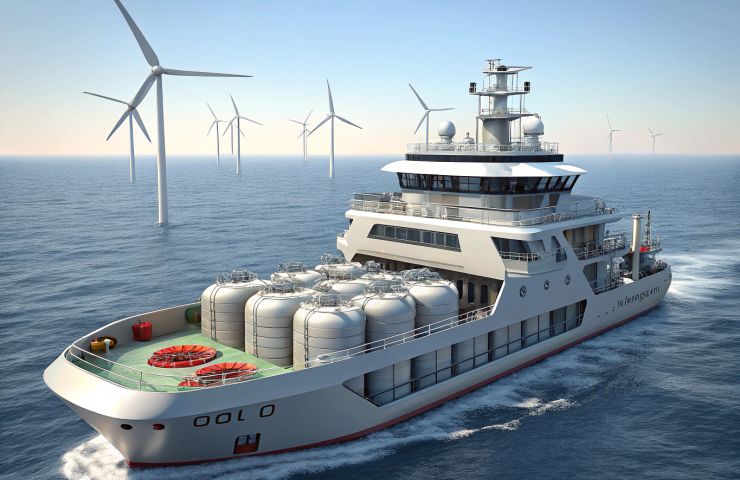
Europe Charts Clean Course With Liquid Hydrogen On Board
Europe’s setting sail on a serious mission to cut emissions at sea—and they’re doing it by tapping into the potential of liquid hydrogen (LH₂). Enter the NavHyS project, a game plan to bring LH₂ storage tech aboard service operation vessels (SOVs) that support offshore wind farms. Running through 2028, NavHyS shows that the dream of long-range zero-emission ships is getting real—fast. This is no science fair project. With Bureau Veritas Marine & Offshore at the helm, and big names like ArianeGroup, ENGIE, Gas and Heat, INERIS, RISE, and shipbuilder Vard onboard, Europe is connecting the dots between policy, industry, and tech to supercharge maritime decarbonization.A Hydrogen-fueled Challenge at Sea
Let’s face it—ships need power and lots of it, especially vessels like SOVs that play a crucial role in keeping offshore wind farms up and running. But clean energy alternatives often fall short when it comes to range or onboard space. That’s why liquid hydrogen, kept ice-cold and compact in below-deck Type C tanks, is turning heads. It shrinks hydrogen’s footprint and boosts how long a ship can run without refueling—exactly what’s needed to kick diesel to the curb. Sure, we’ve seen hydrogen gaining ground on land, but putting cryogenic fuel on moving ships and across ports brings a whole new set of challenges. That’s where NavHyS steps in—not just to test the waters, but to build the global rulebook on how to manage, store, and refuel with hydrogen safely and efficiently.The Aerospace-Marine Crossover
One of the project's secret weapons? ArianeGroup. These folks have been chilling liquid fuels for rocket launches for decades—literally. Now, they’re channeling that space-grade cryogenics know-how into marine applications. Together with Bureau Veritas, they’re developing not just the tanks, but also the safety and operational playbook so this tech isn’t just innovative—it’s certifiable.Strategic Stakes for Europe
This isn’t just about making greener boats. Maritime shipping contributes around 3% of global CO₂ emissions, and international regulators are starting to crack down. Europe’s betting that being ahead of the hydrogen infrastructure curve will pay off—especially as the region expands offshore wind ships and demands cleaner supply chains. NavHyS is gunning for a TRL 8–9 technology readiness level by 2030, aiming for commercial use sometime between 2035 and 2040. It’s not overnight—but for a sector like shipping, it’s an ambitious but achievable stride into the clean future.Tech Specs That Matter
So what’s under the hood, or rather, below the deck? We’re talking about 200–300 m³ cryogenic tanks, built to hold up to 18 tonnes of LH₂. And with refueling speeds targeted at 10 tons per hour, it’s a spec sheet that aligns with real-world maritime demands. Meanwhile, Europe’s also looking at other hydrogen carriers. For instance, separate projects are exploring ammonia cracking using membrane reactors—a way to store hydrogen in a more stable form and convert it on demand for fuel cells. Not part of NavHyS, but it shows how broad the continent's clean shipping strategy really is.Not Just a Floating Lab
Unlike some R&D ventures that never leave the dock, NavHyS is built for real-world impact. Vard, the shipbuilder in the consortium, is expected to lead the final integration into actual offshore wind support vessels. If it works, it won’t just cut emissions from maintenance fleets—it could lay the blueprint for LH₂-powered shipping across multiple sectors. And there’s more. The project also digs into what needs to happen on shore. Can ports and bunkering terminals handle liquid hydrogen safely without messing up trade flow? That’s part of the equation, too. By anchoring key tests in France, Sweden, and Finland, NavHyS is making sure port realities from different climates and infrastructures are part of the solution.Big Picture: It’s All About the Hydrogen Infrastructure
At the end of the day, LH₂ ships are just one piece of the puzzle. The real impact lands when you consider the ripple effect across the hydrogen infrastructure chain—from increased demand for electrolyzers and cryogenic equipment, to port retrofits and bunkering protocols. This kind of demand is exactly what Europe is hoping will kick its hydrogen economy into full gear.Final Takeaway
NavHyS may not be the first project to put hydrogen at sea, but its focus on matching cutting-edge tech with a high-value use case makes it one to watch. With the combined clout of ArianeGroup, Bureau Veritas, and ENGIE, the groundwork is being laid not just for a cleaner ocean—but for a shipping industry that’s finally ready to pivot from ambition to action. Because soon enough, liquid hydrogen won’t just be powering rockets—it’ll be driving the future of our seas.About Bureau Veritas Marine & Offshore
Headquartered in France, Bureau Veritas Marine & Offshore provides classification, inspection, and certification services to the global maritime and offshore industries. They’re at the forefront of setting standards for emerging maritime technologies, including cutting-edge fuels like liquid hydrogen and the future of autonomous shipping.How was this article?
Thanks for the feedback!