MHIET Unveils 450kW Hydrogen Co-Firing Cogeneration System to Advance Industrial Decarbonization
MHIET and Toho Gas introduce a 450kW hydrogen co-firing cogeneration system in Japan, offering a practical step toward industrial decarbonization without compromising performance.
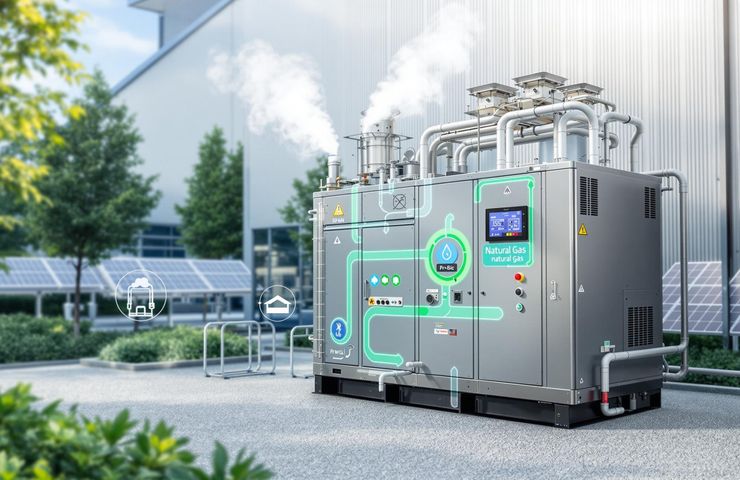
Mitsubishi Heavy Industries Engine & Turbocharger, Ltd. (MHIET) has just taken a big leap toward Japan’s hydrogen-powered future. Working closely with Toho Gas Co., Ltd., they’ve rolled out a new 450kW gas cogeneration system that can run on a blend of natural gas and up to 15% hydrogen fuel—without sacrificing performance or reliability. For a country serious about industrial decarbonization, this is more than a tech upgrade—it’s a clear step forward.
Hydrogen Power That Works in the Real World
Let’s be honest, plenty of “clean technology” promises have fizzled once they meet the real world. This isn’t one of them. MHIET’s new system offers the kind of built-in flexibility that industries can actually use. It co-fires hydrogen and natural gas seamlessly, without dropping output—crucial when uptime isn’t negotiable. It’s already up and running in Aichi Prefecture’s Tokai region, an area known for driving industrial innovation in Japan.
Here’s the kicker: achieving stable hydrogen co-firing—even at 15%—is no small feat. Those in the energy sector know how tricky it’s been to get beyond low single-digit hydrogen blends without creating combustion problems. By solving that challenge, MHIET has cleared a path many said would take years to navigate.
Under the Hood: Smart Tech, Clean Results
What makes it all tick? At the core is MHIET’s proprietary hydrogen co-firing engine technology. They’ve reworked the system’s fuel supply and control architecture to precisely manage the hydrogen-gas mix. This not only cuts down CO₂ emissions, but it also keeps that full 450kW power output intact—a must for commercial operations that can’t afford even a second of downtime.
As one MHIET engineer put it, “We’re not toying around with hydrogen—we’re making it work, today, in real industrial applications.” And they’re doing it without overhauling existing facilities. That’s the brilliance of this system: evolutionary change with revolutionary impact.
Backed by Bigger Goals
This isn’t just a one-off success story—it’s part of a bigger mission. The system advances the Mitsubishi Heavy Industries Group’s "MISSION NET ZERO" plan, aimed at hitting carbon neutrality by 2040. It also fits right into Japan’s national hydrogen strategy, which sees clean hydrogen as a centerpiece for sustainable energy and a more energy-secure future.
Japan isn’t working alone either. The government is ramping up efforts to build out the country’s hydrogen infrastructure, and the Tokai region is front and center, thanks to its massive industrial presence and strong energy demands. Partners like MHIET are giving those plans momentum with working, real-world tech.
Building on a Solid Hydrogen Track Record
This isn’t the company’s first hydrogen breakthrough either. MHIET already has 100% hydrogen-fueled generators in its portfolio. Those are designed for longer-term use in places with the infrastructure to handle pure hydrogen—and zero emissions.
Their strategy is smart: start with blended solutions where hydrogen is still new, then gradually transition to full hydrogen systems as the supply chain and logistics catch up. It’s all about giving businesses stepping stones, not cliffs to climb.
Business-Friendly, Future-Ready
What really makes this stand out is how it speaks to the priorities of business. Reliability and cost are king. And this new system lets industrial users get greener without jumping through expensive hoops or sacrificing performance. No surprises, no slowdowns—just smart industrial decarbonization.
Plus, the system’s distributed energy design means companies can generate heat and electricity on-site. That cuts dependence on the grid and boosts energy efficiency—music to the ears of cost-conscious and eco-conscious manufacturers alike.
One More Piece of a Bigger Puzzle
Zooming out a bit, this system isn’t just a new engine—it’s a key building block in Japan’s rollout of a nationwide hydrogen infrastructure. Sure, there are still hurdles—hydrogen production, transport, and storage need to scale. But by offering solutions that work within today’s constraints, MHIET is moving the needle in a big way.
And Japan’s not alone in this line of thinking. Countries like Germany, the Netherlands, and Australia are turning to hydrogen co-firing in gas turbines as a way to reduce emissions now—without waiting for perfect conditions or new grids.
The Real Path Forward
The future of the hydrogen economy isn’t all-or-nothing. It’s going to be about hybrid approaches like this—mixing the known reliability of natural gas systems with the green hydrogen promise of cleaner energy. MHIET and Toho Gas are betting smart: on flexible solutions that help today’s businesses pave the way for tomorrow’s sustainable energy systems.
As Japan doubles down on its hydrogen ambitions, innovations like this 450kW system could guide other hydrogen-hopeful nations. Because if hydrogen fuel is going to power the future, it will be because of tech that respects today’s realities while pushing us boldly forward.