Microbial Fuel Cells Bring Power and Clean Water to Nigeria's Wastewater Challenge
A Nigerian innovation turns wastewater into clean energy using microbial fuel cells, offering scalable, low-emission solutions to sanitation and electricity gaps.
You’ve probably heard about hydrogen fuel cells and electrolysis making waves in the energy world. But halfway around the globe, there’s a less talked-about — yet seriously exciting — twist on fuel cell technology taking shape. It’s tackling two problems in one shot: power shortages and wastewater treatment. Who would’ve thought bacteria could be energy heroes?
A Nigerian Innovation Turning Waste into Watts
Back in 2024, a Nigerian scholar from a local university rolled out a groundbreaking wastewater treatment idea powered by none other than microbial fuel cell (MFC) technology. This isn’t just science for science’s sake — it’s a practical, two-in-one fix for some of Nigeria’s toughest energy and environmental problems. And although the project’s still hanging out in academic circles, its potential reach goes way beyond the lab walls.
So, What Exactly Are Microbial Fuel Cells?
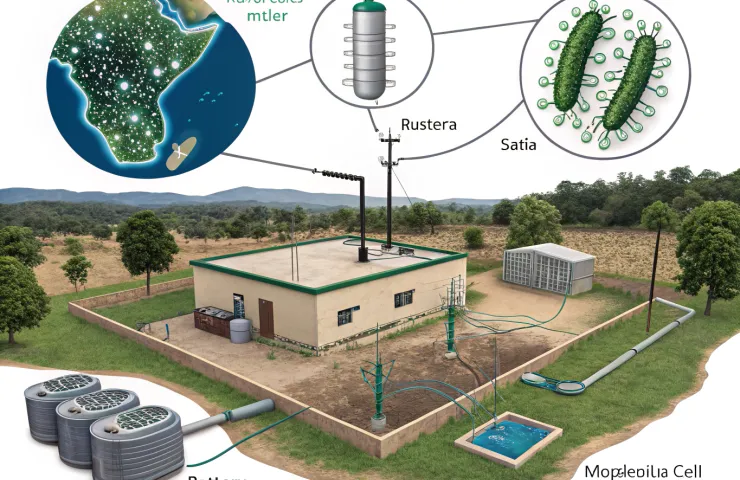
At their core, microbial fuel cells use naturally occurring bacteria to break down organic stuff in wastewater. As these tiny microbes chow down on waste, they release electrons and protons. The electrons zip through a wire and generate electricity, while the protons make their way through a membrane and eventually help produce clean water at the other end. It’s clean, low-emission, and energy-efficient — a stunning example of biology pulling double duty.
“We treat the water and get energy back — that’s circular economy in action,” said a researcher involved in a global MFC initiative, and that sentiment couldn't hit closer to home in this case.
Why This Matters — For Nigeria and Beyond
Let’s talk reality: Nigeria is facing a double whammy — not enough power and overwhelmed sanitation systems. Around 55% of the population lives without reliable electricity, and wastewater treatment facilities (if they even exist locally) are often outdated or overloaded. Conventional methods are costly and power-hungry. Here’s where the magic of MFCs kicks in — think self-powered, decentralized treatment units that are lower in cost and perfectly suited for off-grid or semi-urban use.
This isn’t just about keeping the lights on or cleaning up waterways — it ties right into the bigger story of sustainable energy and industrial decarbonization. Like hydrogen electrolysis, this method decentralizes energy production but from organic waste instead of water. In a place with an abundance of waste and energy needs, microbial fuel cells might just be the clean energy hack hiding in plain sight.
When Opportunity Meets Innovation
Here’s the thing — this isn’t just a flashy science experiment. It could open doors for a major shift in how Nigeria handles sanitation and energy. With the right mix of funding, research partnerships, and vision, microbial fuel cells might just catch the eye of climate investors, development agencies, and utility companies looking for power solutions in hard-to-reach, off-grid areas.
Sure, there’ll be hurdles — securing investment and navigating tech transfer aren’t exactly walk-in-the-park tasks, especially across African innovation ecosystems. But global eyes are on circular technologies, and the timing feels right. Europe and North America are already exploring biotech for wastewater energy solutions. With its homegrown talent, urgent needs, and raw material supply, Nigeria could skip a few steps and take the lead — if the pieces fall into place.
Why Aren’t Microbial Fuel Cells Everywhere Already?
Good question. Despite their promise, microbial fuel cells are still more of a lab star than a real-world player. Their power output is modest, and scaling up is tricky and pricey. Meanwhile, hydrogen tech and lithium-ion batteries have a head start — backed by stronger government push and hefty private-sector funding. But here’s the twist: in regions where energy solutions need to be small, local, and nimble, MFCs are starting to carve out their own niche.
They’re not trying to beat hydrogen or batteries at their own game. Instead, they’re proving useful in those situations where traditional grids fall short — offering something uniquely tailored to communities on the edge.
Looking Ahead: From Lab to Life
The journey from prototype to real-world MVP isn’t going to be easy. Success will hinge on the scalability, reliability, and efficiency of MFCs. Everything from the types of bacteria used, to the quality of wastewater, to the design of the cells plays a part. But this is exactly where global collaboration can shine — through shared blueprints, open-source designs, and even AI-assisted optimization to supercharge system performance.
If developers can speed up prototyping and field-ready designs, we might one day see compact MFC systems powering lights in refugee camps, charging phones at rural clinics, or processing waste in urban slums — tackling sanitation and electricity issues in one shot.
What the Nigerian scholar started isn’t just another cool research project — it’s a glimpse into a new kind of energy future. One rooted in biology, localized innovation, and a whole lot of promise — quietly rewriting the playbook for fuel cell technology on the sidelines of the hydrogen race.