News
New Zealand Considers Regulatory Overhaul to Accelerate Natural Hydrogen Development
New Zealand opens public consultation on how to regulate natural and orange hydrogen, exploring legal options to foster investment and secure its role in a low-emissions future.
New Push in Wellington: Hydrogen Policy Heads to the Drawing Board
New Zealand’s gearing up for a big leap in its clean energy future as the government kicks off a public consultation focused on how to regulate natural and orange hydrogen. These emerging technologies could be game-changers in the country’s quest for sustainable energy and industrial decarbonization. The Ministry of Business, Innovation and Employment (MBIE) rolled out a discussion paper in May 2025, opening the door for feedback on a few different regulatory paths. There’s a lot riding on this—how these rules shake out could change the landscape for hydrogen production and investment. If you’ve got something to say, you’ve got until July 4, 2025 to chime in.What's Actually Being Decided?
At the heart of the debate is a pretty fundamental question: should hydrogen be treated like a mineral and regulated under the Crown Minerals Act 1991 (CMA), should it fall under the Resource Management Act (RMA)Hon Shane Jones, Minister for Resources. “Whether it’s tailored legislation or adapting existing laws, we’re listening.”The Big Picture: Why Natural Hydrogen Matters
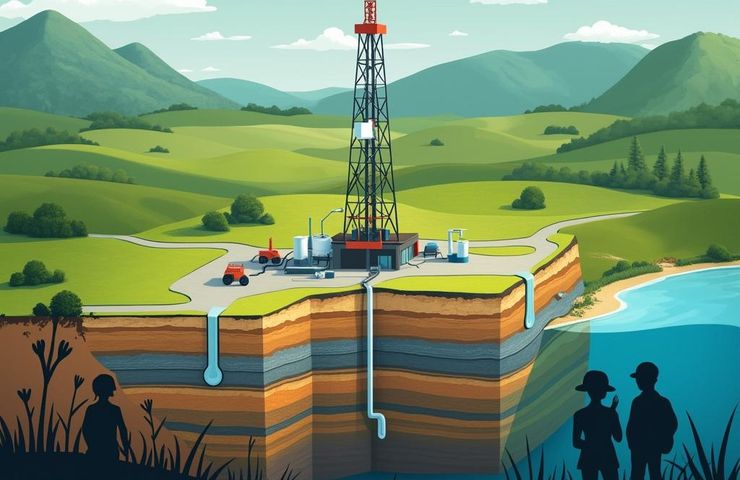
What’s driving all this? Turns out, natural hydrogen—also known as white hydrogen—might be sitting right beneath our feet. It’s been found in near-surface reservoirs and could be a clean, affordable source of energy that doesn’t come with the emissions or hefty energy bills of traditional hydrogen production methods. And then there’s orange hydrogen. Still in the experimental phase, this cutting-edge process involves injecting water and capturing carbon dioxide deep underground to stimulate hydrogen generation. It’s a bit like hitting two birds with one stone: you get clean fuel and bury greenhouse gases at the same time. All of this fits neatly into New Zealand’s ambitions to cut emissions in hard-to-electrify sectors like heavy industry, transport, and potentially even green ammonia down the road.Why Regulation Matters: Certainty Equals Confidence
Here’s the kicker: no one’s going to put serious money into hydrogen if the legal landscape looks like a black hole. Investors want to know what rules they’re working with before they start drilling or building infrastructure. One approach being floated? Classify hydrogen as a mineral under the CMA. That could make things easier for companies who already deal with fossil fuel legislation. But it might also stir up conflict over land rights unless the law is very carefully written. On the flip side, leaving hydrogen under the RMA—or its future replacement—might not go far enough. It could leave holes, especially when it comes to managing things like shared underground resources that cross property lines. The government’s been clear, though: they’re not eyeing nationalisation, which sets this apart from how petroleum resources are managed. They might even borrow ideas from recent geothermal or offshore renewable energy laws.Been a Long Time Coming
This conversation didn’t just fall out of the sky. It’s been simmering since at least the 2023 release of the Interim Hydrogen Roadmap, and the more detailed Hydrogen Action Plan published in late 2024. These documents laid the foundation for what’s happening now. Meanwhile, countries around the world are racing to figure this out too—Australia being one of them. Their approach’s all over the map, with different states treating hydrogen as a mineral, petroleum, or something entirely new. As New Zealand builds out its own hydrogen infrastructure, aligning with international standards will be key to staying competitive in the global market.More Than Just Paperwork: Risks, Rewards, and Ripple Effects
This isn’t just regulatory nerd stuff—it has real-world consequences. A hydrogen policy reset could disrupt landowner rights. What if a hydrogen pocket crosses two farms or iwi boundaries? If we end up adopting a “first to drill, first to own” approach (known as the rule of capture), we could be opening the door to serious disputes. But flip that coin, and there’s also a big upside. Solid rules could unlock investment, fast-track innovation in low-emissions tech, and even position New Zealand as an exporter of clean hydrogen to Asian and Pacific markets looking to move away from fossil fuels. Environmental safeguards, especially for the chemical-heavy orange hydrogen methods, will need to be front and center—think well spacing, monitoring, and extraction limits.What’s Next?
The consultation window wraps up in early July, and while the government hasn’t made any firm calls yet, this is clearly a major step forward. If this process lands in the right place, it could finally jumpstart a local hydrogen industry that’s been quietly waiting in the wings. One thing’s for sure: if New Zealand doesn’t put the right policies in place soon, all that clean hydrogen might end up staying stuck underground. For those ready to dive deeper, you can check out the MBIE’s full discussion document here, and get more background from the Hydrogen Action Plan.How was this article?
Thanks for the feedback!