News
OCOchem Fires Up World's First Industrial CO2 Electrolyzer Pilot for Sustainable Hydrogen Formate Production
OCOchem just activated the world’s first pilot plant converting CO2 and water into formate at industrial scale—no biomass, no fossil fuels. A true third path in sustainable chemical production.
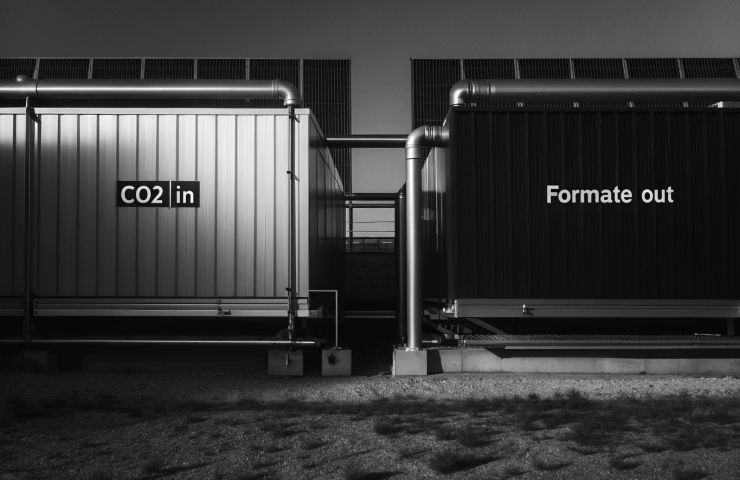
Richland, Washington just put itself on the map in a big way. On April 8, 2025, a startup called OCOchem powered up something that’s never been done before—the world’s first industrial-scale pilot plant that turns CO2 and water directly into hydrogen formate. No biomass. No fossil fuels. Just captured carbon and clean electricity doing the heavy lifting.
A Chemical Plant That Ships Like IKEA Furniture
Here’s the wild part: this isn’t some sprawling refinery. OCOchem’s $5 million plant was built off-site using a modular, skid-mounted system—which basically means it showed up pre-assembled and up and running in just six weeks. That’s lightning-fast in a world where traditional “stick-built” plants can take years. The result? A plug-and-play chemical facility with the ability to scale like software. Inside, it’s packing a powerful punch—specifically, a 4-stack system of 1.5 m² CO2 electrolyzer cells. It operates at room temperature and pressure, so no hazardous heat or pressure levels to worry about. And the real ace up its sleeve? Patented gas diffusion electrodes that make it a CO2 conversion powerhouse. We’re talking a staggering 100x improvement over older tech. That’s not a tweak—that’s a leap.Why It Matters
This isn’t just another cool science fair project. OCOchem is opening the door to a new kind of grid-responsive, regional chemical production. It takes captured carbon and converts it into hydrogen and potassium formate, helping industries ditch fossil feedstocks while soaking up emissions. And since it's electricity-powered (and ideally tied to renewables), it can ramp up or down depending on the energy mix. That’s huge when you're trying to make the most of variable green power.Breaking the Carbon Mold
For ages, we’ve only had two places to get our carbon fix: either plants or fossil fuels. Now, OCOchem is introducing a third option—direct CO2 conversion. Think of it as artificial photosynthesis…but built for industry. No crops. No oil fields. No seasonal limits. Just science doing what nature does—but on demand. And this ain’t some proof-of-concept tucked away in a lab. Backed by $7.5 million in private investment and $8.3 million in government grants, they’ve been grinding hard. Over three years, they expanded their CO2 cell tech from 10 cm² to a jaw-dropping 15,000 cm². That’s not slow and steady—that’s a moonshot.Why This Could Change Everything
The demo plant’s already capable of producing up to 60 tons of formate per year—and that’s just the start (figures per company data). The vision? A network of small but mighty chemical hubs that could cut out the middlemen—no need for centralized oil terminals or massive chemical shipping routes. Even better, potassium and hydrogen formate aren’t one-trick ponies. They’ve got real commercial potential across sectors like agriculture, pharmaceuticals, metal processing, and even as a way to store and transport hydrogen. Yeah, unlike compressed hydrogen tanks, formates slide right into our existing liquid infrastructure. It’s a sneaky, elegant way to build a green hydrogen supply chain without overhauling everything.The Bigger Picture: A New Era of Chemistry?
If OCOchem can take this from pilot to product, we’re not just talking about cleaning up our chemistry—we’re rewiring it. CEO Todd Brix puts it this way: this is the “third path” that cuts fossil fuels and plants out entirely. Of course, skeptics will want to see this system scaled across multiple use cases. One pilot doesn’t equal profit. But if this modular, electrolysis-based CO2 conversion turns out to be affordable, scalable, and competitive—well, we’re looking at a shakeup of global supply chains. Bottom line? This isn’t carbon capture and storage. It’s carbon capture and value creation. And that makes it way more interesting.One Last Thing to Think About
If CO2 can start pulling its weight as a resource instead of dragging us down as pollution, suddenly everyone—from lawmakers to investors—has a reason to embrace it. Could formates be the missing piece between on-demand renewable energy and the constant demand for chemicals? It’s worth watching. Keep an eye on OCOchem—and the broader CO2-to-X space—because this could be the beginning of a whole new playbook in carbon utilization and zero-emission technology.How was this article?
Thanks for the feedback!