Hydrogen news
Energy companies look to robots to install solar panels amid labor shortage
Keeping on schedule with installations has become a challenge without enough human workers As energy companies race to construct massive farms of solar panels throughout the United States as the country decarbonizes, those same companies are facing substantial challenges. They don’t have to do with technology, materials or equipment, but instead the lack of workers. The labor shortage has made it difficult to keep up with construction deadlines Without a big enough workforce to meet their goals for installing solar panels, energy companies are turning to robots for the help they need. The l…
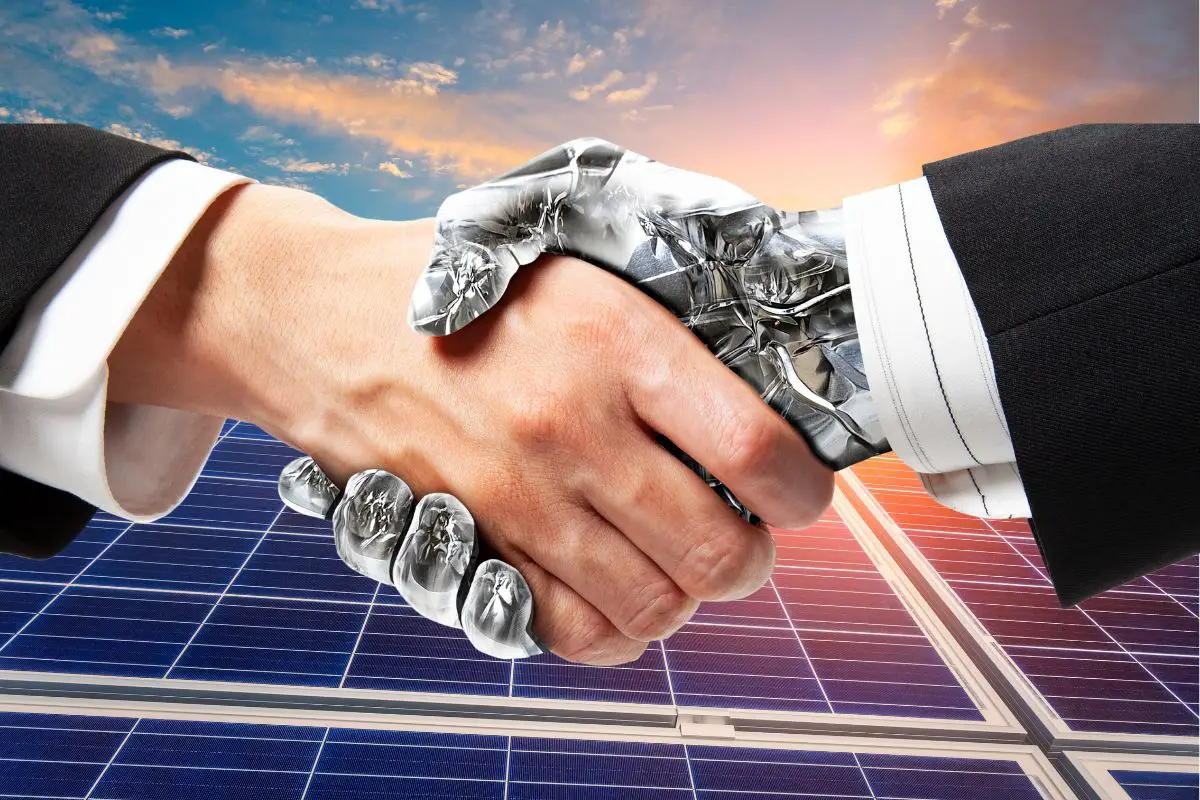
Keeping on schedule with installations has become a challenge without enough human workers
As energy companies race to construct massive farms of solar panels throughout the United States as the country decarbonizes, those same companies are facing substantial challenges. They don’t have to do with technology, materials or equipment, but instead the lack of workers.The labor shortage has made it difficult to keep up with construction deadlines
Without a big enough workforce to meet their goals for installing solar panels, energy companies are turning to robots for the help they need. The largest renewable energy company in the US, AES Corporation, has introduced a unique type of robot that is able to carry around and install the large, heavy components comprising an array. The company named its robot Maximo, and according to AES, that robot will be able to install the components up to twice as fast as humans, but at half the cost of human labor. Maximo is approximately the size of an average pickup truck and features suction cups on the end of a large extendable arm. Those suction cups are used to pick up and move solar panels, one at a time, to lay them out in rows. The robot is supported by artificial intelligence technology and computer vision to ensure the proper placement of each of the components.The robot has been undergoing testing for installing solar panels
Following months of this type of testing, Maximo will begin working later in 2024, when it will head to the California desert to assist in installing solar panels. This will take place at the largest solar-plus-battery project currently underway. Eventually, the array will be used to provide some of the power needed for Amazon data centers. Should the installation with the robot go as planned, the intention is to begin construction of hundreds of these AI-powered robots to help with further installations.
Automation to overcome worker shortages
The energy industry has been facing a massive trend in labor shortages, as it also seeks to boost construction of new renewable energy farms and reduce overall costs. This type of goal typically requires far more labor, but the workers simply aren’t there to be found. Energy companies have said that unless they look to substantial changes in the way they reach their targets, it will not be possible to meet the climate targets and take on the challenge of global warming while still meeting the country’s need for reliable electricity. For AES, the drastic change they are looking into making is with robots like Maximo.Keeping up with decarbonization and electricity demand
“We’re seeing labor shortages on construction projects in the United States, and it’s a bottleneck to the build-out of solar farms,” explained AES CEO Andrés Gluski in a recent media interview. “So how do you get around it? Well, robots can work 24 hours, right? Robots can pick up 80-pound solar panels, not a problem.” The focus on automation spiked when politicians such as President Joe Biden announced that clean energy’s expansion would generate millions of jobs. “Whenever automation comes up, there’s always this push and pull,” said BlueGreen Alliance vice president of federal affairs, Katie Harris. The BlueGreen Alliance is a labor union and environmental group partnership organization. “It can help folks be more productive, but we also want to create good-paying union jobs, and automation isn’t always a friend there.”Finding workers to install and maintain solar panels
That said, as the demand for clean energy and the installation of solar panels is expected to experience exponential growth over the next decade, hundreds of billions of dollars are pouring in through federal subsidies, particularly as tech giants secure contracts to power their data centers with clean energy. While some estimates have indicated that 475,000 workers would be needed for energy produced by solar panels by 2033 – almost double the current figure – 44 percent of solar energy companies say that they already find it “very difficult” to find qualified labor, according to a survey cited by the New York Times.How was this article?
Thanks for the feedback!