Hydrogen news
Are US green hydrogen projects being planned for the wrong locations?
A recent report underscored that 1 in 5 of the projects will be located in water-stressed places The US federal government is pouring billions of dollars into the production of green hydrogen for the purpose of reducing greenhouse gas emissions, but concerns have arisen regarding the locations in which many of those production hubs are being developed. Critics have pointed to the Southwest water shortages Just recently in May 2024, Fortescue held its groundbreaking ceremony for its Buckeye, Arizona green hydrogen plant within a zone labeled by the city as the “Sustainable Valley.” That said,…

A recent report underscored that 1 in 5 of the projects will be located in water-stressed places
The US federal government is pouring billions of dollars into the production of green hydrogen for the purpose of reducing greenhouse gas emissions, but concerns have arisen regarding the locations in which many of those production hubs are being developed.Critics have pointed to the Southwest water shortages
Just recently in May 2024, Fortescue held its groundbreaking ceremony for its Buckeye, Arizona green hydrogen plant within a zone labeled by the city as the “Sustainable Valley.” That said, the Sonoran Desert plant, which will be powered by wind and solar energy – will be using groundwater for the production of the zero-carbon emission H2 fuel, which critics are calling unsustainable. The plant will require at least 26 million gallons of water in order to produce the 11,000 metric tons of H2 per year that it is slated to produce. Beyond that, it will need a total of between 32 and 45 million gallons (including what is required for the H2 production itself) if that previously quoted amount doesn’t include the water required for purification and cooling, according to Argonne National Laboratory water usage estimates.The water usage figures for the green hydrogen production remain unclear
If the original figure does include all the water required for producing and operating the wind and solar energy, and if the remaining water following all the required processes is not directed back into the local groundwater or onto the surface, data published in the Renewable Energy journal estimated that the plant would consume as much as 319 million gallons of water.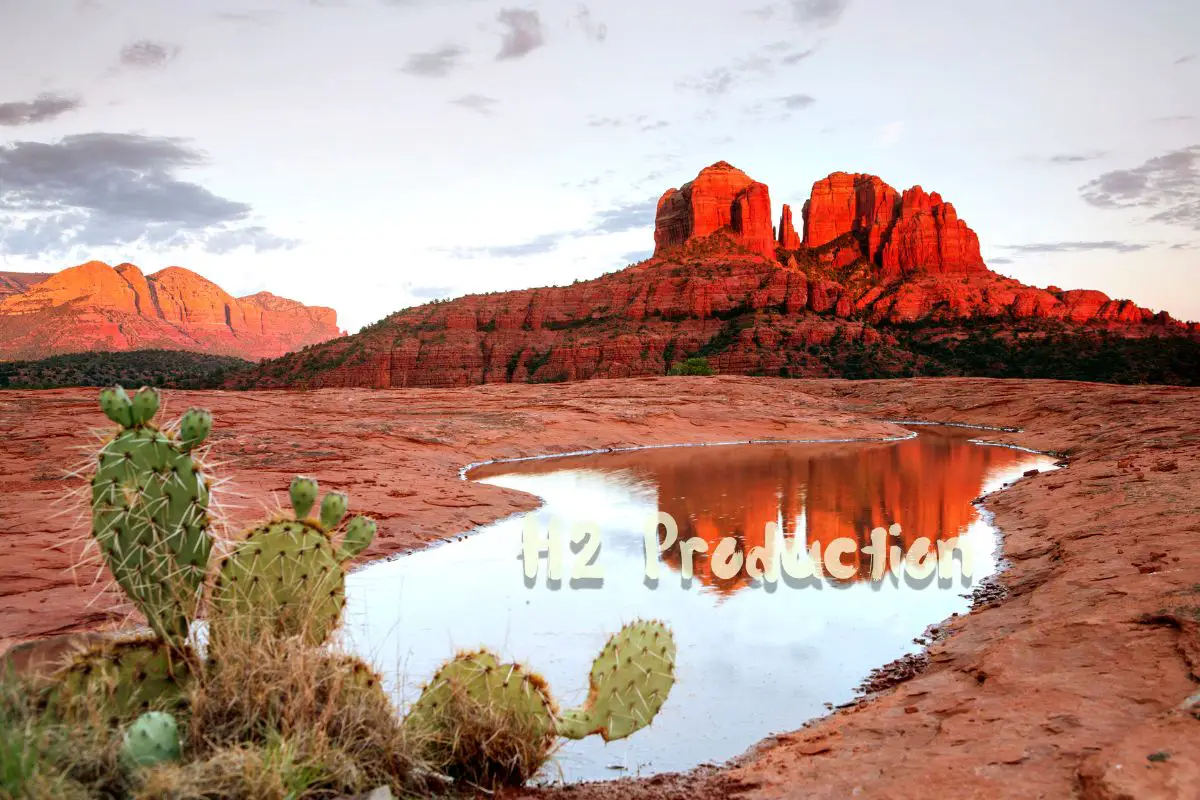 Regardless of which total is the true requirement by the green hydrogen plant, estimates show that its presence will remove more water from the local aquifer, which has already been suffering a 3-feet per year decline primarily due to its use for alfalfa and other crop irrigation. One local well just one mile from the site of the plant has dropped 170 feet since the measurement from the year 2000.
H2 production water requirements compared to crop irrigation
Irrigation is already causing the local groundwater supply to drop. In comparison with the amount needed for that purpose, green hydrogen production won’t require as much. Arizona State University’ Kyl Center for Water Policy Director Sarah Porter said that H2 production’s water requirement “is not a lot” when compared to crop irrigation. “But if hydrogen is the next big thing … then it is important for the state to come up with policies, to have a policy discussion and certainly give consideration to whether we should require sustainable water supplies,” said Porter.Fortescue’s take on water use for green hydrogen production
In a statement by Fortescue, it stated that it was committed to reducing the use of water for green hydrogen production but didn’t specify just what it planned to do or how much the plant would require to operate. “We are conducting a detailed hydrogeological assessment to more fully understand the aquifer and how to protect it and preserve water in this area,” said the statement. “We are developing design efficiencies to limit overall water use, and we are seeking alternative water sources like wastewater to reduce groundwater use.” Water use already established by other green hydrogen projects and by Fortescue itself, including a nearby Casa Grande 3,650-ton plant, underscores potential water consumption risks with the expansion of H2 production that have been encouraged by tax breaks and other forms of government funding. Of 18 approved green hydrogen projects that will require substantial freshwater quantities, 4 are located in areas where high or extremely high water stress is already an issue. This includes the plant in the Buckeye, Arizona area, according to the Water Risk Atlas from the World Resources Institute.How was this article?
Thanks for the feedback!