NTT DATA Partners with Bloom Energy for a Game-Changing Onsite Power Generation Initiative
NTT DATA partners with Bloom Energy to deploy 900 MW of onsite power generation, boosting energy efficiency for global data centers.

In a significant move to tackle the increasing electricity demands of modern data centers, NTT DATA has teamed up with Bloom Energy to unveil a groundbreaking initiative. The collaboration targets a planned deployment of 900 megawatts of onsite power generation across various NTT Global Data Centers worldwide. That scale is notable: almost a gigawatt of capacity, sited at the points where computing load actually occurs rather than at distant utility substations. For operators racing to bring capacity online, on-site generation can remove a major bottleneck. And for the companies involved, the announcement signals a strategic push to align data-center buildouts with more flexible, locally controlled power sources.
Why now? The surge in artificial intelligence and cloud computing has produced a rapid and sustained increase in electricity needs for data centers. These loads are high density and rapid to install. Often, however, projects run into delays tied to traditional grid infrastructure—queueing for interconnection studies, waiting for transformer upgrades, or negotiating limited local capacity. Those are not minor headaches. They are calendar- and budget-driven constraints that can slow real estate and operations decisions for months, even years.
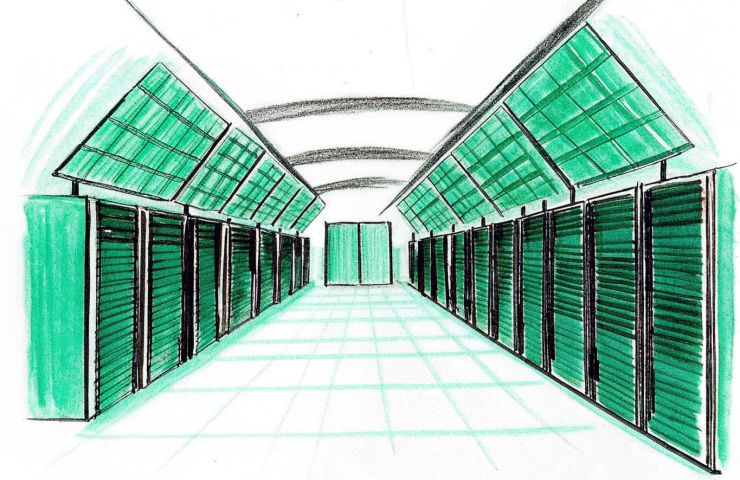
The technical linchpin of the approach is Bloom Energy's Energy Server. This modular system converts fuels—natural gas, biogas, or hydrogen—electrochemically, rather than through combustion. The result is cleaner, quieter operation. Local air pollution is reduced and noise is lower compared with traditional diesel or gas-fired generators. Crucially, the Energy Server produces electricity at the point of demand, enabling a steady, scalable power supply while new data halls are being constructed or when grid connections are insufficient or delayed. It is a distinctly different engineering choice from spinning up temporary generator plants or depending solely on utility timing.
The practical implications play out in familiar terms for data-center operators. Projects can shorten the time it takes to become operational, mitigating risks associated with grid congestion and interconnection delays. That compresses timelines for revenue generation and reduces exposure to construction schedule slips. Power resilience can also be enhanced: onsite conversion systems provide a local layer of reliability that can operate independently or in parallel with the grid. And because the systems are modular, capacity can be sized and added in stages to match how a campus actually grows.
Bloom Energy’s systems are set to be deployed in multiple undisclosed international locations, marking a significant expansion in the company's role within the energy sector, particularly in growing markets where demand for reliable, high-density electricity is rising. The exact sites remain private for now, but the decision to take the technology abroad underscores the wider appeal of distributed, high-capacity solutions. In places where grid upgrades are slow or costly, the ability to generate power on site can make otherwise marginal projects viable. It can also change the calculus for where data centers are placed and how they are phased into operation.
On the strategic front, NTT DATA is aiming to bolster its offerings in a market that increasingly favors energy independence and sustainability, while Bloom Energy stands to gain substantial traction as an essential provider for large-scale applications. The collaboration is also backed by NTT Group’s commitment to investing heavily in research and development—more than $3 billion annually. That investment posture provides a foundation for further technical refinement and for integrating power systems into broader data-center design, procurement and lifecycle planning. From a market standpoint, the partnership creates a clear value proposition for customers who prioritize both uptime and lower local emissions footprints.
Looking toward the horizon, the potential for this technology to redefine how we think about energy production and consumption is significant. Growing concerns over climate change and a broader shift toward prioritizing sustainable solutions place a premium on options that reduce local emissions and enable the use of lower-carbon fuels such as biogas or hydrogen. At the same time, the operational model — modular, on-site, and fuel-flexible — responds to immediate commercial pressures around speed and certainty of deployment. In short, the approach speaks to two distinct needs at once: short-term project delivery and a longer-term transition toward cleaner energy vectors.
This is not merely another piece of vendor marketing. It is a pivot toward more responsive infrastructure and a different way of planning power for high-density facilities. For NTT DATA and Bloom Energy, the initiative maps onto broader industry trends: a push for energy resilience, an interest in localized generation, and a preference for technologies that can bridge current needs with future decarbonization goals. If implemented at scale, the effort could make reliable, clean energy more accessible at the locations where compute demand is growing fastest—turning a set of logistical challenges into operational options and transforming challenges into opportunities.