Oman's Coordinated Green Hydrogen Model Draws Global Attention
Oman is positioning itself as a key player in the global green hydrogen landscape through its innovative, government-led integrated model for hydrogen production and export.
Oman is positioning itself as a key player in the global green hydrogen landscape through its innovative, government-led integrated model for hydrogen production and export. This unprecedented initiative has been highlighted in a H2Global Foundation study, which emphasizes the Omani approach to harmonizing various elements necessary for the success of a green hydrogen ecosystem. The study frames the effort not as a single project but as a coordinated set of policies, allocations and shared services designed to reduce overlap and duplication. That coordination, the report suggests, is meant to speed project maturity while limiting the fragmentation that can drive up costs and delay delivery.
The report identifies Hydrogen Oman (Hydrom), launched in 2022, as the central entity responsible for orchestrating the nation's green hydrogen efforts. It manages land allocation, competitive project auctions, and the development of shared infrastructure. By emphasizing standardized processes and shared resources, Oman is attempting to avoid the pitfalls of fragmented project development observed in other regions. Hydrom’s role, as described in the study, is not only administrative: it is intended to create a predictable pipeline of opportunities for developers and investors, while steering physical infrastructure to locations that can best support clustered industrial activity.
Strategic Implications of Oman's Model
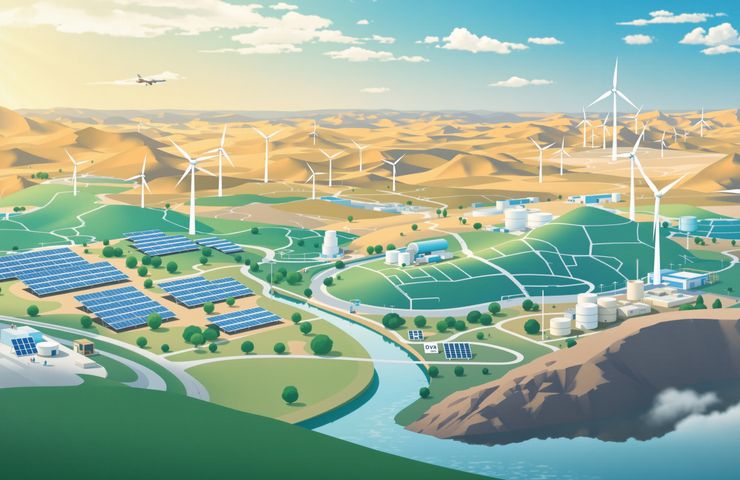
At the core of this strategy is the concept of Common-User Infrastructure (CUI), which includes interlinked hydrogen pipelines, electricity transmission lines, desalination facilities, and logistical networks. Such an integrated approach aims to minimize cost duplications and maximize economies of scale among various hydrogen producers. Duqm and Salalah have been identified as the primary hubs for this hydrogen ecosystem, where shared resources can further fuel industrial growth. Placing production, desalination and transmission in proximate hubs is meant to create concentrated demand and justify larger, more efficient facilities than a series of isolated projects could support.
The study also cautions that the technical layering of infrastructure is only one side of the equation. Key commercial arrangements surrounding tariffs, ownership, cost recovery, and risk allocation still remain unresolved, which could impact future financing and project bankability. These questions influence investor appetite. They determine which party ultimately carries construction risk, who earns returns from shared assets and how end users pay for delivered hydrogen or downstream products. Until those commercial parameters are clarified, lenders and offtakers may treat projects with increased caution.
For the model to attract large-scale capital, regulatory clarity will need to keep pace with the physical build-out. The report stresses that governance frameworks, legal title and tariff regimes should be designed with an eye to long-term operations, not only initial construction. If policymakers fail to address ownership structures and recovery mechanisms in the near term, cost allocation disputes or ambiguous contract terms could slow project financing and impede timely deployment of capacity.
Business Context and Future Steps
Two new projects in Duqm announced during recent international discussions appear to target the production of green ammonium nitrate and green ammonia, diversifying Oman’s product offerings beyond pure hydrogen. Fertilizer and chemical production markets are considered more immediate outlets compared to direct hydrogen exports. The projects promise substantial combined capacities, emphasizing the need for infrastructure that can support large-scale operations. Converting hydrogen into nitrogen-based products or ammonia is a well-trodden route to move renewable hydrogen into existing commodity markets and shipping lanes, and the study places those projects in that practical commercial context.
Developers, meanwhile, will be watching how the shared-infrastructure model affects project economics and timelines. A single hydrogen pipeline, for example, can cut unit transport costs for multiple producers, but it also requires a framework for allocating capacity, scheduling maintenance and sharing liability. Similarly, common desalination tied to renewable generation can lower water costs for electrolysis, yet raises questions about who pays for spare capacity during lulls and which users have priority in water-scarce periods. These design choices reverberate through project-level business cases.
Financially, the model aims to attract domestic and foreign investments, while also creating local jobs and industries centered around hydrogen production. However, achieving these goals will depend not only on logistical enhancements but also on securing firm offtake agreements and establishing competitive pricing for delivered products. Offtake certainty is singled out in the study as a principal determinant of bankability: without long-term contracts that buyers and lenders trust, projects face higher financing costs or limited access to capital altogether.
Environmental and Regulatory Considerations
Oman's generated renewable energy, primarily from solar and wind, facilitates a low-emission profile for its hydrogen sector. Yet, with water scarcity a significant concern, investments in renewable-powered desalination technologies will be crucial. This system will need to align with environmental regulations to maintain sustainability. The study underscores that desalination powered by intermittent renewable energy must be planned alongside storage or grid integration to ensure reliable supply without compromising environmental standards.
Regulatory authorities will also face trade-offs when balancing industrial growth with local environmental constraints. Rules on water withdrawal, brine disposal and habitat protection affect the design and siting of both desalination and production plants. The report implies that robust environmental reviews and clear permitting pathways will be necessary to keep projects on schedule and to prevent downstream legal or social challenges.
As Oman's hydrogen strategy unfolds, it serves as a test case for other nations aiming for a similar transition. The approach’s success hinges on how effectively it can balance private sector dynamism with public sector coordination. Where public coordination reduces duplication and enables economies of scale, private developers still bring specialized know-how, engineering capability and commercial discipline. The study frames the Omani model as an attempt to marry those strengths without allowing either side to dominate to the detriment of overall system performance.
Ultimately, Oman’s integrated hydrogen development strategy showcases a forward-thinking approach that could redefine hydrogen production and exportation frameworks worldwide. The global community watches closely as Oman strives to enact its vision, likely influencing future policies and market strategies in the hydrogen sector. If the balance between shared infrastructure, clear commercial rules and environmental safeguards can be struck, the study suggests, the Omani model may offer lessons for other emerging hydrogen economies facing similar infrastructure and governance challenges.