Port of Los Angeles Commits $240M to Zero-Emission Trucking as Part of Clean Freight Future
Port of Los Angeles commits $240M through 2028 to transition its drayage fleet to zero-emission hydrogen and electric trucks, advancing California’s climate and public health goals.
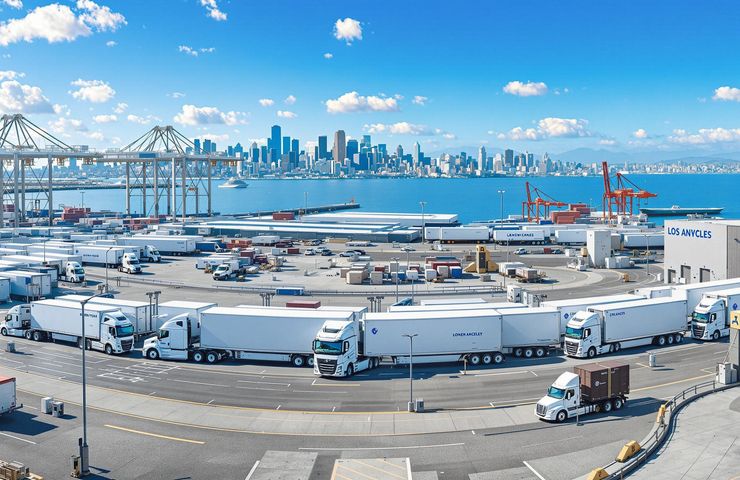
Los Angeles, CA — The Port of Los Angeles is doubling down on its commitment to clean air and zero-emission technology, pouring a fresh $240 million into a plan that aims to swap out diesel trucks for a fleet of zero-emission vehicles (ZEVs). Backed by the Clean Truck Fund (CTF) and greenlit by the Los Angeles Board of Harbor Commissioners, this move is all about cutting down on air pollution and carbon emissions in what’s arguably the nation’s busiest freight corridor.
Turning the Page on Freight Pollution
This isn't just about replacing diesel engines—it’s about reimagining the way goods move through the heart of American trade. Since 1907, the port has been a major link between Asia and North America. But that global trade powerhouse status has come with a cost: tons of diesel exhaust that’s hurt the air quality in nearby L.A. neighborhoods.
That’s changing. In May 2025, the port approved a bold update to its strategy, channeling funds from a per-container CTF fee—charged to diesel truck operators—straight into the transition to an all-ZEV drayage fleet by 2035. The new plan extends funding through June 2028 and builds on the path set by the groundbreaking 2008 Clean Truck Program.
What the Clean Truck Fund Actually Does
Here’s how it works: since April 2022, the CTF has brought in around $123 million through container fees—$10 for a standard TEU and $20 for the bigger boxes, if hauled by diesel trucks. ZEVs? They skip the fee altogether. It's basically a financial push to get businesses off diesel and into cleaner options.
Most of that money—around $93 million—has already gone toward buying new vehicles and building up charging and hydrogen fueling infrastructure. Whether companies are choosing fast-charging electric rigs or going the hydrogen fuel cell route, every dollar helps make that first leap to zero emissions a little less daunting. The next $147 million will keep that momentum going over the next three years, funding more infrastructure and boosting truck purchase incentives.
Healthier Lungs, Cleaner Skies
Let’s be real: diesel trucks are only a small slice of California’s total vehicle count, but they pack a pollution punch. They’re huge contributors to the state’s NOx and particulate emissions—and that hits hardest in the neighborhoods closest to the port, where locals breathe that air every day.
Switching to ZEVs isn’t just good for the planet, it’s a game-changer for public health. We’re talking lower asthma rates, fewer heart issues, and a real shot at cleaning up L.A.’s air. Plus, this move lines up with California’s statewide mandate for zero-emission drayage trucks by 2035 and the port's target to become carbon-neutral by 2035. So, it’s not just a nice-to-have—it’s quickly becoming the new normal.
Not Everyone's on Easy Street
Of course, making the switch isn’t equally simple for everyone. Smaller fleets and independent owner-operators face some tough hurdles. Electric and hydrogen trucks can cost hundreds of thousands more upfront than an old-school used diesel rig. And even if you swing the cash, there’s the question of where to plug in or fuel up—and how often you’ll need repairs or maintenance.
But that’s exactly where the Clean Truck Fund steps in. By turning those surcharge dollars into real, tangible support—think truck purchase vouchers and funds for building out more charging or fueling stations—the program is trying to shrink the gap for smaller players. And if this public-private teamwork actually works? It might just become the blueprint for clean ports across North America.
Lessons from the Past to Power the Future
The port's push toward clean trucking isn’t new. The Clean Truck Program kicked off in 2008 as part of the San Pedro Bay Ports Clean Air Action Plan, and it led to some big wins in cutting diesel emissions. But “cleaner diesel” still isn’t the same as zero-emission—and scientists and environmental advocates weren’t quiet about that.
This new $240 million investment represents the next chapter in that story. And this time, the focus on developing robust hydrogen infrastructure signals a long-term vision. While battery-electric trucks are great for certain routes, hydrogen fuel cells have the edge when it comes to range and refueling speed—perfect for the grind of back-and-forth port freight.
The Bigger Picture: Industrial Decarbonization in Motion
What’s unfolding at the Port of L.A. isn’t just a local green initiative—it’s a real-world example of how large-scale industrial decarbonization can be done. This is one of the few places with the regulatory pull, financial horsepower, and sheer volume to make a difference fast.
Lots of ports talk about going green. L.A.? It’s already writing checks, laying down infrastructure, and shifting gears—literally. As one shipping policy insider put it, “If one of the busiest ports in the world can pull this off without throwing a wrench into the supply chain, then seriously—what’s everybody else waiting for?”