Quest One and MasTec Partner to Scale Green Hydrogen Infrastructure in North America
Quest One and MasTec CE&I partner to accelerate industrial-scale green hydrogen deployment in North America, leveraging modular PEM electrolysis and construction expertise to cut costs and de-risk projects.
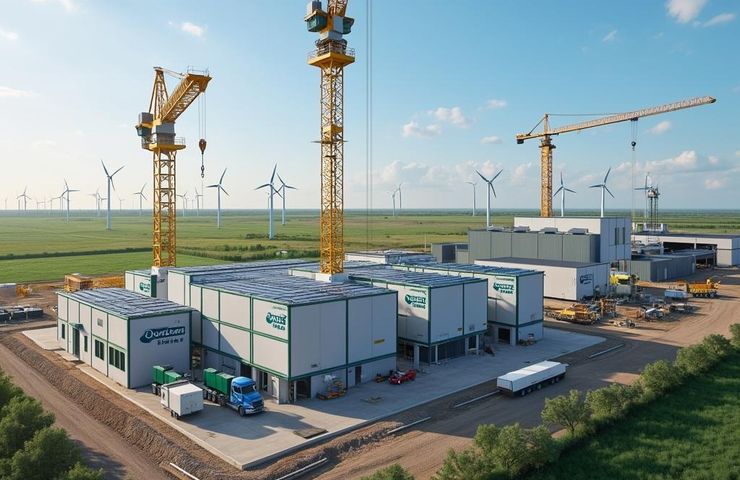
Green hydrogen is no longer just a futuristic concept—it’s starting to take shape, and two major players are teaming up to speed things up across North America.
On June 11, 2025, Germany-based Quest One, a pioneer in hydrogen tech, and Florida’s own MasTec Clean Energy & Infrastructure (CE&I), a construction and energy giant, signed a memorandum of understanding (MoU). The goal? Make industrial-scale PEM electrolysis plants faster to build, easier to replicate, and cheaper to scale. In other words, they want to make zero-emission hydrogen fuel not just viable—but commonplace.
Modular Hydrogen That Moves at Industrial Speed
At the heart of this collaboration is Quest One’s Modular Hydrogen Platform (MHP)—a clever system built on 10 MW PEM electrolyzer blocks that are preassembled and delivered ready to go, almost like plug-and-play hydrogen. Picture rows of these units stacked like shipping containers, scalable from a small bundle to a full-blown power hub in the hundreds of megawatts.
By marrying this modular, prefabricated approach with MasTec's deep experience in engineering, procurement, and construction (EPC), the two companies aim to dramatically cut both costs and timelines. That’s a big deal in sectors like steelmaking, fertilizer, heavy-duty transport, and power, where the clock is ticking, and the demand for clean hydrogen production is soaring.
Policy Winds Are Shifting—Now It’s Time to Build
North America is emerging as a hotspot for green hydrogen, thanks in no small part to the U.S. Inflation Reduction Act (IRA), which offers juicy tax breaks and incentives for clean energy projects. But let's be real: grants and subsidies can only take you so far. Permitting headaches, construction delays, and ballooning costs are still big hurdles on the road to execution.
That’s what makes this partnership so timely. It’s not just another press release—it’s a real-world strategy for getting shovels in the ground. With major industries prepping to adopt hydrogen at scale, a prefabricated, ready-to-deploy model isn't a luxury—it’s becoming the expectation.
From One-Off Pilots to Scalable Pipelines
Quest One—formerly known as H-TEC SYSTEMS—has recently stepped up its game with a new manufacturing hub in Hamburg, Germany. Their aim? Crank out over 5 GW of hydrogen electrolyzer capacity every year. And they’re not just staying in Europe—this manufacturing muscle is backing projects across North America too, right as demand ramps up.
Meanwhile, MasTec CE&I brings serious credentials in large-scale solar, wind, and battery storage projects across the continent. Now, with hydrogen’s modular potential and MasTec’s on-the-ground expertise, this could be a game-changing combo for scaling hydrogen infrastructure.
The Shift From Grey to Green
Today, most hydrogen still comes from natural gas in a process called steam methane reforming, which releases a ton of CO2. That’s not going to cut it for industries striving to slash emissions. Enter electrolysis, powered by renewables, which offers a clean alternative—especially for industrial sectors that can’t just plug into electricity, like refining, chemicals, and shipping.
PEM electrolysis is especially attractive thanks to its flexibility, quick start-up, and seamless integration with wind or solar. It’s becoming a go-to technology for grid-balancing and those power-to-X applications we keep hearing about.
The catch? Traditional build methods are too slow and too expensive. That’s where a prefab model—built off-site and dropped in ready to run—starts to look like the future.
What’s Coming Next?
While the MoU doesn’t attach itself to any specific project just yet, don’t assume things are standing still. Behind the scenes, you can bet there’s already work underway on permitting, engineering, and supply planning. The companies are keeping tight-lipped on budgets or timelines for now, but we’re likely to hear more as progress picks up in 2025 and beyond.
The Ripple Effects
This isn’t just about producing hydrogen—it’s also about creating momentum. Projects like this can spark local job growth in everything from construction and manufacturing to renewables support. They help strengthen domestic green hydrogen supply chains, a top priority for U.S. policymakers right now. And if the modular model works? Regional developers could have a repeatable blueprint to run with—no need to start from scratch every time.
Plus, more execution-ready projects mean higher confidence from investors, more public-private funding, and a stronger push for industry-wide standards—all of which make the hydrogen economy more real and more resilient.
Sure, challenges remain. Grid connection queues are long, permitting is still a pain, and diversifying supply chains for core materials doesn’t happen overnight. But partnerships like the one between Quest One and MasTec show the hydrogen sector isn’t waiting around. They’re moving fast, modular, and mission-ready—to help turn zero-emission power into a scalable reality.
About Quest One
Quest One (formerly H-TEC SYSTEMS) is a global leader in PEM electrolyzer systems for green hydrogen production. With headquarters in Germany and a growing international footprint, Quest One focuses on industrial-scale solutions that drive down global CO2 emissions through cutting-edge electrolysis technology.