Technip Energies Taps Methane Pyrolysis to Disrupt Low-Carbon Hydrogen Production
Technip Energies partners with Texas-based Graphitic Energy to commercialize methane pyrolysis for clean hydrogen and graphite production—offering an alternative to electrolysis and steam methane reforming.
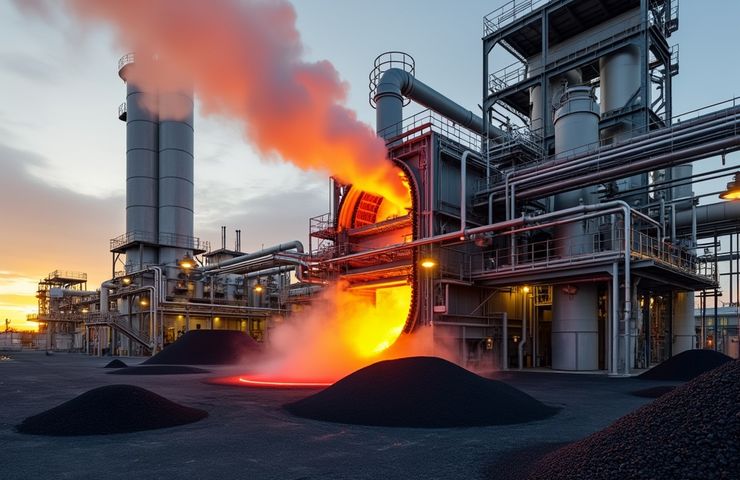
Technip Energies is doubling down on clean hydrogen in a big way—and it’s not just the hydrogen industry that should be paying attention. The French engineering giant has teamed up with Graphitic Energy, a U.S. startup that's making waves with a fresh approach to hydrogen production: an emerging technique called methane pyrolysis. Their partnership isn’t just shaking up the hydrogen space—it could also make a major dent in the battery materials market.
Hydrogen Without the Carbon Hangover
In May 2025, the two companies announced their partnership focused on scaling Graphitic’s proprietary methane pyrolysis process. What sets it apart? It breaks down methane into clean hydrogen gas and synthetic graphite—all without releasing any CO2.
The pilot plant, located in San Antonio, Texas, has been up and running since March 2025, giving it a solid lead in the race to make this technology commercially viable. Unlike older methods like steam methane reforming (SMR), which requires carbon capture, or electrolysis that demands a lot of green electricity, this process takes a different route. It uses high heat—over 1200°C—to “crack” methane, producing two valuable products: hydrogen and graphite.
Why Everyone’s Watching
This isn’t just about cleaner hydrogen—it’s a two-for-one solution targeting two major supply chain headaches. First, cost-effective low-carbon hydrogen. Second, a local, secure supply of synthetic graphite, a material crucial for lithium-ion battery anodes.
Graphitic Energy says the process hits a remarkable 95% methane conversion efficiency, which could drive hydrogen costs to under $1.50 per kilogram—and that’s without subsidies. If those numbers hold up at scale, it would undercut many green hydrogen projects, especially in places where renewables and water are limited.
And let’s not forget the graphite angle—right now, prices float anywhere from $5,000 to $20,000 per ton. That makes the graphite byproduct far from waste. Early modeling suggests this technology could meet up to 10% of the world’s synthetic graphite demand by 2030.
Texas Steps Into the Clean Tech Spotlight
San Antonio might not be the first place that comes to mind for cutting-edge clean hydrogen technology, but it’s gaining ground fast. With access to around 35% of the U.S.’s natural gas reserves, plus a seasoned energy workforce and existing industrial infrastructure, Texas has all the ingredients to become a hub for methane pyrolysis.
Long a fossil fuel stronghold, Texas is now leaning into its role as a bridge between traditional energy and decarbonized futures. It’s becoming a proving ground for transitional technologies—ones that don’t require an entirely new energy system overnight, but that still move the needle on industrial decarbonization.
A Strategic Win on Both Sides
For Technip Energies, it’s another strong play in the low-carbon arena. Already leading in carbon capture, LNG decarbonization, and blue and green hydrogen, this partnership gives them yet another lever to pull in the evolving hydrogen economy. The plan? License and roll out Graphitic’s tech at scale starting in late 2025, potentially bringing serious competition to a market largely dominated by electrolysis and blue hydrogen pilots.
As for Graphitic Energy, access to Technip’s global footprint and experienced engineering muscle could be the boost it needs to shift from a promising startup to a real industrial player. With the right push, this technology could hit the mainstream faster than anyone saw coming.
The Road Ahead
With pressure mounting on both sides of the Atlantic to deliver fast, scalable low-carbon hydrogen systems, the methane pyrolysis model offers a pragmatic path forward. It sidesteps the need for water-intensive processes, doesn’t depend on new renewables infrastructure, and makes smart use of existing methane supplies. Sure, there are still bumps to iron out—like making the reactor components last longer and figuring out optimal ways to handle and monetize the carbon outputs—but overall, the pace and promise look compelling.
This approach isn’t shouting for attention—it’s quietly shifting the paradigm. By turning fossil fuels into tomorrow’s clean energy and tapping into surging demand for synthetic graphite, this tech doesn’t just tick the sustainability box. It potentially makes it profitable, too. If Technip Energies and Graphitic Energy can scale this up successfully, don’t be surprised if methane pyrolysis finds a permanent spot on the hydrogen roadmap of the future.