BMW Group Tests 18-Tonne Hydrogen-Combustion Engine Truck in Leipzig Logistics
BMW Group is testing an 18-tonne hydrogen-combustion engine truck at its Leipzig plant under the HyCET project, with DEUTZ AG powering the engine, Rudolph Logistics Group operating the vehicle, and TEAL MOBILITY providing refuelling infrastructure.
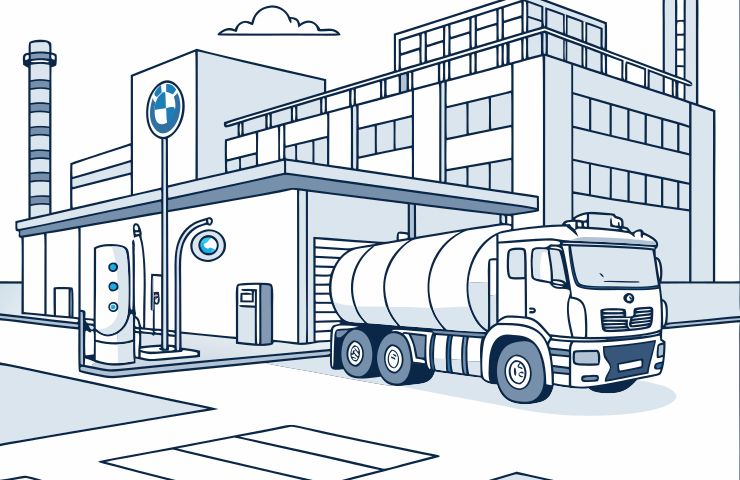
BMW Group has begun field testing an 18-tonne truck powered by a hydrogen internal-combustion engine at its Leipzig manufacturing plant, according to a BMW press release. The trial is notable for being an early instance of the technology in everyday logistics. It represents the first use of such technology in regular logistics operations for German car production, says Dirk Wiedmann, head of Production Network and Logistics at BMW Group. BMW frames the exercise as evaluation under working conditions, not as a demonstration model confined to laboratories.
The vehicle initially transports parts such as bumpers and spoilers to BMW’s Technology Exterior Components division and is intended to later support just-in-time delivery to vehicle assembly. It will operate on scheduled routes inside the plant complex before any wider deployment is considered. The field test is part of the HyCET project, a German-funded research programme evaluating hydrogen combustion engine trucks in real-world logistics, according to DEUTZ AG and BMW materials.
Operational Trial at Plant Leipzig
The trial is taking place at BMW Group Plant Leipzig in Saxony, a high-throughput manufacturing complex that produced 246,195 vehicles in 2024 and has built roughly four million units since opening in 2005, according to BMW Group data. Multi-shift production. Continuous material flows. The plant’s multi-shift operations and tight logistics demands provide a rigorous environment to test an alternative drivetrain under sustained heavy-duty service. In short, Leipzig is a stress test for duty cycles, turnaround times and uptime requirements that characterise modern automotive logistics.
Technical Overview of the Hydrogen Engine
DEUTZ AG developed the tested engine, a 7.8-litre hydrogen internal-combustion unit derived from its diesel architectures, project documentation states. Hydrogen is stored onboard at high pressure and injected into conventional cylinders, where spark ignition drives piston cycles through a conventional transmission. The setup preserves many elements of existing engine and drivetrain practice while replacing diesel fuel with gaseous hydrogen. Exhaust emissions contain water vapour and, depending on combustion conditions and after-treatment, nitrogen oxides, while direct CO₂ tailpipe emissions are eliminated under the stated operating conditions.
Consortium Roles and Refuelling Infrastructure
The hydrogen engine was engineered by DEUTZ AG, while Rudolph Logistics Group operates the truck in plant logistics operations, according to BMW. TEAL MOBILITY installed the required heavy-duty refuelling station in Leipzig. The original HyCET framework involved two 18-tonne and two 40-tonne trucks, public hydrogen stations and a four-year programme with a total investment of €19.5 million – including €11.3 million in federal funding and €5.7 million for infrastructure, per DEUTZ’s 2022 announcement. Those figures set the scale of public and private commitment at project launch.
Positioning Hydrogen Combustion in Logistics
BMW Group positions hydrogen combustion as a complement to battery-electric trucks, especially where charging windows are limited in multi-shift or high-mileage use. The company argues that fast refuelling and engine architecture familiar to fleet operators may reduce transition barriers compared with fuel-cell or fully electric drivetrains. BMW describes its logistics strategy as technology-open, matching alternative drivetrains to specific transport tasks rather than prescribing a single solution. In practice that means assessing each route for range, duty cycle and refuelling access before favouring one technology over another.
Environmental and Regulatory Context
Burning hydrogen removes fossil carbon at the tailpipe, but lifecycle emissions depend on hydrogen production pathways and distribution, industry analysis notes. Combustion also generates nitrogen oxides, requiring lean combustion strategies and after-treatment systems. Under current EU regulations, some hydrogen internal-combustion vehicles can qualify for low-CO₂ thresholds, though they may not be considered zero-emission without measured emissions data. This trial will produce operational data on fuel use, emissions and after-treatment performance to inform potential regulatory classification.
Implications for Heavy-Duty Freight Decarbonization
According to the International Energy Agency, battery-electric heavy-duty trucks offer superior energy efficiency, while hydrogen fuel-cell trucks still face higher capital costs through 2030. Hydrogen combustion could reuse existing service ecosystems for piston engines, but its lower energy efficiency and dependence on dedicated refuelling infrastructure present trade-offs. The Leipzig pilot will generate data on refuelling times, uptime and maintenance requirements to help fleet operators compare total cost of ownership among low-carbon drivetrains. Those operational metrics are central to commercial decisions on replacement cycles, depot design and spare-parts inventories.
HyCET: From Concept to Field Test
Approved in 2022 by the German Federal Ministry for Digital and Transport, HyCET stands for Hydrogen Combustion Engine Trucks. Led by BMW Group, the consortium originally included DEUTZ AG, DHL Freight, KEYOU, TotalEnergies and Volvo Group. The four-year programme envisaged two 18-tonne and two 40-tonne vehicles, public hydrogen stations and comparative assessments of hydrogen combustion versus other heavy-duty drivetrains under real conditions, per DEUTZ’s 2022 announcement. That roadmap framed both technical targets and the expectations for comparative analysis.
In its current phase, the Leipzig trial will collect data on daily mileage, hydrogen consumption per trip, refuelling dwell time and engine performance across three-shift operations. These metrics will feed lifecycle assessments and total cost models, industry analysts expect. BMW says the data will help identify the transport tasks for which hydrogen combustion offers the greatest benefit relative to battery-electric or fuel-cell trucks. The aim is practical: determine where hydrogen combustion can be competitive on operational grounds, not only in theory.
Bearing on field results, BMW Group may extend hydrogen-combustion trucks to routes beyond plant logistics. Wider adoption depends on expanding dedicated hydrogen infrastructure and securing low-carbon hydrogen supplies. Positive outcomes could drive investment by engine developers like DEUTZ AG and infrastructure providers, though partners stress that commercial viability requires measured operational data rather than theoretical benefits. In short: real-world performance will decide next steps.
According to TEAL MOBILITY, the Leipzig refuelling station features high-pressure storage and automated dispensers suited for heavy-duty operations. The installation includes safety interlocks and pressure management systems to enable multiple truck fill-ups per shift, though exact throughput rates have not been disclosed. The site provides a controlled environment to observe refuelling behaviour under the clocked rhythms of plant logistics.
The Leipzig field test does not yet demonstrate commercial readiness, but it marks a shift from laboratory demonstrations toward routine industrial operation. The resulting data on performance, reliability and economics will shape BMW Group’s future logistics procurement, guide investment by engine and infrastructure suppliers, and inform public policy on hydrogen technologies in heavy-duty transport. As stakeholders review the findings, the trial could redefine procurement criteria for low-carbon fleets and influence hydrogen funding priorities across Europe.