Toyota Racing to Power MissionH24’s H24EVO with Hydrogen-Combustion V6
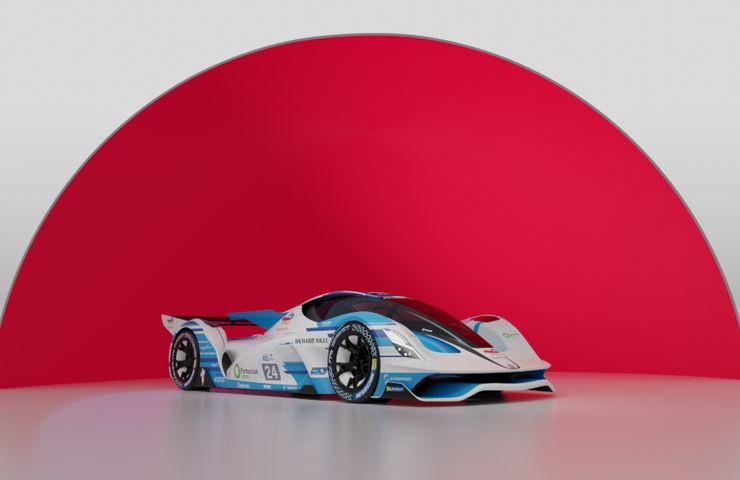
MissionH24 and Toyota Racing announced at Fuji Speedway that the H24EVO prototype will adopt a Toyota 3.5-litre V6 hydrogen-combustion engine with hybrid assistance, targeting 650 kW output.
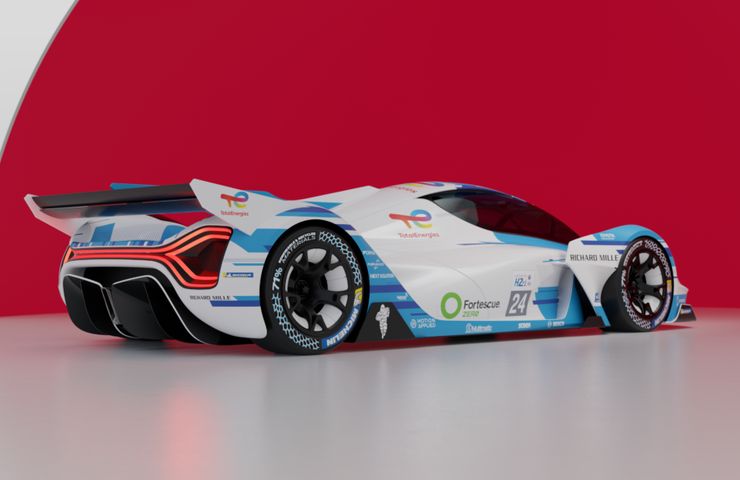
MissionH24 and Toyota Racing announced at Fuji Speedway in Shizuoka Prefecture, Japan, on 26 September 2026, that the H24EVO prototype will adopt a 3.5-litre V6 hydrogen-combustion engine developed by Toyota, paired with a hybrid system targeting a maximum output of 650 kW, according to a MissionH24 statement.
Market Impact
The partnership gives MissionH24 direct access to Toyota Racing’s combustion-engine expertise and its established supply chains. That access may streamline research and development expenditure, according to MissionH24. For Toyota Racing, the move supports a broader strategy: retaining combustion-engine development while exploring hydrogen as an alternative fuel, according to Toyota Racing. The Automobile Club de l’Ouest indicates that the deal aligns with its aim to introduce a hydrogen category in the FIA World Endurance Championship by around 2030, potentially attracting new sponsors and partners focused on hydrogen infrastructure. MissionH24 says the announcement may catalyze additional investment in pit-lane refuelling facilities, according to MissionH24.
Program History
MissionH24 began as a collaboration in 2018. It was founded through a partnership between the Automobile Club de l’Ouest and H24Project, according to MissionH24 historical materials. The programme’s first prototype, the LMPH2G, completed a demonstration lap at Spa-Francorchamps in September 2018. In 2019 the car ran in Michelin Le Mans Cup practice sessions, using a TotalEnergies mobile refuelling station. The second-generation H24 prototype expanded the test programme to include fuel-cell electric propulsion and refuelling protocols, and it went on to finish four races in the Michelin Le Mans Cup in 2022, according to MissionH24. In 2024 the third-generation H24EVO was revealed at the 24 Hours of Le Mans as a liquid-hydrogen fuel-cell design. Initial track tests planned for 2026 reflected that fuel-cell focus before the recent shift to hydrogen combustion, according to MissionH24.
Supplier and Partnership Network
H24Project, led by Jean-Michel Bouresche as CEO, functions as MissionH24’s technical and operational partner. It oversees development of hydrogen powertrains, vehicle integration and safety protocols, according to MissionH24. TotalEnergies has been a visible supporter since the early tests, providing a mobile hydrogen refuelling station and broader hydrogen supply chain services, according to TotalEnergies. The Automobile Club de l’Ouest co-created MissionH24 and continues to manage sporting regulations, safety standards and category development, according to ACO materials. Toyota Racing’s decision to supply its hydrogen-combustion V6 engine marks its first core powertrain involvement with MissionH24, expanding on a prior role that was focused on aerodynamics and cooling, according to MissionH24.
Technical Snapshot
- Hydrogen internal-combustion V6: A 3.5-litre V6 engine that burns hydrogen in a conventional four-stroke cycle, designed by Toyota Racing for integration with a hybrid system, according to MissionH24.
- Hybrid powertrain: An electric motor and battery pack paired with the combustion engine to achieve a combined maximum output of 650 kW, according to MissionH24’s announcement.
- Liquid hydrogen storage: Cryogenic tanks operating near –253°C to increase onboard energy density versus compressed gas, according to MissionH24 historical materials.
Each component is designed to meet endurance conditions while addressing safety and performance targets, according to MissionH24.
Engineering Challenges
Fitting a new V6 hydrogen power unit into an endurance racer is not straightforward. Mechanical interfaces between the engine, chassis and gearbox must be revised, according to MissionH24. Thermal management systems will need to cope with sustained heat rejection typical of high-output combustion engines, and calibration work is required to limit nitrogen-oxide formation during hydrogen burn, according to MissionH24’s technical brief. Control software must be engineered to coordinate engine speed, electric torque blending and battery state of charge across long stints. Teams are also tasked with validating the crashworthiness of altered liquid-hydrogen tank configurations through impact simulations, according to MissionH24.
Regulatory and Safety Development
The Automobile Club de l’Ouest uses endurance racing as a practical environment to trial tank certification, emergency response protocols and sporting-equivalence rules for new powertrains, according to ACO materials. Findings from the H24EVO project will feed into regulations on hydrogen storage integrity, pit-lane refuelling procedures and performance balancing aimed at achieving lap-time parity with existing classes, according to the Automobile Club de l’Ouest.
Infrastructure and Refuelling
TotalEnergies has supplied a mobile hydrogen refuelling station since MissionH24’s early Michelin Le Mans Cup tests, according to TotalEnergies. For the H24EVO, MissionH24 says rapid and repeatable cryogenic refuelling interfaces will be crucial to meet pit-stop targets under competitive time constraints, according to MissionH24. The programme will also test consistency in hydrogen supply chain logistics and station throughput.
Parallel Demonstrations
Earlier in 2026, in June, Toyota Racing presented its TR LH2 Racing Prototype at the 24 Hours of Le Mans. That vehicle showcased a liquid-hydrogen combustion concept that is separate from MissionH24’s fuel-cell pathways, according to MissionH24. The demonstration focused on cryogenic fueling procedures, thermal management strategies and hybrid integration, all under real-world conditions at the Circuit de la Sarthe, according to MissionH24. MissionH24 says data on tank boil-off rates and refuelling flow rates from the TR LH2 will inform both programmes, according to MissionH24.
Comparative Analysis
Past MissionH24 cars—the LMPH2G and H24 prototypes—relied on hydrogen fuel-cell electric propulsion to reach net outputs of around 300 kW, according to MissionH24. The combustion route uses familiar engine architecture and may allow faster integration into existing race platforms. It can, however, compromise system efficiency when compared with fuel-cell systems. Fuel cells emit only water at the tailpipe, whereas hydrogen combustion removes CO₂ emissions associated with the fuel but can produce nitrogen oxides, according to MissionH24.
Future Testing and Homologation
MissionH24 reports that initial track tests for the H24EVO development vehicle are planned for late 2026, pending technical approval. At this stage the prototype is not a confirmed entry for the 24 Hours of Le Mans. No independent lap-time, fuel-consumption or homologation data has been published, according to MissionH24.
Strategic Outlook
If the H24EVO achieves its 650 kW performance and reliability targets, its data will be used by FIA and ACO working groups drafting technical regulations for a hydrogen endurance class by around 2030, according to the Automobile Club de l’Ouest. MissionH24 says the project’s ultimate value will depend on system efficiency, hydrogen tank mass, refuelling speed and the carbon intensity of the hydrogen supply, according to MissionH24.
Key Takeaways
- This marks a shift from fuel-cell to hydrogen-combustion power, according to MissionH24.
- Toyota Racing supplies a 3.5-litre V6 hydrogen engine paired with a hybrid system, targeting 650 kW, according to MissionH24.
- Liquid-hydrogen storage offers greater energy density but adds thermal and operational complexity, according to MissionH24.
- ACO is using endurance racing to develop hydrogen safety and sporting-equivalence rules, according to the Automobile Club de l’Ouest.
- Initial track testing is scheduled for late 2026; a competitive Le Mans entry is yet to be confirmed, according to MissionH24.
MissionH24 says forthcoming tests will generate performance and reliability data essential for shaping hydrogen-powered endurance racing and refining regulations ahead of a potential 2030 hydrogen category.