Ballard to supply 24 FCrail modules for Romania’s first Mireo Plus H hydrogen trains
Ballard Power Systems will supply 24 FCrail 200 kW fuel-cell modules to Siemens Mobility for Romania’s first hydrogen-powered Mireo Plus H train fleet, marking a 4.8 MW deployment across 12 trains and testing hydrogen traction on non-electrified regional routes.
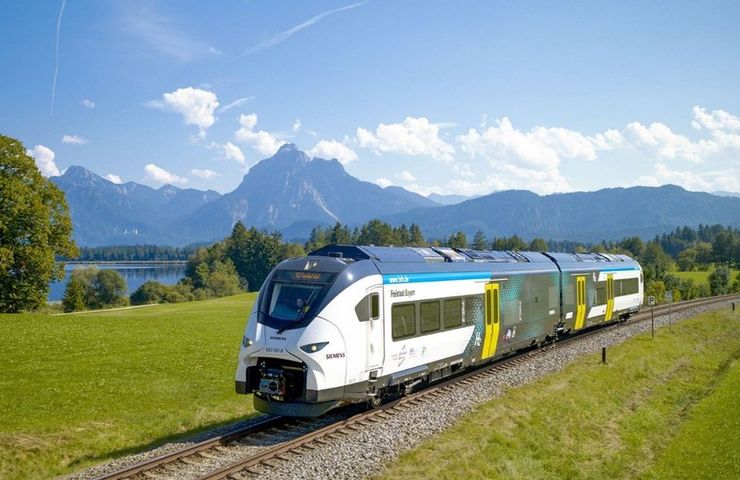
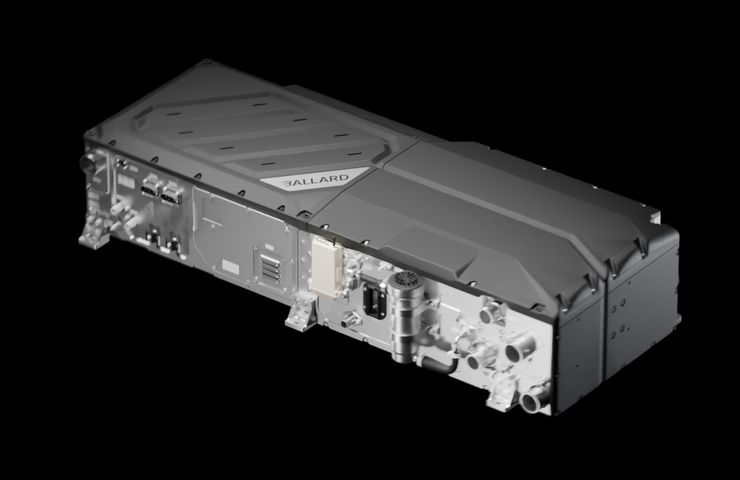
Ballard Power Systems has announced that Siemens Mobility has placed an order for 24 of its FCrail 200 kW proton-exchange-membrane fuel-cell modules to power the first hydrogen-powered Mireo Plus H train fleet in Romania, according to Ballard.
Each FCrail module is rated at 200 kW. The modules are intended to power 12 two-car Mireo Plus H hydrogen electric multiple units ordered by Romania’s public railway reform authority, according to a Siemens Mobility announcement. Two modules per two-car trainset, if allocated evenly. That matches Ballard’s earlier descriptions of Mireo Plus H configurations.
Technical deep dive: FCrail integration and depot refueling
The FCrail 200 kW module uses a polymer electrolyte membrane fuel cell architecture. In this design, hydrogen is supplied to the anode and ambient air provides oxygen at the cathode. Hydrogen molecules split into protons and electrons at the anode; the protons pass through the membrane while the electrons flow through an external circuit to deliver electrical power, rejoining with oxygen at the cathode to form water and heat, Ballard explains. The description lays out the electrochemical cycle in straightforward terms.
The FCrail module includes balance-of-plant components such as humidifiers, pumps, cooling circuits and safety sensors integrated into a compact skid, Ballard states. Its modular approach allows operators to scale power easily; the 24-module order corresponds to two modules per trainset if allocated evenly, matching Ballard’s earlier descriptions of Mireo Plus H configurations. The skid consolidates subsystems that otherwise would require separate housings and piping.
Onboard power electronics regulate the fuel-cell output for traction motors, while a lithium-ion battery buffer handles peak loads during acceleration and captures regenerative braking energy, Siemens states. That battery buffer smooths transients and reduces mechanical stress on the fuel cells. The combined system manages continuous and transient power demands without overtaxing the fuel-cell stack.
Integrating these fuel cells into a train depot requires a hydrogen refueling and storage system. Hydrogen may be delivered by truck or produced on-site via electrolysis, then compressed to station pressure, stored in fixed tanks, and dispensed to onboard tanks through controlled gauges, according to hydrogen refueling design guidelines. Final details of Romania’s refueling station network have not been disclosed by Siemens or Ballard. Planning therefore remains at the system-design level rather than at a completed network stage.
Deployment on Romania’s non-electrified lines
Romania’s railway network is only partially electrified, leaving many regional corridors reliant on diesel traction. The hydrogen train fleet is targeted at non-electrified services radiating from Bucharest, including Bucharest North–Târgoviște, Bucharest North–Pitești–Craiova, Pitești–Curtea de Argeș and Bucharest North–Henri Coandă Airport, as planned or temporarily assigned, industry reports indicate. Those are the candidate routes for initial operations.
Under the procurement, ten trainsets are planned to be operated by the state carrier CFR Călători, while two are allocated to private operator Transferoviar Călători, according to railway-industry reporting. Siemens Mobility’s contract also includes a long-term maintenance agreement for an initial 15-year term, Railway Gazette reports. Maintenance is bundled into the contract rather than handled as a separate tender.
Fuel-cell deliveries are scheduled for 2027 and 2028, with passenger service expected to begin in 2029, Ballard says. Siemens notes a maximum operating speed of 120 km/h, 131 fixed seats and five folding seats per trainset, pending regulatory approvals and depot commissioning. Those capacity and speed figures are conditional on certification and infrastructure readiness.
Strategic and economic implications
This contract represents the first commercial deployment of the Mireo Plus H platform outside Germany and its inaugural fleet in Eastern Europe, Ballard states. Siemens Mobility initially developed the Mireo Plus H through its H2goesRail collaboration with Deutsche Bahn, designed to demonstrate hydrogen traction as a diesel replacement on non-electrified routes. The Romania order therefore extends a development program into a new regional market.
Railway Gazette reported a contract value of around €229 million including maintenance, financed through the EU-backed Transport Programme 2021–2027 with national co-financing. However, available sources support approximately RON 1.135 billion excluding VAT, equivalent to about €229.3 million, reflecting variations in maintenance periods and contract scope.
Ballard’s relationship with Siemens predates this order: the companies collaborated on previous projects, including a 2021 trial purchase of two 200 kW modules and a subsequent order for additional modules. That earlier work establishes a supplier relationship rather than a first prototype deployment. The Romania agreement thus builds on an existing technical partnership.
Observations indicated that Romania’s deployment will be closely watched to see how hydrogen production emissions, refueling infrastructure reliability and actual operational availability affect total cost of ownership, industry observers note. Observers plan to compare real-world performance against modeled expectations.
EU policy frameworks such as the Renewable Energy Directive and the EU Hydrogen Strategy provide incentives for green hydrogen production, potentially lowering future fuel costs, according to policy summaries. Romania’s choice to test hydrogen reflects a broader EU aim to diversify decarbonization options beyond direct electrification and battery solutions. Policy incentives are therefore part of the context for the procurement.
Alstom’s Coradia iLint pioneered hydrogen traction in Europe and began commercial service in Germany in recent years, according to Alstom. The Romanian fleet will be among the first to test hydrogen trains across a dispersed regional network, potentially influencing similar procurements in Central and Eastern Europe. That prior experience offers a comparative benchmark.
Closing outlook
For Ballard Power Systems and Siemens Mobility, Romania’s order offers a high-visibility reference and the chance to standardize hydrogen train operations in a new market. For Romanian rail authorities and operators, it presents a potential diesel alternative that leverages existing infrastructure without immediate overhead electrification. Both vendor and operator stand to gain operational lessons.
The Romanian Mireo Plus H fleet’s success will depend on establishing a reliable hydrogen supply chain, securing safety certifications and achieving consistent service availability. Its performance data will inform future decisions on decarbonizing non-electrified corridors in Romania and across Europe. The coming years should clarify whether the technical and economic assumptions underpinning the project hold up in everyday service.