China Unveils 195-Kilometer Pure Hydrogen Pipeline to Boost Green Hydrogen Infrastructure
China has launched a 195-kilometer pure-hydrogen pipeline in Inner Mongolia, linking renewable hydrogen production to industrial users, marking a significant step in the country's hydrogen infrastructure development.
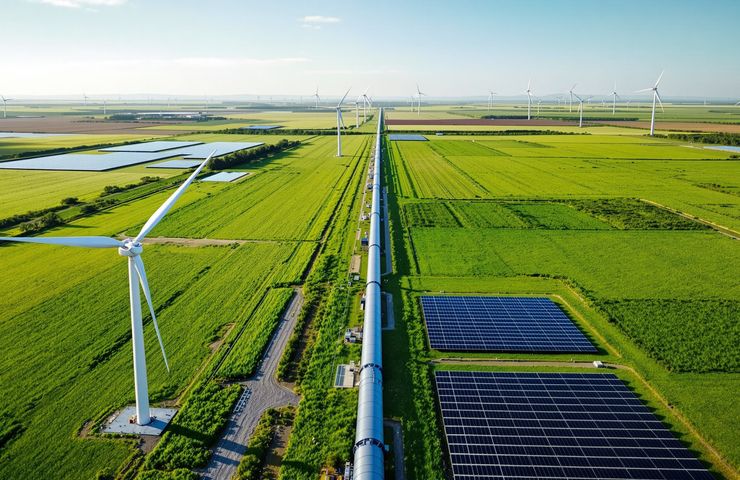
China has marked a significant milestone in its hydrogen infrastructure with the launch of a 195-kilometer pure-hydrogen transmission pipeline in Inner Mongolia. Announced during the recent 2026 Hydrogen Energy Industry Development Conference, the corridor links renewable hydrogen production sites in northern Baotou with industrial consumers in the city. It is being presented as the longest pure-hydrogen pipeline of its kind in China, and its scale is intended to improve the economics and logistics of supplying hydrogen to heavier industrial demand.
The pipeline’s technical specifications are specific. It carries a nominal diameter of DN450 and operates at a designed pressure of 6.3 megapascals. Regulators have approved an annual transmission capacity of 100,000 metric tons of pure hydrogen. Project planners say that capacity could rise to 240,000 metric tons in the future, part of a broader effort to position Inner Mongolia as a central hub for both hydrogen production and consumption.
Connecting Renewable Hydrogen with Industrial Needs
The route is planned to bridge wind- and solar-rich production zones with urban demand centers. Among the production areas is Darhan Muminggan Joint Banner. Consumption is concentrated in Baotou, where sectors such as chemicals, metallurgy and transportation create sizable demand. Those geographic mismatches—production in relatively remote renewable-resource areas and consumption in industrial cities—are a familiar challenge for hydrogen projects around the world.
Until now, moving hydrogen between sites often relied on tube-trailer systems. Those trucks are flexible but limited in scale and costly over distance. Reports suggest a potential reduction in transport costs from roughly 13 yuan per kilogram with traditional methods to about 3 yuan per kilogram through the pipeline—an expected reduction of about 77%. If realized, that change would make consistent industrial supply more viable than it has been with road transport alone.
Technological Innovations in Hydrogen Transmission
Transporting pure hydrogen at scale has technical risks. One prominent concern is hydrogen embrittlement in steel, which can reduce durability and performance. To address such risks, Baotou Iron and Steel Group has reportedly developed anti-hydrogen-embrittlement steel specifically for this project. That material, the developers say, is intended to mitigate the interaction between hydrogen and pipeline metallurgy that can lead to cracking or loss of strength.
On the production side, the pipeline will be supplied in part by electrolyzers powered by renewable energy. These devices split water into hydrogen and oxygen through electrolysis, and their use aligns with an explicit push toward green hydrogen production. Project documentation references a previous demonstration that involved large alkaline and proton-exchange-membrane electrolyzers, underscoring that the current effort builds on earlier technical trials rather than starting from scratch.
Manufacturing and materials are only one part of the equation. Integration—matching intermittent renewable generation to steady industrial load, operating electrolyzers efficiently, and coordinating pipeline flows—will determine how much of the approved transmission capacity is usable in practice. Engineering this balance is a practical challenge for operators once the system moves from commissioning into steady operation.
Strategic Implications and Future Prospects
If the pipeline operates as designed, it could serve as a template for similar links elsewhere. A functioning route between large renewable-generation clusters and dense industrial demand could encourage other regional networks and hydrogen corridors that connect production facilities with end users. The prospect is not just reduced transport costs; it is also about establishing routines for contracts, safety oversight and commercial hydrogen trading at scale.
The National Energy Administration has hailed this initiative as a crucial pilot project in a national drive towards broader hydrogen energy adoption, moving beyond mere transport applications to a full-fledged industrial utility.
That official endorsement frames the pipeline as part of a national strategy. Yet significant questions remain. The reliability of actual throughput, operational costs, safety performance, and competitive hydrogen supply agreements must be validated through real-world operation. Operators and regulators will need to demonstrate capacity factors, maintenance regimes and emergency procedures before the model can be widely replicated.
Supporters point out that the physical pipeline reduces reliance on road transport and the accompanying operational overhead. Opponents or cautious observers will look for evidence that the projected cost reductions and capacity expansions can be achieved without sacrificing safety or creating new supply bottlenecks. In short: pipeline economics must be proven in daily use, not only on paper.
As Baotou continues to develop its hydrogen infrastructure with governmental backing and what project documents describe as technological consolidation, the implications extend beyond single-factory supply chains. The proponents link the work to a broader goal: advancing sustainable energy practices consistent with international climate commitments. Whether the project becomes a replicable model will depend on both technical performance and commercial arrangements forged during early operation.